
Blog

My grandfather, Sophus Johnson, once gave me $2,500 to finish college in 1975. Instead of tuition, I asked if I could use it to buy land and build a house out of an old barn. He laughed, said yes, and made me promise I’d finish college after the house was done — which I did.
Forty-eight years later, I’m rebuilding his log home on the very same land he helped me buy. That’s why we call it Sophus’ House.
Reusing and reclaiming materials has been my way of life ever since I built that first home in 1976. So it’s no surprise to anyone who knows me that my current project combines my grandparents’ 135-year-old log cabin from Denmark, Wisconsin with a historic log barn from Montgomery, Minnesota.

The real push to start came when the producer of Restoration Road called asking if we had any unique projects for 2022. After hearing my idea, they loved it — until they realized filming meant sending a crew to Minnesota in January to watch me dismantle a log barn. Even after I offered to buy them snowmobile suits, they passed!
They were right about the schedule being ambitious, but just before my 70th birthday, it felt like a sign: It’s now or never. I had told so many people about the opportunity that I knew I had to move forward, with or without TV cameras.
And so the build began — using reclaimed materials from all over Minnesota.
- Floor framing from a barn in Sanborn and an old bar in Eveleth
- Second-floor beams from a bank in Albert Lea and logs from Good Thunder
- Insulation and stair timbers salvaged from Fergus Falls
- Basement studs milled from beams taken from a demolished motel in Gilbert
- Soffit, fascia, and trim from a barn near the Mankato airport
- Garage siding from a barn in Mapleton
- And flooring made from black walnut trees we harvested in Mankato three years ago
- All restoration, repairs, chinking, and finishes were completed using Perma-Chink Systems products.
This home is more than a building — it’s a living scrapbook of places, memories, and people who shaped my life. And most importantly, it all started with my grandfather’s gift.
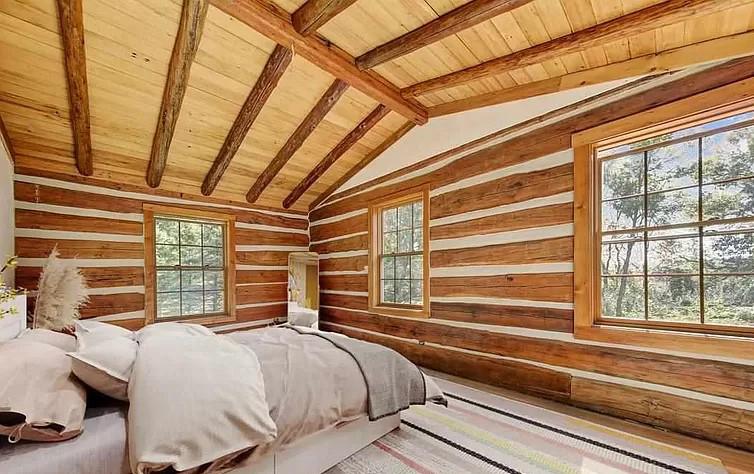
The full restoration video is here:
🎥 How I used Perma-Chink products to restore my grandparents log cabin
Story by Mark Johnson
Artisan Restoration
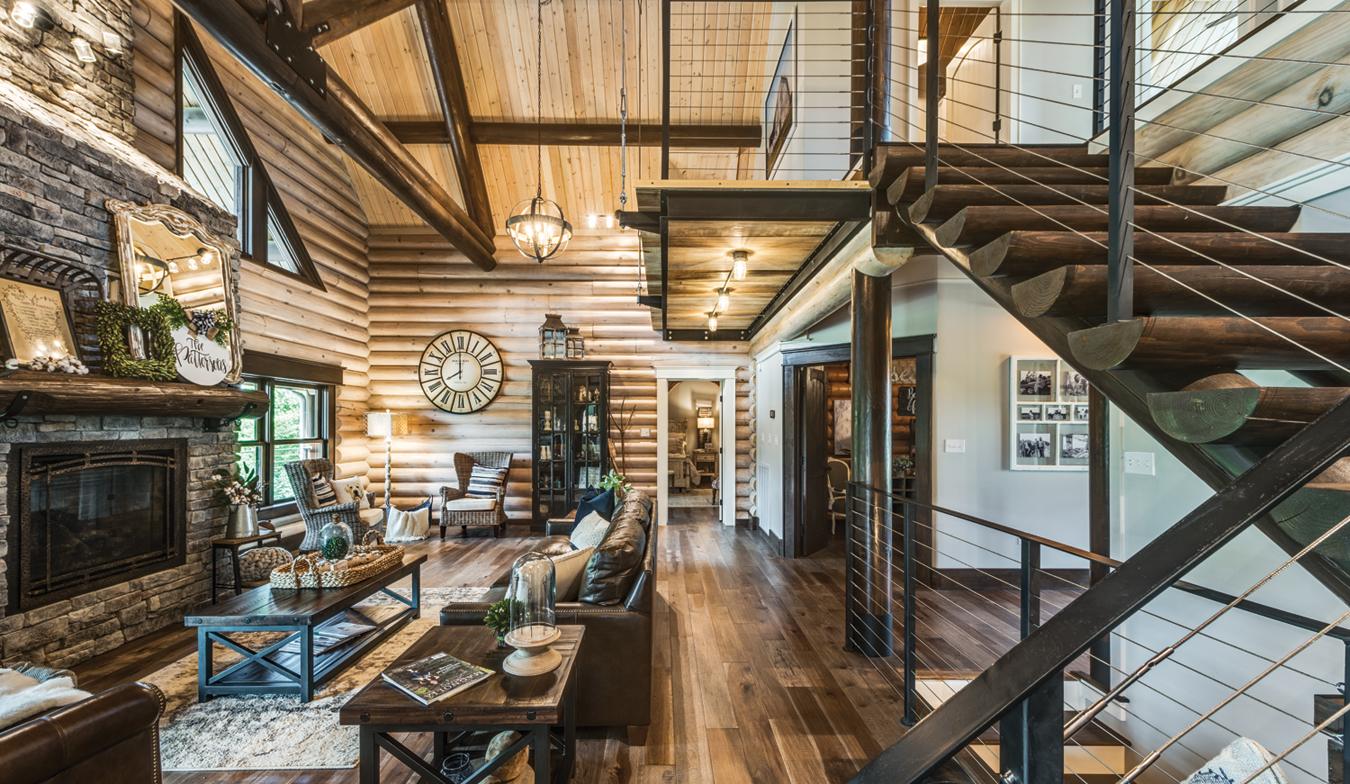
The exceptional quality of Perma-Chink Systems’ log and timber home wood care products has always been vibrant, and Lifeline Accents line takes that philosophy quite literally. Lifeline Accents, the extensive interior/exterior stain product line, boasts a variety of features that everyone from professional applicators to the do-it-yourselfer find irresistible, and the most obvious is color.
Bold hues such as jade, garnet and midnight catch the eye, while more traditional tones, such as sand, umber and charcoal, round out the 18-color palette. Each vibrant color is designed to allow the wood’s grain to emerge, so the color complements the wood, rather than covering it.
And unlike many other tinted stains, the color endures, meaning fewer touchups over time. Our Lifeline Accents high-performance semi-transparent stains are designed utilizing our proprietary technology to highlight and protect both interior and exterior surfaces.
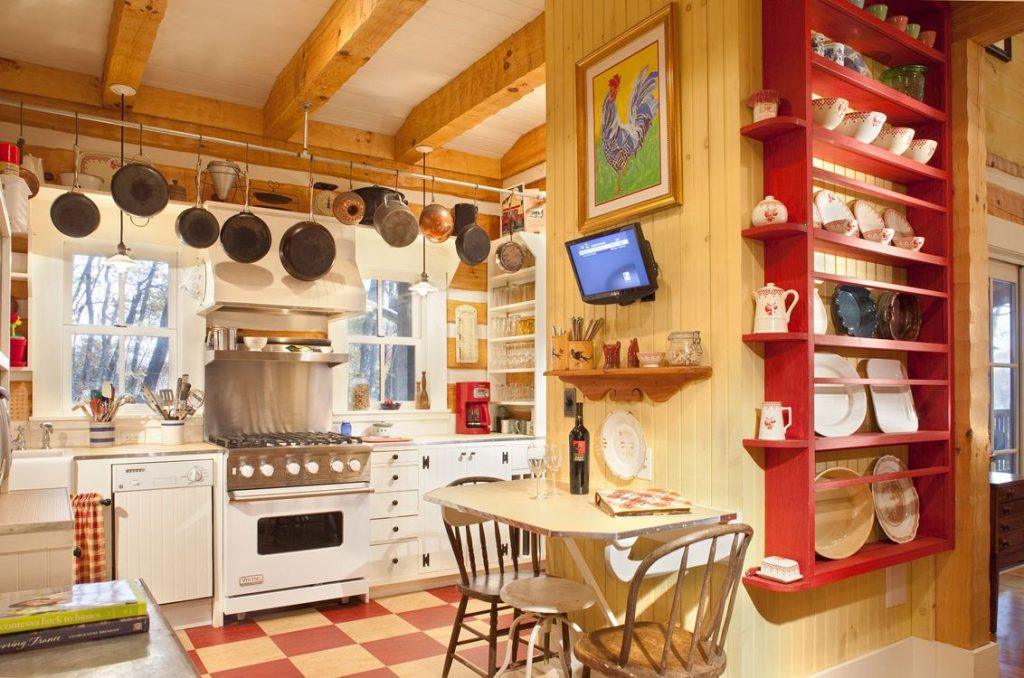
Creates a wonderful accent for your wood trim,
interior and exterior walls, millwork, timber, furniture and
other elements of your home.
The combination of exciting colors and ease of application will expand choices and add value for both homeowners and applicators. As a leader and innovator in wood-finishing products, Perma-Chink Systems offers a complete line of specialized sealers, stains, finishes, preservatives and cleaners made for the unique needs of log, timber and wood-trimmed homes. Order your free samples here.
If you’d like some guidance for a more substantial home restoration, or you’re interested in trying a new color this year, please reach out today 1-800-548-3554. Just pick your colors and order FREE samples to try it on your wood. Custom colors are available upon request.
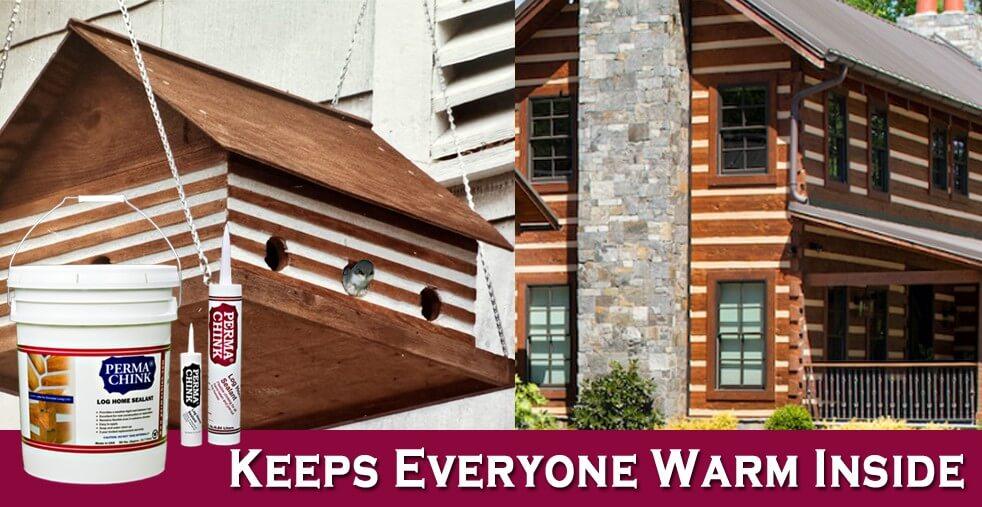
Lower Your Energy Consumption and Prepare Your Home for Winter
From the Experts at Perma-Chink Systems
As winter approaches, one of the most important tasks for maintaining your log home is ensuring it’s properly sealed. With the cold months ahead, taking the time to address any gaps and cracks will help prevent cold drafts and keep your home cozy and energy-efficient.
In today’s world of rising fuel costs and growing environmental concerns, keeping cold air out and warmth in has never been more important. A well-sealed home reduces your energy consumption, helping you save money while also minimizing your environmental impact.
At Perma-Chink Systems, we specialize in products designed specifically to help you seal your log home effectively. Although we’re widely known for our premium stain products, our reputation was first built on our high-quality chinking and sealants. So, what exactly do we mean by “sealants”?
In the context of log homes, sealants are materials used to fill gaps, cracks, seams, joints, and any other spaces where air, water, or pests might enter. While many people refer to these materials as “caulk,” we call them “sealants” to emphasize the superior quality of our products compared to typical caulks you’ll find at your local hardware store.
What makes Perma-Chink sealants different?
Our products are specifically designed for log homes, offering superior performance in sealing, and insulating. Unlike basic caulk, many of our sealants remain flexible after curing, providing long-lasting protection without cracking or peeling. They come in a variety of formulations, each tailored to meet different needs—from maintaining flexibility to achieving a hard, durable seal.
Sealants are typically plastic-like compounds that come in tubes or pails, and once applied, they cure to form a strong bond with the surrounding material. This process helps prevent drafts and moisture infiltration, ensuring that your home stays warm and dry throughout the winter months.
If you’re ready to lower your energy costs and get your home winter-ready, Perma-Chink Systems offers the ideal sealants to help you achieve the best possible results. Let us help you seal in comfort and save energy this winter! Call us at 1-800-548-3554 or visit us at Store.PermaChink.com.
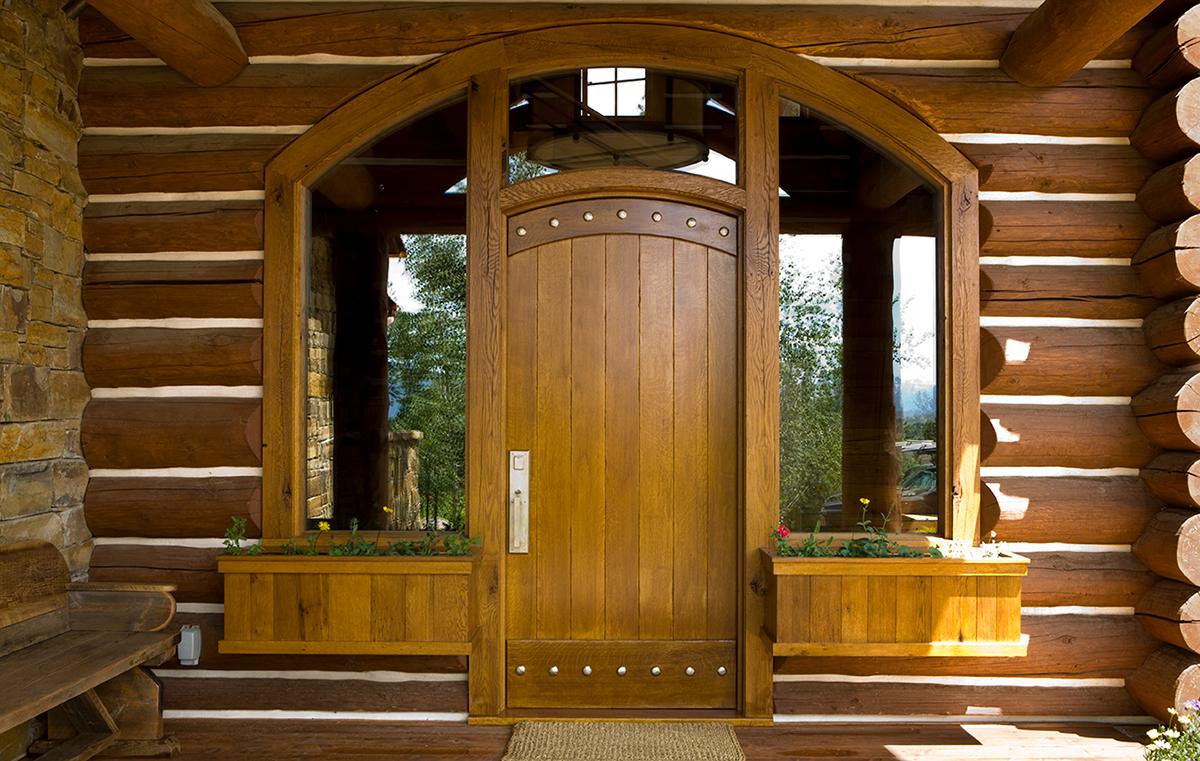
How should I go about making sure that I get started right when it comes to maintenance? How critical is it to begin proper maintenance when the home is new?
Research
Do your research in finding the right system. We provide a robust library of Tech Tips that provides information you need to take care of your log and timber home. New homes should not have issues, and we recommend homeowners perform inspections of their home to find any small issues and fix those now, before they become big issues.
The Right System
Chose a system of fully compatible log or timber frame home products to protect your home, such as Perma-Chink Systems. When doing your research ask for samples. This allows you to choose the best color combination you prefer. Our products cover all stages of log home finishing from insect and mold prevention to wood cleaners to sealants to finishes. Our “whole-home” approach results in all our products working together in preserving your log home.
The Right Amount
You’ll also need to know how many linear feet will you get out of a pail of the sealant or chinking that you use to order the proper amount. Do you know the square footage of your log home exterior? You’ll need to know that when ordering finish and topcoats. How many square feet of coverage will you get from a gallon of finish? Sometimes the more moderate or even higher priced products are a better value because they go further than the cheaper ones. This is worth considering, as labor rates keep increasing.
Proper Project Prep
Prep is always the number one thing when sealing or staining. Clean logs, proper log texture (not overly smooth), and compatible weather – avoid extremes and rainy weather.
Hiring a Contractor
If you hire a contractor, make sure that they have a solid background, check their references, make sure they are current with their insurance company, and get quotes from more than one contractor. Perma-Chink Systems has a list of Preferred Applicators that know best how to care for your log home. And pro tip – book contractors well in advance, many Preferred Applicators book months in advance.
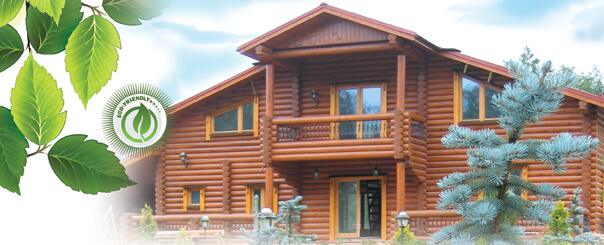
Proper surface preparation is a must and is the key to a successful job. Wood has a chemistry, all of it’s own. First of all, it is close to neutral in pH, much the same as drinking water. Any chemical you apply is likely to change the basic chemistry of the wood and may affect the performance of your finish. That means once you have prepared the wood and before applying the finish, you should try to return the wood to a neutral pH.
LOW PH WOOD CLEANER
Log Wash is a liquid concentrate for cleaning log and wood surfaces. It can be used as maintenance cleaner or to prepare the surface of wood for a new coat of stain or topcoat. Log Wash removes dirt, grime, pollen, and surface stains without harming the wood or the finish. As opposed to bleach solutions, Log Wash does not upset the natural pH balance of the wood, thus preventing wood fiber damage and iron tannate stains. (To treat gray, UV-exposed wood see below Wood Renew).
One gallon of Log Wash when diluted with water will clean 3000 sq.ft. for maintenance cleaning.
For redwoods and cedar, we recommend Cedar Wash. It is a ready-to-use cleaner specifically formulated for preparing the bare wood surface of wood species that contain high levels of wood extractives and resin oils.
For New Construction Projects
Let’s start with brand new wood right out of the mill. As the logs are planed, the process creates surface heat and pressure. This heat can cause the starches and sugars to form mill glaze on the surface of the logs. Mill glaze is very smooth and can inhibit adhesion and penetration of finishes. Most finish manufacturers recommend removing mill glaze prior to application. The best way to remove mill glaze from exterior wood surfaces is by using Wood ReNew, a percarbonate cleaner, and pressure washing. One old standby procedure was to wash the home down with household bleach. This is a No-No. Bleach is caustic and it will destroy lignin in the wood. Lignin is what holds the wood fibers together. You will end up with “fuzzy” logs, as the lignin is destroyed and the fibers break loose from each other.
You are probably wondering why this neutral balance is so important. Wood is a very interesting object and usually is very forgiving. But whenever the pH balance of wood is altered, the chances of developing iron tannate stains increases. While these stains do not damage the wood, they are unsightly and are very often misdiagnosed as mold or mildew under the finish. If tannin stains develop, they are easily removed with treatment of oxalic acid solution, like Oxcon, a brightener. Oxalic acid is a mild acid, but must be treated with caution and properly rinsed off to bring the chemical balance of the wood back to neutral.
Order free samples of Wood Renew and Oxcon
Some wood has characteristic of stains such as bluestain or sapstain that come along with the wood. They are natural occurrence and can’t be removed. Some people try to remove it by spot sanding. While this may lighten the color somewhat, it is best to leave it alone. Spot sanding creates a different surface textures that result in different color acceptance of sanded areas making the finish uneven. If you must sand, try to send the entire wall. Another solution for staining wood with uneven texture is to use a clear primer such as Prelude.
For Restoration Projects
There are two ways to remove old finishes from the logs, Wet and Dry.
Wet Method – Removing Old Finishes
We offer two types of environmentally-friendly wood finish removers that specifically designed for log homes: S-100 and StripIt. Both products are water-based solvents that remove most oil, water-based stains and topcoats. They contain no-harsh chemicals, are bio-degradable and non-flammable, and unlike caustic strippers will not discolor the wood. As opposed to media blasting, chemical stripping is much more user-friendly since all it takes is a general purpose pressure washer.
Order free samples of S-100 and StripIt
Dry Method – Media Blasting
The latest and greatest dry method around is blasting that aging, discolored finish off with new age glass media. Glass media is lighter than sand so while it strikes your home with necessary force, it has less weight – this allows it to remove the stain without harming the wood so much. There is also no risk of blowing water into your house, and because the media is dry, you can re-stain immediately. Of course, you can hire someone to do it for you. If you prefer, call us and we find you a contractor near you, or visit https://www.permachink.com/contractors/ for a list of contractors in your area.
For Maintenance Cleaning
The exterior of a log home is a settling ground for dust, pollen and other airborne contaminants that dull the surface and encourage mold growth. A light cleaning once or twice a year with Log Wash will keep a home looking beautiful and helps prolong the life of the exterior wood finish.
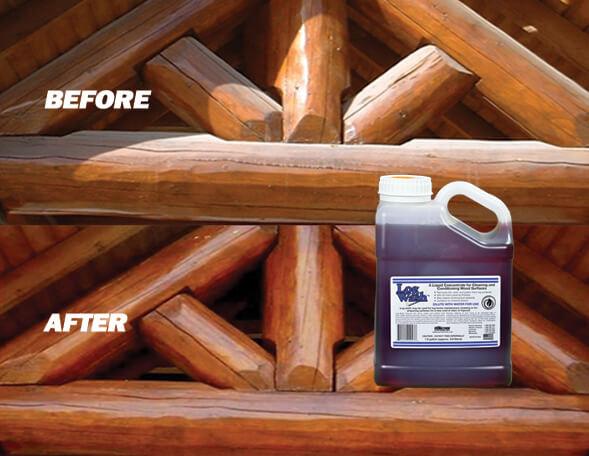
Read the product labels, follow the directions, be well informed before you start the surface preparation process, and the results will be rewarding. And remember, rinse, rinse and then rinse again! You should apply log finish as soon as the home has adequately dried.

Perma-Chink Systems: Advancing the Future of Exterior Wood Finishes
Perma-Chink Systems has been a leader in waterborne exterior finishes for decades. As federal and state environmental regulations increasingly restrict the use of oil-based products, the performance of traditional oil-based stains has declined. While these changes are a win for the environment, they’ve created challenges for manufacturers and homeowners alike.
Fortunately, waterborne transparent stains have evolved dramatically improving in both durability and appearance. At Perma-Chink Systems, we’ve spent years developing finishes that are not only environmentally responsible but also easy to maintain, long-lasting, and designed to enhance the natural beauty of wood.
Our Lifeline Ultra-2 and Ultra-7 stains, combined with our Lifeline Advance clear topcoat, represent a major leap forward in the performance of exterior transparent finishes—outperforming both waterborne and oil-based alternatives. These finishes deliver the signature beauty you expect from Lifeline, are simple to apply and clean up, and offer the highest level of durability we’ve ever seen in our testing.
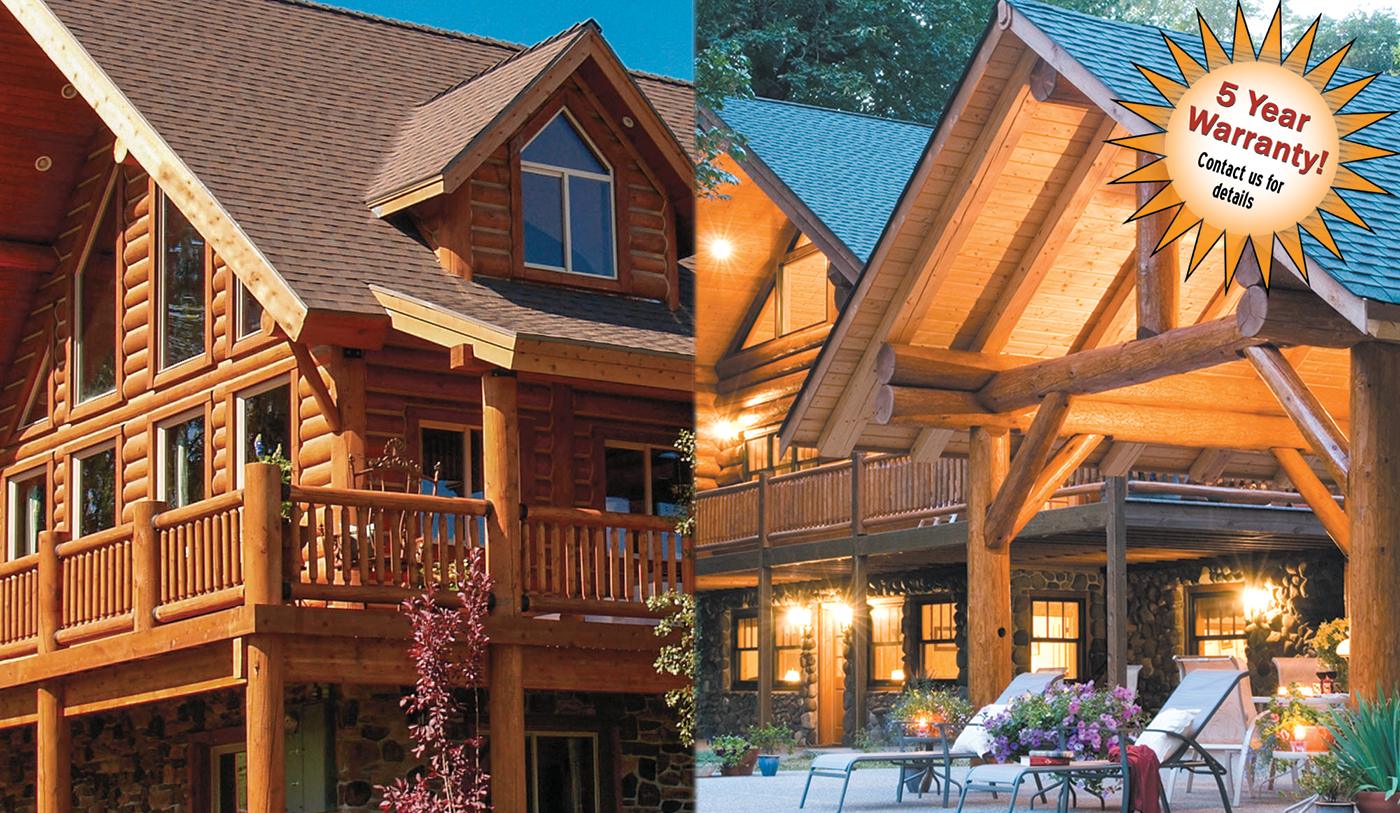
From lab trials to outdoor test panels and real-world building applications, Lifeline Ultra-2 with Lifeline Advance has consistently demonstrated exceptional long-term performance. Based on these results, we’re proud to back this system with a 5-Year Limited Warranty – a testament to its reliability and resilience.
How Does the Warranty Work?
When applied to properly prepared wood, a base coat of Lifeline Ultra-2 or Ultra-7 followed by a clear topcoat of Lifeline Advance qualifies for 3 years of warranty coverage. To extend the warranty to the full 5 years, simply apply one additional coat of Lifeline Advance within the first three years.
This warranty, backed by decades of innovation and rigorous testing, ensures that homes remains protected and beautiful year after year with the most advanced waterborne finish system on the market today.
If you haven’t experienced Lifeline Ultra-2 or Ultra-7 with Lifeline Advance, now’s the time. Contact your nearest Perma-Chink Systems location and request a sample – you’ll see firsthand how beautifully it brings out the character of your wood.
Where to get Free Samples
Order free samples online: Exterior Wood Finishes or call 1-800-548-3554.
Warranty Details
Link to warranty form: Ultra-7 Warranty

Honeybee after honeybee painted on buildings around the world — each one is handcrafted by artist Matthew Willey, founder of the Good of the Hive. https://www.thegoodofthehive.com/
Painter Matt Willey is creating a mural at the Rifle Branch Library. The project will include events every Sunday through Sept. 9 — the scheduled day for mural completion.
Honeybees within the hive ‘think’ collectively. They are hard-wired to understand that their immune system is collective. Their health is based on the health of the hive, not the individual bee. A personal experience with a honeybee in 2008 sparked a paradigm shift for Matt Willey. He realized that human and planetary health are collective, although we rarely act like it. COVID was a reminder that we are truly all connected more deeply than we realize. The global hive Matt is painting is a metaphor for the connectedness of all things. Bees are a symbol for humans, trees, animals, pollinators, water, soil and everything in between…
“A bee is always considering the welfare of her hive. She is wired that way. But humans are wired for choice. So we must choose to see how connected all our problems are.”
Healing the planet is a marathon, not a sprint. Eight years into an estimated 21-year project, Matt has created 42 murals and installations with over 10,000 hand-painted bees.
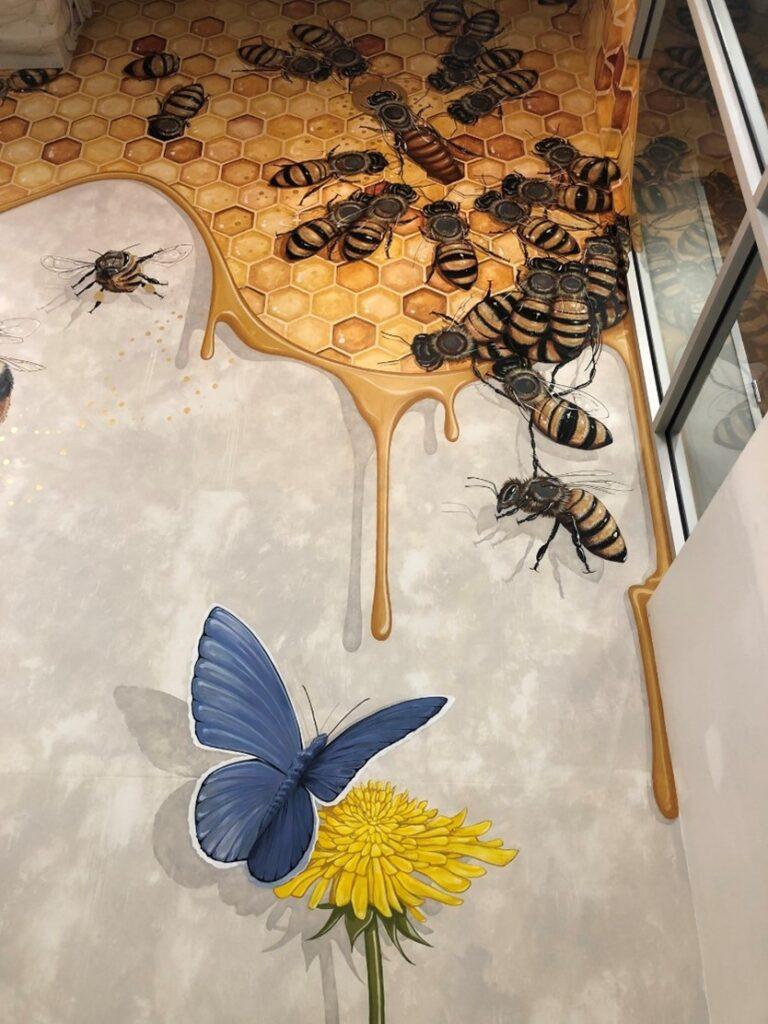
Matt started his art journey at the age of five. He was born and raised in Lexington, Massachusetts. His mother was a painter and since he was the youngest sibling, he became his mom’s helper. Since then, it never occurred to him to be anything but just that – a painter.
Matt Willey had a successful career as an artist – painting for interior designers, being an NBA sports muralist and a portrait painter. He’s lived in Manhattan, D.C., Asheville, and now upstate New York.
It was 2008, in his studio in New York City when he found his true calling. The inspiration was a bee that had landed on his rug.
“For whatever reason, I got down on the floor and hung out with this little bee and I connected with her,” Willey said. But the bee was dying. He said it crawled about two inches over a span of two hours before it died. His connection with the bee made him start researching to learn more about them.
It was then that he set off to share this message — that we as humans are a lot more connected than we think and could actually learn something if we behaved like the bees.
The dying bee in Matt Willey’s studio became the inspiration for his organization, “The Good of the Hive”. The organization is a movement to hand-paint 50,000 honeybees. He said this is the number necessary for a healthy, thriving hive.
He painted his first bee mural in LaBelle, Florida. Willey’s friend had sent him a picture of the side of a honey business he thought would make the perfect canvas.
So how did Matt Willey end up in Rifle, Colorado?
Well, it all began with and thanks to Lydia B. LaBelle de Rios — whose last name in relation to Willey’s first mural town (LaBelle, Florida) project did not go unnoticed. LaBelle de Rios works for the U.S. Forest Service but her idea for this project has nothing to do with her work. She refers to her role in this as an excited community member and has always liked bees. Read more about this here https://www.postindependent.com/news/towns-abuzz-international-artist-comes-to-rifle-to-paint-bee-mural.
The Rifle Library mural project has a few more weeks of work left before completion. Perma-Chink Systems is a very proud contributor to the project. When the president of Perma-Chink Systems, Rich Dunstan, first learned about it from a friend in Rifle he immediately set out to be a part of it. He thought the project would bring added beauty to an already beautiful community.
Rich contacted his Rifle branch manager, Samantha Herter, to ask her to support the project. Samantha jumped on the request and met with Alex Garcia-Bernal, who is the education and events manager with Garfield County Libraries. Also in the meeting was Amy Tonozzi, who is the Rifle library branch manager. Perma-Chink Systems voiced support for the project and backed this by presenting a check of $500 to contribute to the project.

Left to right – Alex Garcia-Bernal, Amy Tonozzi and Samantha Herter
Matt Willey will be available to talk with all of those who are interested during his time at the Rifle Branch Library. Updates on the project will be provided by the Glenwood Springs Post Independent and Rifle Citizen Telegram.
Update:
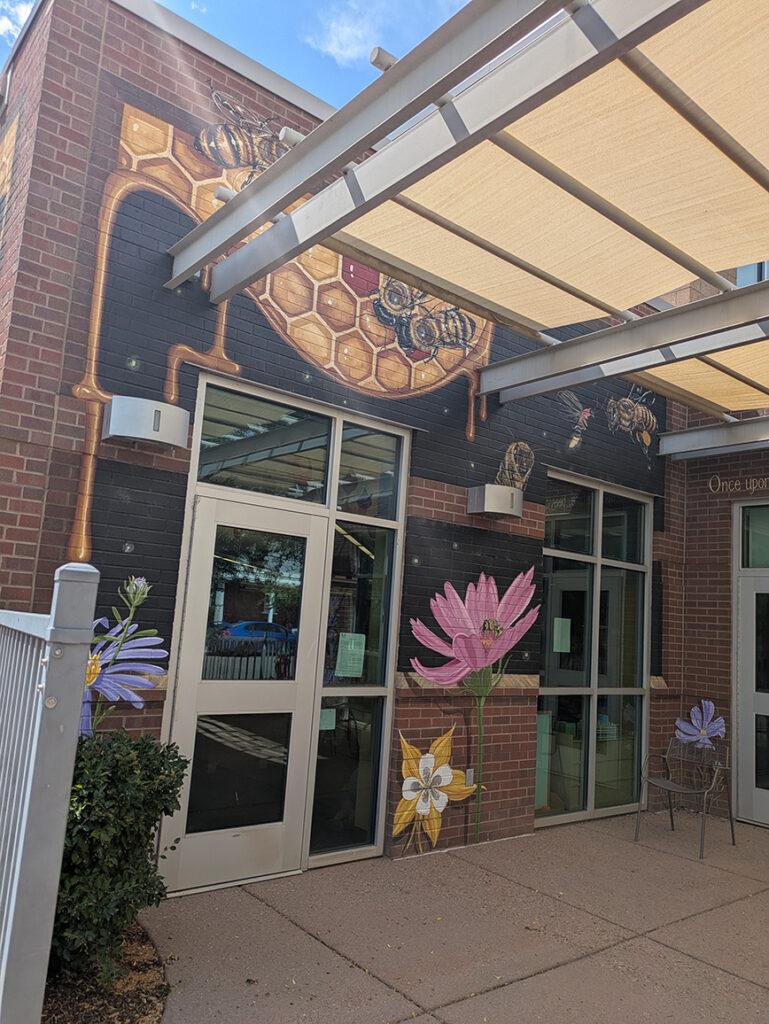
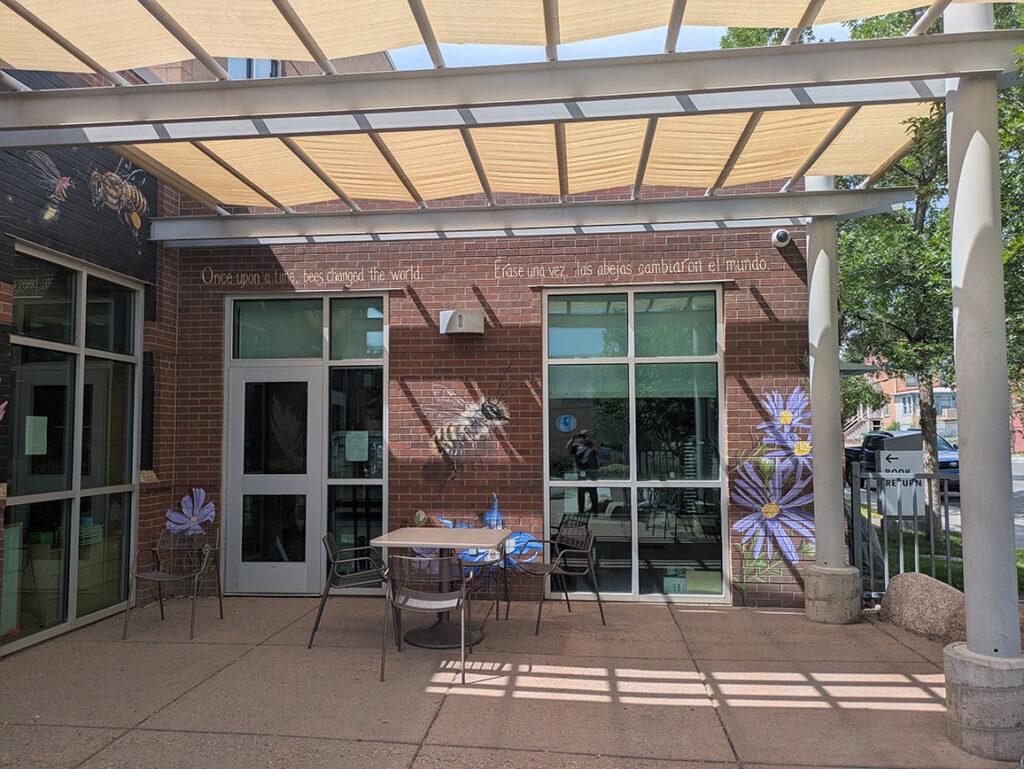
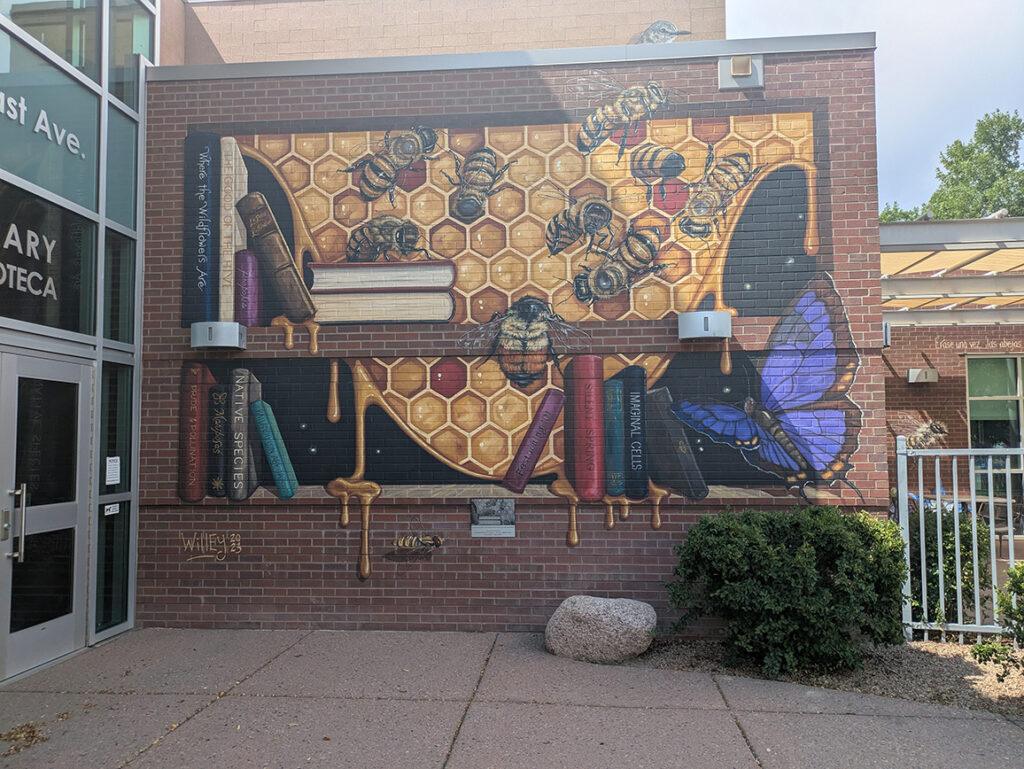
With the project completed, the bee mural really envelopes the Rifle, CO library, adding a little whimsy and imagination that libraries often contain. We’re elated that our small contribution is making a huge impact in drawing residents to the library. Here are some pictures of the completed artwork of the bees, those industrious pollinators that help make our world beautiful.
Looking For Stain and Sealant In One?
Perma-Chink Systems® has extended our log and timber home finish options for our customers with Log and Timber Defense™. Unlike our traditional Lifeline wood finishes, Log and Timber Defense penetrates wood much like an oil coating. Once Log and Timber Defense penetrates the wood surface, it forms a strong lattice network within the wood, reinforcing and strengthening the entire system from the inside out. This mechanism greatly reduces the chances of peeling and flaking by leaving the system breathable to water vapor. Many traditional oil-based finishes can also form a network, but are often so high in solids that they can easily blister and peel. Vapor pressure builds up behind the thick, unbreathable solid film and pushes the film away from the wood. This leads to an unfortunate situation requiring removal of the compromised coating down to bare wood.
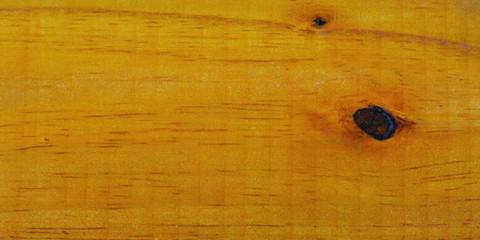
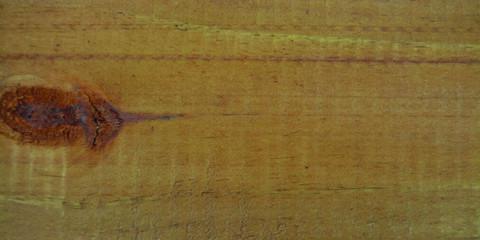
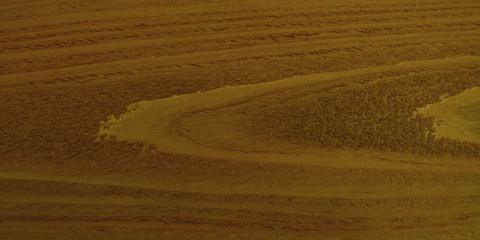
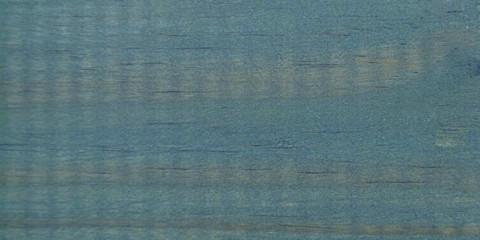
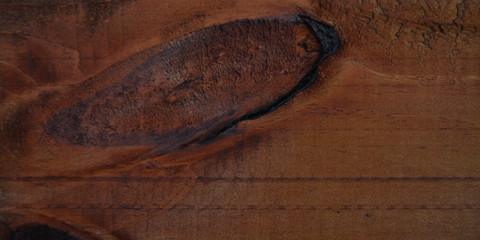

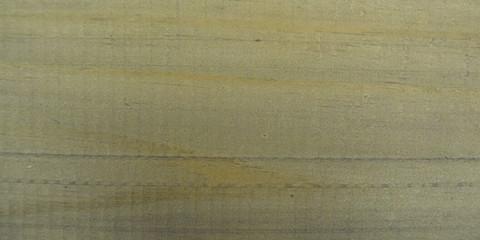
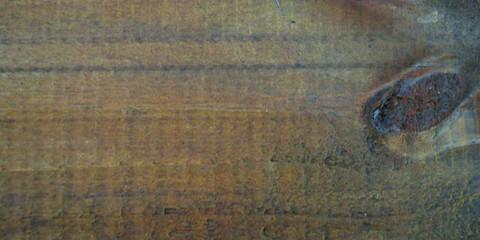
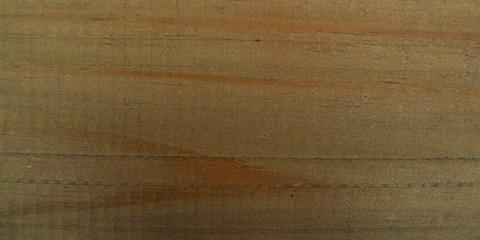
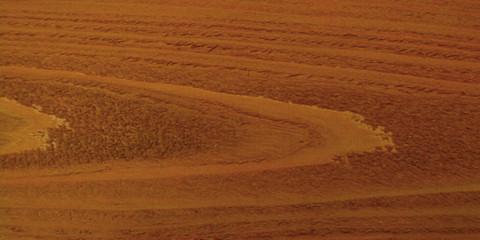
Log and Timber Defense is designed to be applied to bare wood in one or two coats. If it is applied to wood that already has an existing coating, this can prevent it from forming the lattice network inside the wood. We have had some customers ask: “Can I apply a topcoat such as Lifeline Advance™ to Log and Timber Defense?” We do not recommend application of a topcoat. The reason we do not recommend this is because when a maintenance coat of Log and Timber Defense is needed in the future, there will be difficulty with penetration into the wood because the topcoat forms a barrier to penetration. This could leave undesirable surface defects as well as an uneven appearance. Furthermore, it could lead to peeling and flaking of the film.
How Does Log and Timber Defense Look?
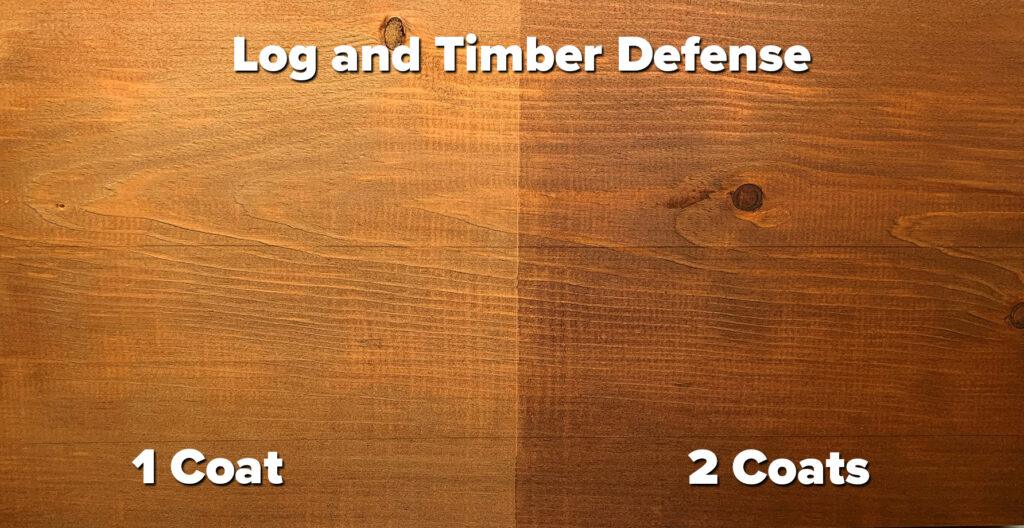
Texture is another property that distinguishes Log and Timber Defense from our Lifeline Stains. Due to its penetrating nature, Log and Timber Defense leaves the surface with a more natural, rustic beauty. It will appear much flatter in appearance. However, if a slightly different look is desired, a second coat of Log and Timber Defense may be applied, but the appearance will remain relatively flat. The second coat will increase color intensity and provide an increased level of overall protection for the system.

Difference Between Stain and Sealant vs. Film-Forming Finishes
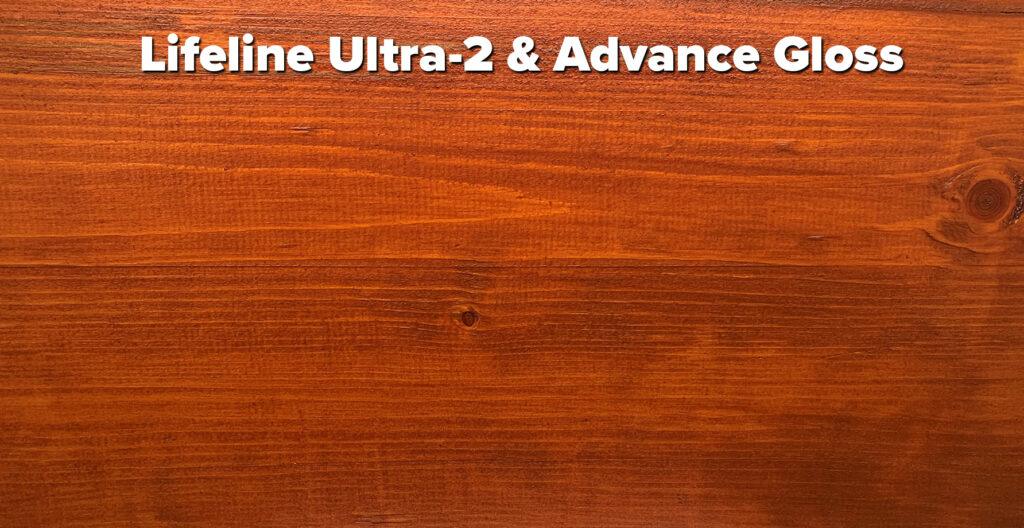
In contrast, our traditional Lifeline stains are actual breathable film-formers. This is to say they form a film directly on the surface of the wood, but do not penetrate deeply into the wood. When applied correctly our Lifeline stains are not likely to peel due superior breathability and excellent adhesion. They are, however, only slightly more likely than Log and Timber Defense to peel due to their film forming nature. In addition, our Lifeline Stains are designed to be applied over our existing topcoat with no problems with adhesion, color development or film defects. The film-forming stains will provide a much higher level of gloss development than Log and Timber Defense due to the films being primarily on the surface of the wood, with the added benefit of being able to apply Advance gloss topcoat to finish the system.
Which One Should I Choose?
It can be difficult to choose between our finish options. Rest assured, all our options are high quality and engineered to last. Both Lifeline Stains and Log and Timber Defense are formulated with ingredients that inhibit the growth of mold and mildew. Log and Timber Defense is both a stain and sealant in one package. It helps to keep liquid water out, which reduces biological growth that can attack and destroy your wood. In contrast, traditional natural oils such as Linseed Oil can easily promote growth of mold and mildew. Finally, both Log & Timber Defense and Lifeline Stains are both waterborne, low in odor, have easy soap and water cleanup, and are non-flammable. Each of our stains and finishes offer unique properties designed to give your home the very best protection possible.
For more information about our finishes, please visit PermaChink.com and click Wood Finishes.
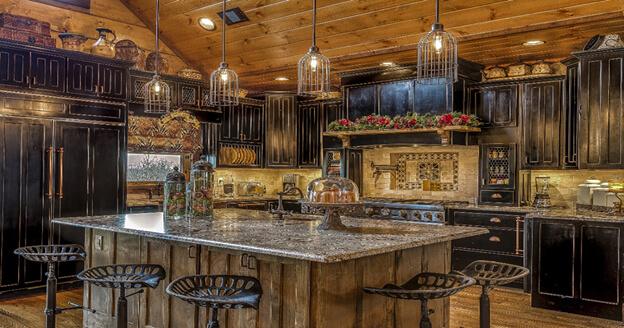
Colors have the ability to evoke emotions and change our attitudes. They can inspire and motivate us to try something new and bold. They can alter our moods and appetites; even make a room feel small and cramped, or large and spacious.
If you plan to redecorate a few rooms this year, the right color choices can make all the difference in the feeling you’re trying to achieve. Better yet, it’s one of the simplest and most affordable decor changes you can make. Not sure which colors to choose? Here is one of the best color palette for home interiors, according to the Pantone Color Institute:
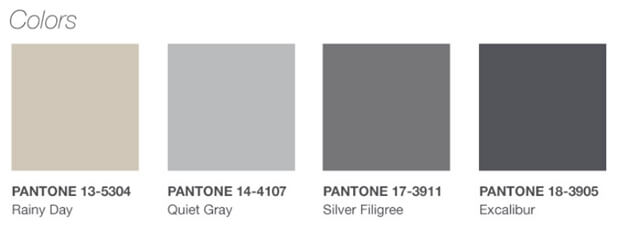
In Praise of Gray
Current trends have featured grays for a few years and we see grays as a key color for paint, home textiles, and interiors. And second only to blue as the most popular color for menswear. Above all, grays serve as the perfect neutral base to work with all other colors.
Often described as a color of scarce emotion, Gray is actually full of meaningful nuances. It is an eclectic but objective color from its coldest hues close to white to its deepest charcoal tones close to black. Gray is like a canvas, which allows you to paint to your heart’s content. It is also the non-perceptible color of nature suggestive of misty fogs, extreme landscapes, and unreachable horizons.
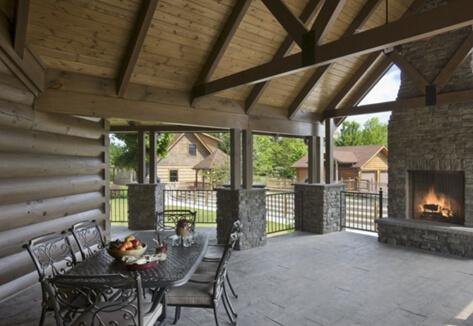
Do you love the idea of gray but worry about the coldness of most gray colors? Try out our new Lifeline Ultra-7 in Eucalyptus or Rustic Gray colors, they are absolutely stylish! Get free exterior wood finish samples here.
If you love your browns more than grays, but still want a hint of that rustic look, try these trendiest new colors in our Lifeline Interior stain collection.
From colors to textures, we’ve got the scoop on which color trends are going strong and we would like you to know about them. We design eye-catching colors in many diverse tones that have the power to transform the entire ambience of your exteriors and interiors.
If you’d like some guidance for a more substantial home restoration, or you’re interested in trying a new color this year, please reach out today 1-800-548-3554. Just pick your colors and order FREE samples to try it on your wood. Custom colors are available upon request.
It’s time to evoke emotions!
Decks are Outdoor Entertaining Spaces – And Should Look It
Indoor spaces can feel overbearing and confining when hosting a small (or large) gathering of friends and family. Spending time outside creates a welcoming atmosphere, encourages more interactive conversations (think games like cornhole or horseshoes), and fosters relaxation and a deeper connection with nature.
The foundation of a great outdoor experience is right under your feet — your deck. Its condition can enhance or detract from the event, so maintaining it is key to creating exceptional memories.
Deck Surface Issues and Problems
If left unprotected or unmaintained, a deteriorating finish allows water and other contaminants to seep into the wood, leading to decay and damage. Over time, the wood weathers, ages, and cracks, allowing even more moisture to penetrate. Keeping a protective finish on your decking helps preserve the wood, limits mold, mildew, and decay, and keeps it looking fantastic.
Deck Defense to the Rescue
Deck Defense is our leading finish for decks, handrails, and fences. Its unique composition bonds with the wood, providing a tough, durable encapsulation. Not only is Deck Defense an exemplary finish for exposed wood surfaces, but its seven standard colors — plus custom color options — also allow homeowners to match their deck to their home’s aesthetic.
Take a Gander at a Recent Deck Project
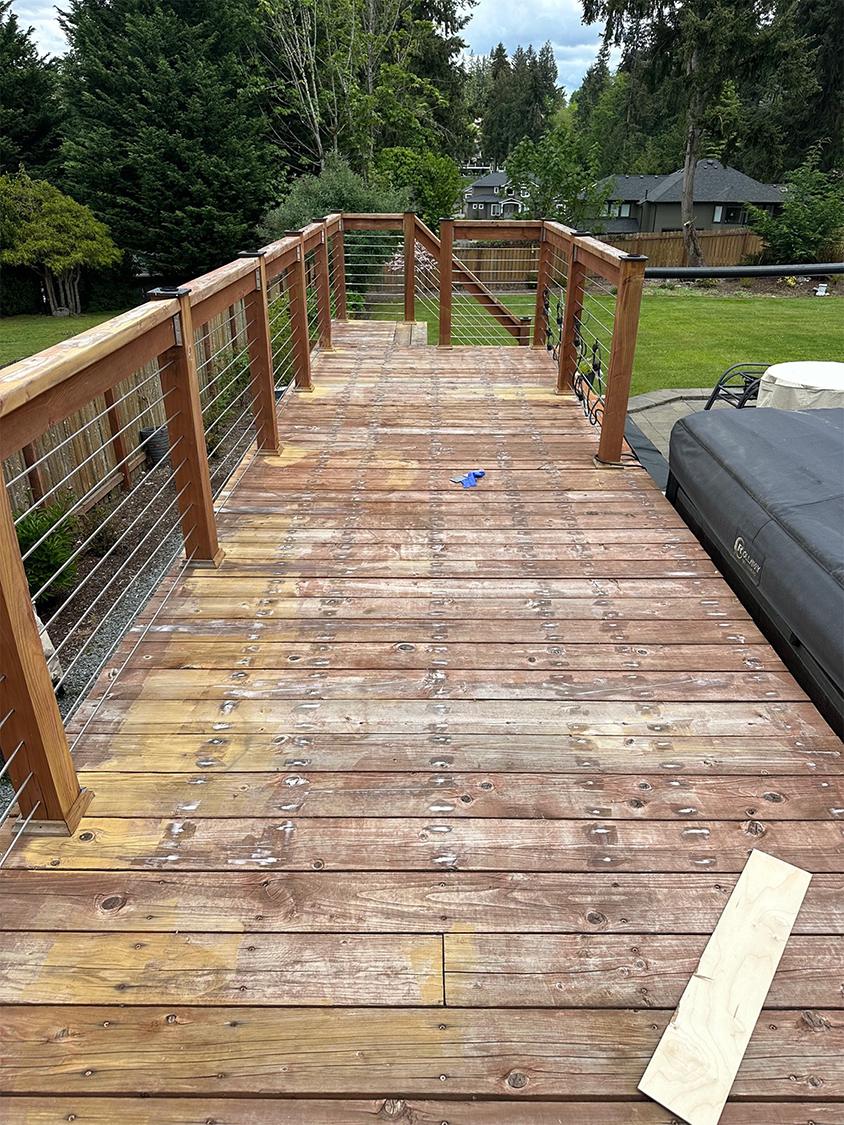
Curious how good a deck can look after an application of Deck Defense? A Washington State contractor, RadRai Development, recently submitted a project using Deck Defense in Weathered Gray. We think the pictures speak for themselves. The first images show the deck’s condition before the application – and the transformation is striking.
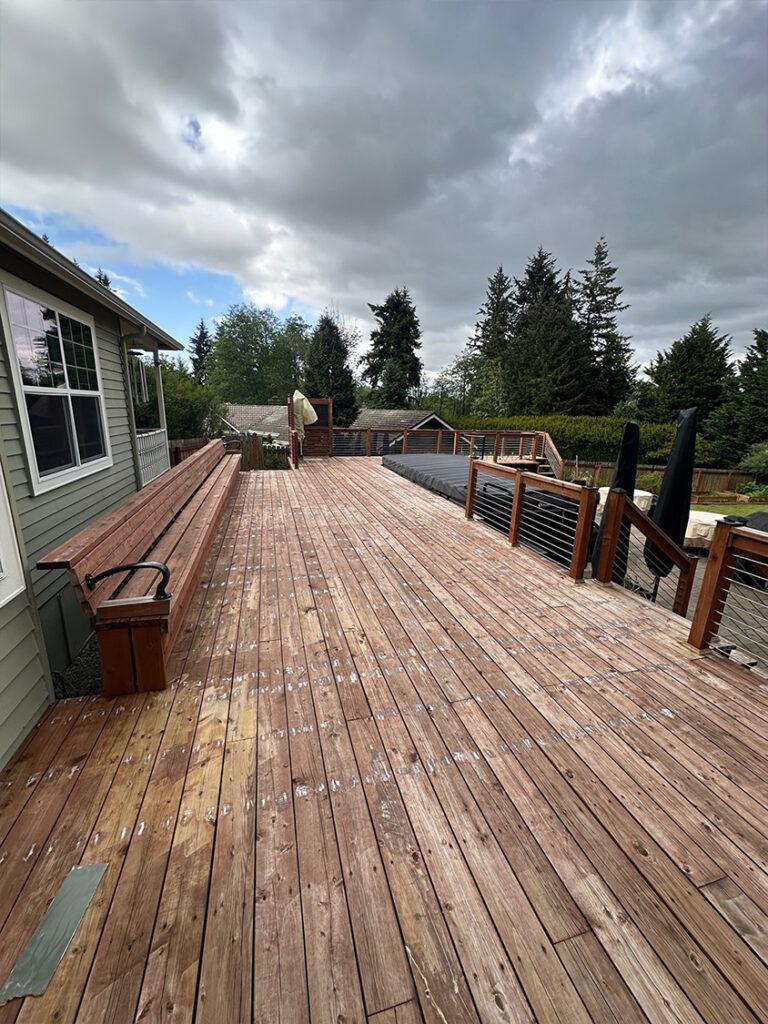
And now the “After” shots of the deck with Deck Defense:
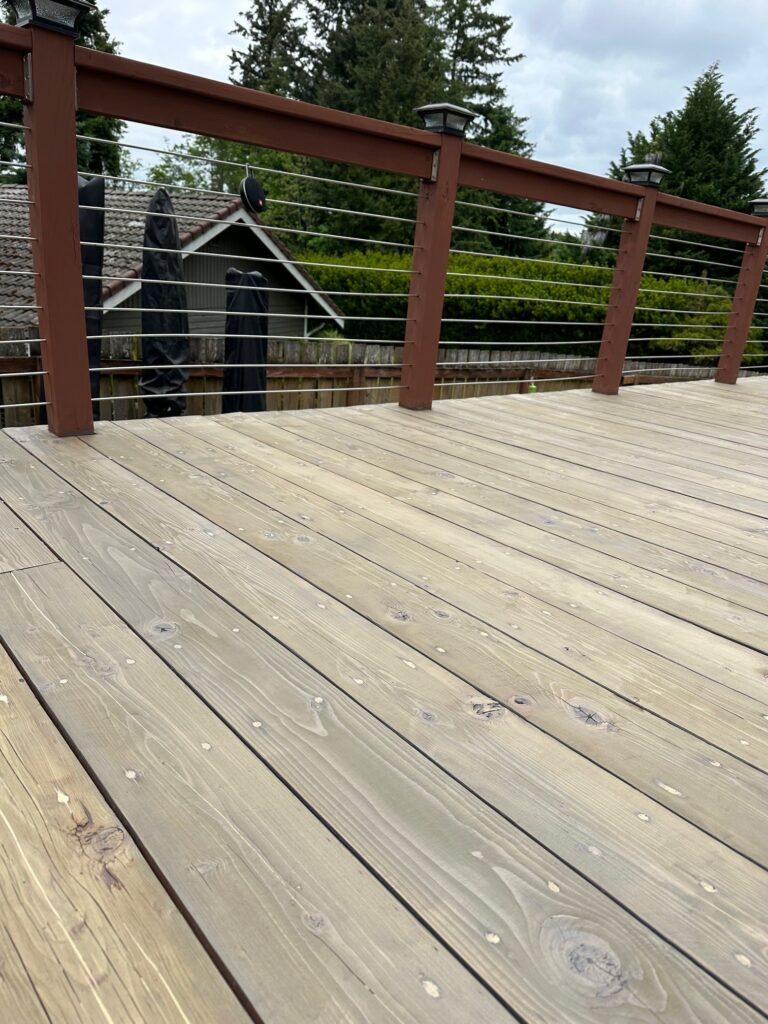
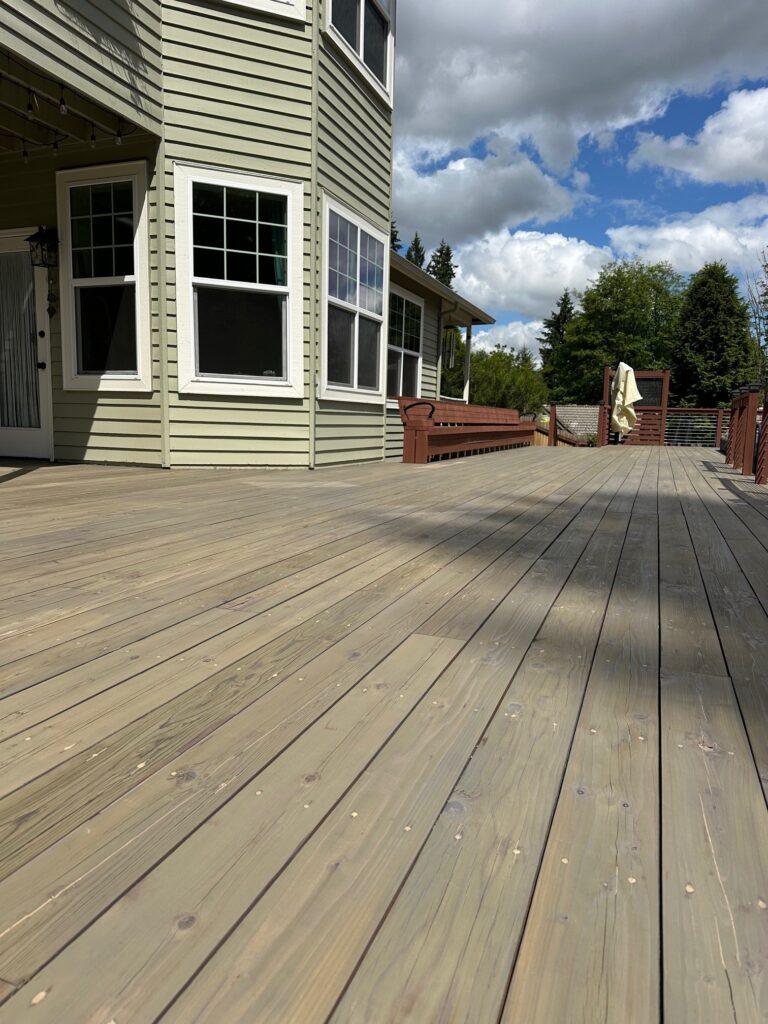
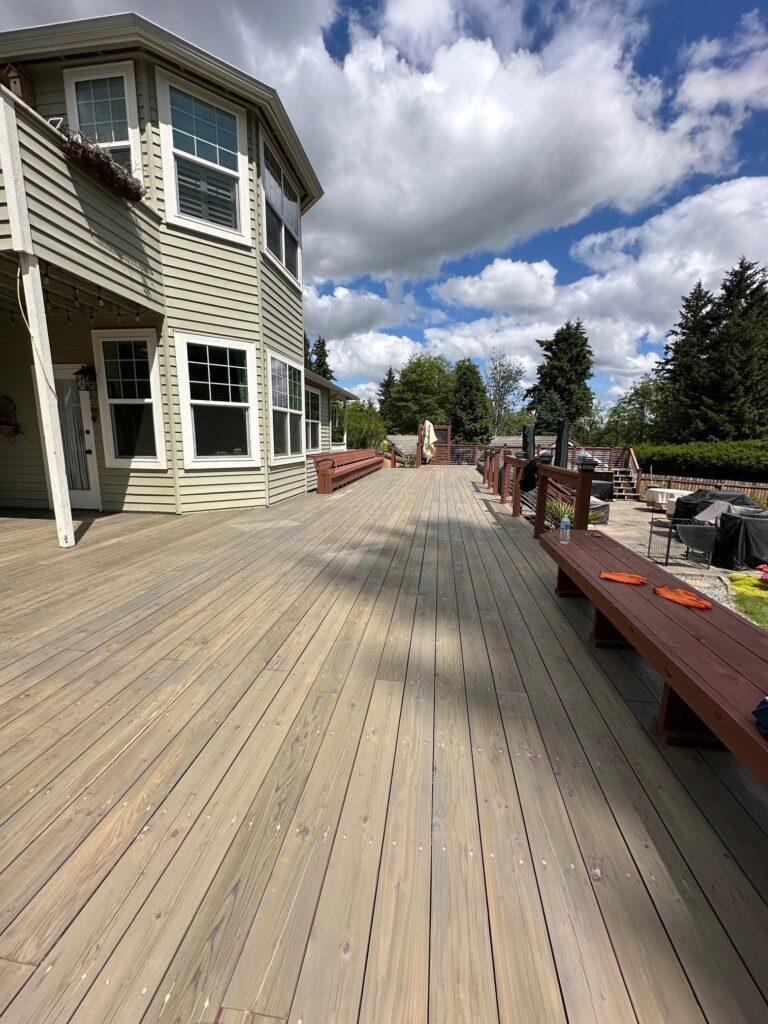
Enjoy Your Outdoor Living Spaces, Starting with Deck Defense on Decks
Deck Defense is available now – order from our Online Store, call us at 1-800-548-3554, or come down to one of our seven PCS stores.
Project pictures courtesy of RadRai Development (Rad Raichynets 425-906-9559) of Western Washington

Log Home Industry Resources
Scroll down to view links to Log Home Manufacturers, Log Siding Suppliers, Log Home Consultants, Log Home Shows and Magazines.
Log Home Manufacturers





















Log Siding
 Pioneer Log Siding |  Wholesale Logs of America |
 Trull Forest Products |  Trull Forest Products |
 Cockburn Island Forest Products |
Log Home Consultants

Randy Fudge Log Home Industry Consultant
Timber Log Design, LLC
www.timberlogdesign.com
Log Building Schools
Log Home Shows
Johnson’s Log & Timber Frame Show
Log Home Magazines
Remember that the key to maintaining a beautiful exterior and a structurally sound energy-efficient log home depends on controlling UV-light exposure and preventing excessive moisture absorbtion. Proper attention to maintenance during your first three to five years in your log home will reduce maintenance for many years beyond.
Dealing with Seasonal Checks
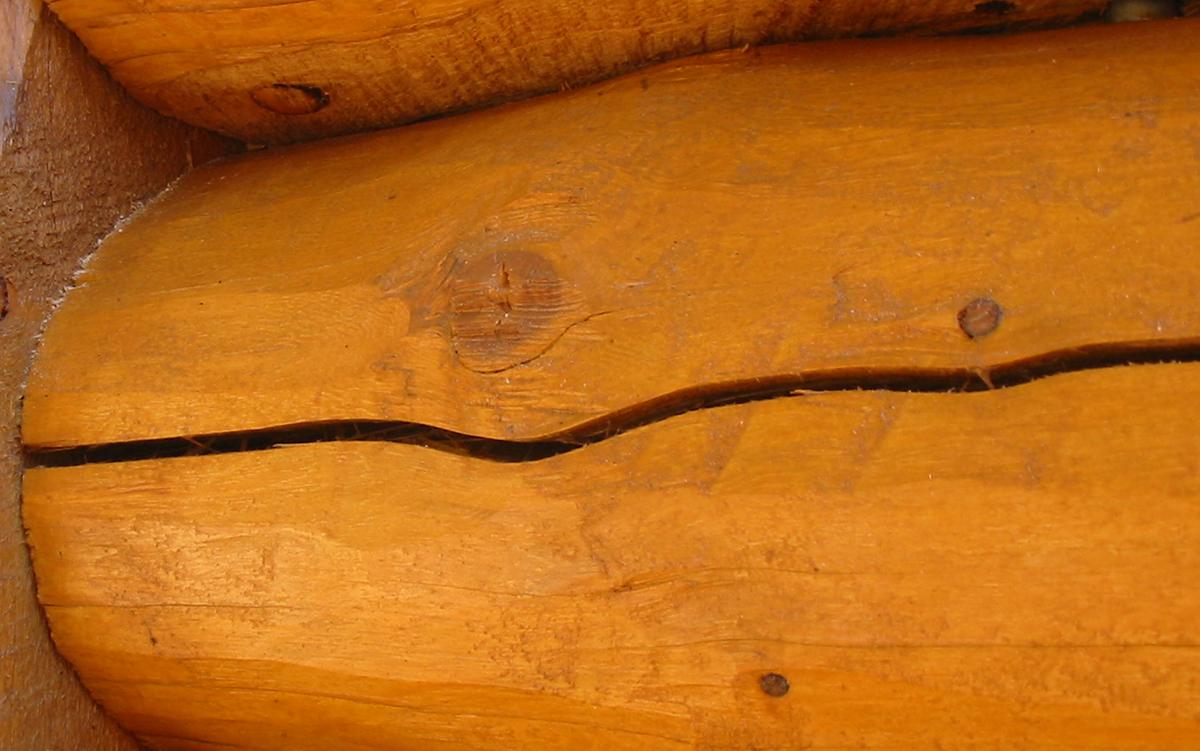
The seasonal checks (the small cracks that develop in wood) that catch water on the exterior should be filled to prevent any further water entry with Check Mate 2 or Energy Seal sealant. Check Mate 2 is the preferred product for sealing checks, as it is highly elastic and adheres exceptionally to wood, allowing for an excellent seal as checks change sizes. You can learn how to seal checks in our Tech Tip here.
What to Look for with Checks and Why
With winter being almost over and spring just around the corner, it’s time to get out of the house and see what the ravages of winter have bestowed on your home and do a little spring cleaning. Depending where you live, winter can be a very unfriendly companion for your home. For instance, if your home is located in areas prone to large amounts of snowfall, the snow can lay against the logs on your home for weeks. Or worse, windblown snow can work its way into unsealed checks, slowly soaking into the wood. As the snow begins to melt during the day and re-freeze at night, the melted snow causes water to run into the seasonal checks and small areas that rainfall normally doesn’t get into. The moisture inside the check can work its way into the wood substrate beneath the finish and make the wood very wet.
Once the freezing process starts again, the trapped water will expand as it freezes beneath the finish and can, in some instances “pop” the finish off at the edges of the check. The wood then is unprotected and can start to suffer damage from ultraviolet light and repeated moisture.
It’s Not Just the Exterior
Seasonal checks that face upward and allow water to enter can not only lead to exterior finish problems, but they can also serve as a channel for the water to work its way to the interior of the home. Water carried into the interior not only brings in unwanted moisture, but it also brings along with it tannin stains or “water stains,” visible and unsightly on interior walls.
These stains can be very difficult to remove, especially if the interior of the home is finished with a stain or sealer. Water stains on unfinished wood can normally be removed with a light scrubbing with Oxalic acid mixed with a mild non-ammonia type cleaner. If the wood is covered with a stain or sealer, it may be necessary to remove the finish, clean and re-finish the affected area.
Repairing Damage to the Stain or Topcoat
If the edges of the check are unprotected, they should be cleaned, lightly sanded and touched up with the stain and topcoat to restore the protection.