Have you ever wished that you could live in a log home but you’re stuck living in conventional housing? If so, join the growing number of people tackling home improvement projects to create a space that has the “feel” of log home living within the limitations of your current home.
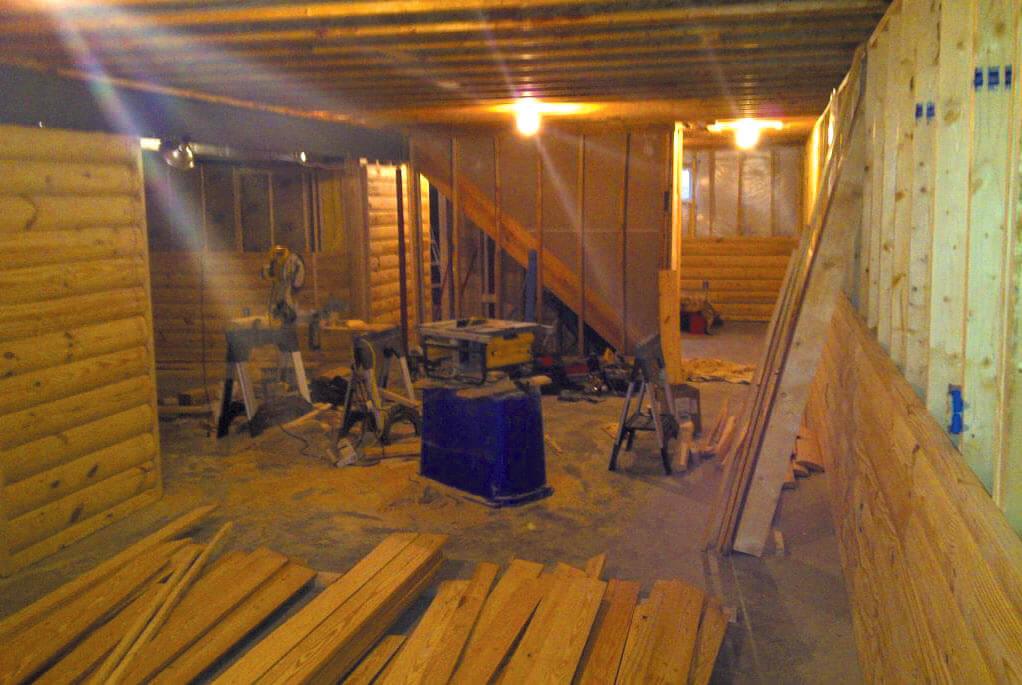
Our project was to convert a roughly 30’x50′ unfinished basement in a contemporary suburban neighborhood into a space that would capture the tranquility of a northwoods lodge. Many of the design and construction techniques we used could just as easily be applied to any interior room, log home basement, or other living space. And best of all, most of the skills required are within the reach of the average handyman, so you can add significant value to your home with only a modest financial investment.
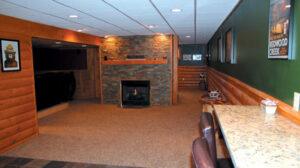
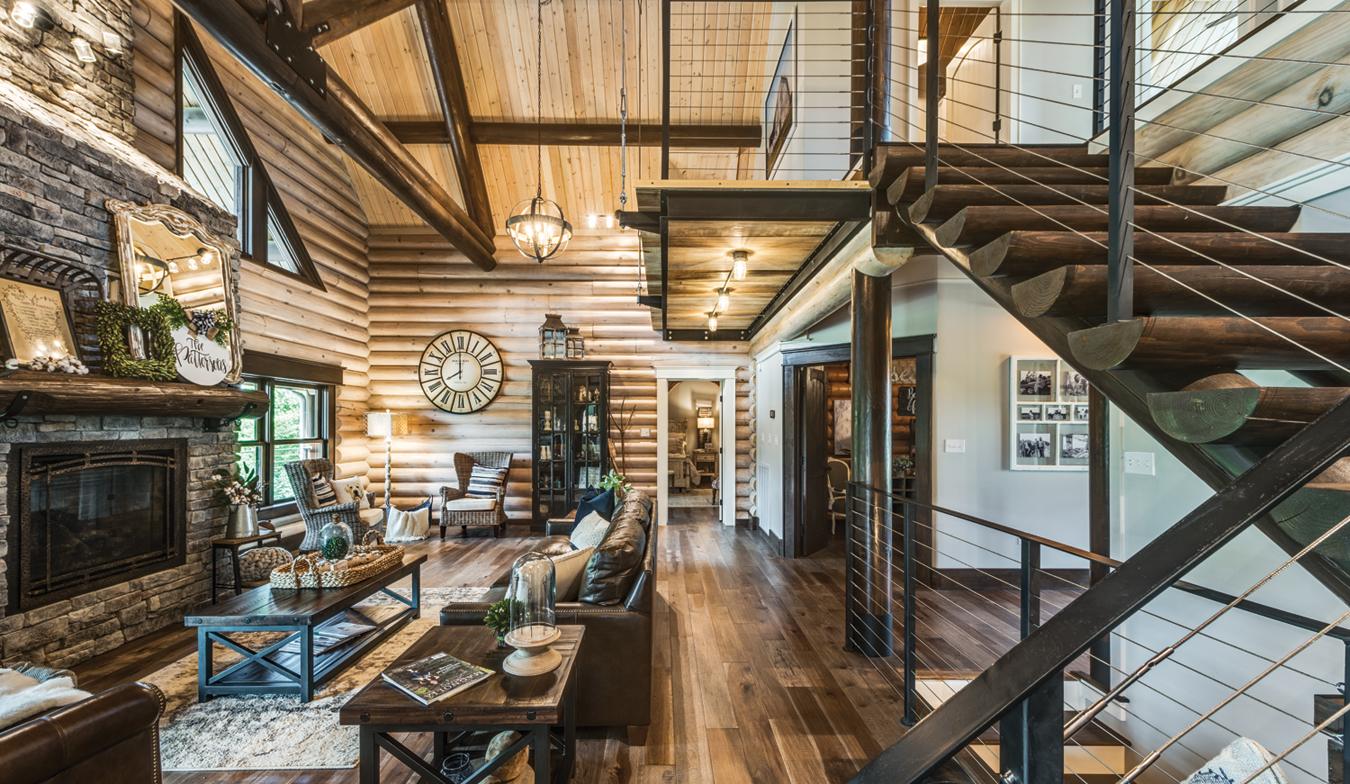
This space needed to harmonize with a contemporary home, so we used a mixture of log siding and drywall in the design.
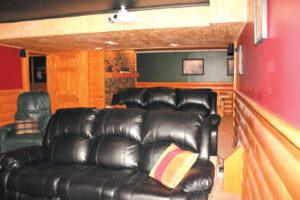
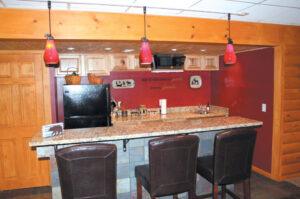
We included a central fireplace as a gathering point for visitors, kitchen/bar area for entertaining, home theater, game room, guest bathroom and storage areas. To maintain the theme, we used natural materials wherever possible. We sketched out the space and made note of existing features (like the stairs, duct work, support beams and posts) so we could accommodate them in our design.
We’ve seen basement conversions that didn’t address the storage issue and that is a mistake so we framed in the corner that housed the furnace and other utilities to create a generous storage room.
Visitors are impressed with the functionality and attractiveness of the previously unused space. The extensive use of standard construction techniques allow for homeowner participation in the building process, and the use of log siding and natural materials provide for a dramatic effect. When it came to selecting the sealant and finish materials, we chose the same supplier that we have used to professionally finish hundreds of homes: Perma-Chink Systems.
It’s always fun to admire beautiful designs in log home publications, but with some creativity you, too, can enjoy the feeling of a log home wherever you live.
About the Author
Wayne Bell is a log home refinishing, repair and restoration contractor, serving the Midwest and southern United States from his base in Ohio. If you have questions about the materials or processes used in this project, you can contact him at 937-657-4565 or at www.LogHomeCareOnline.com.
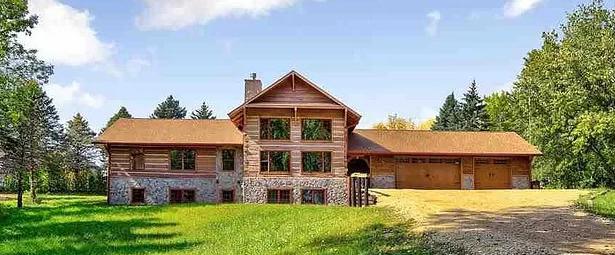
My grandfather, Sophus Johnson, once gave me $2,500 to finish college in 1975. Instead of tuition, I asked if I could use it to buy land and build a house out of an old barn. He laughed, said yes, and made me promise I’d finish college after the house was done — which I did.
Forty-eight years later, I’m rebuilding his log home on the very same land he helped me buy. That’s why we call it Sophus’ House.
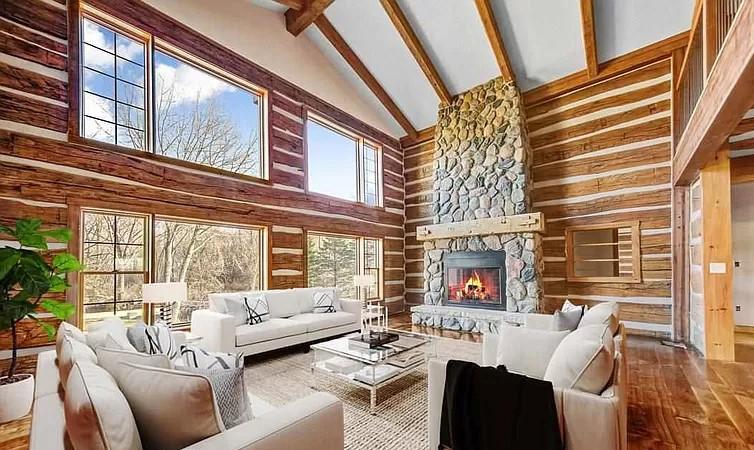
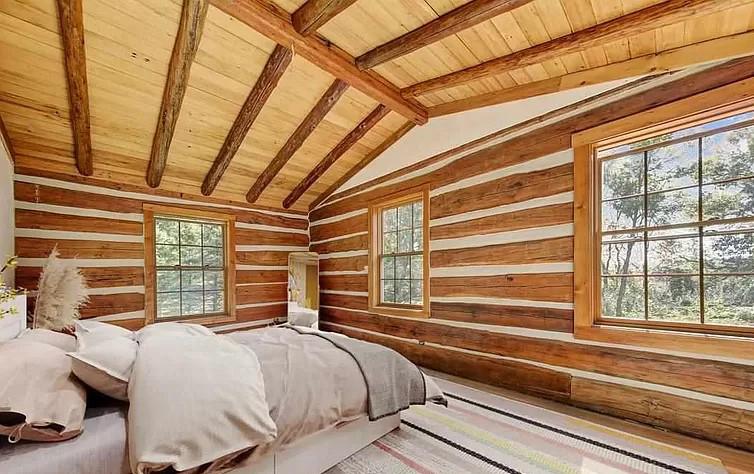
Reusing and reclaiming materials has been my way of life ever since I built that first home in 1976. So it’s no surprise to anyone who knows me that my current project combines my grandparents’ 135-year-old log cabin from Denmark, Wisconsin with a historic log barn from Montgomery, Minnesota.
The real push to start came when the producer of Restoration Road called asking if we had any unique projects for 2022. After hearing my idea, they loved it — until they realized filming meant sending a crew to Minnesota in January to watch me dismantle a log barn. Even after I offered to buy them snowmobile suits, they passed!
They were right about the schedule being ambitious, but just before my 70th birthday, it felt like a sign: It’s now or never. I had told so many people about the opportunity that I knew I had to move forward, with or without TV cameras.
And so the build began — using reclaimed materials from all over Minnesota.
Floor framing from a barn in Sanborn and an old bar in Eveleth
Second-floor beams from a bank in Albert Lea and logs from Good Thunder
Insulation and stair timbers salvaged from Fergus Falls
Basement studs milled from beams taken from a demolished motel in Gilbert
Soffit, fascia, and trim from a barn near the Mankato airport
Garage siding from a barn in Mapleton
And flooring made from black walnut trees we harvested in Mankato three years ago
All restoration, repairs, chinking, and finishes were completed using Perma-Chink Systems products.
This home is more than a building — it’s a living scrapbook of places, memories, and people who shaped my life. And most importantly, it all started with my grandfather’s gift.
The exceptional quality of Perma-Chink Systems’ log and timber home wood care products has always been vibrant, and Lifeline Accents line takes that philosophy quite literally. Lifeline Accents, the extensive interior/exterior stain product line, boasts a variety of features that everyone from professional applicators to the do-it-yourselfer find irresistible, and the most obvious is color.
Bold hues such as jade, garnet and midnight catch the eye, while more traditional tones, such as sand, umber and charcoal, round out the 18-color palette. Each vibrant color is designed to allow the wood’s grain to emerge, so the color complements the wood, rather than covering it.
And unlike many other tinted stains, the color endures, meaning fewer touchups over time. Our Lifeline Accents high-performance semi-transparent stains are designed utilizing our proprietary technology to highlight and protect both interior and exterior surfaces.
Creates a wonderful accent for your wood trim, interior and exterior walls, millwork, timber, furniture and other elements of your home.
The combination of exciting colors and ease of application will expand choices and add value for both homeowners and applicators. As a leader and innovator in wood-finishing products, Perma-Chink Systems offers a complete line of specialized sealers, stains, finishes, preservatives and cleaners made for the unique needs of log, timber and wood-trimmed homes. Order your free samples here.
If you’d like some guidance for a more substantial home restoration, or you’re interested in trying a new color this year, please reach out today 1-800-548-3554. Just pick your colors and order FREE samples to try it on your wood. Custom colors are available upon request.
Lower Your Energy Consumption and Prepare Your Home for Winter
From the Experts at Perma-Chink Systems
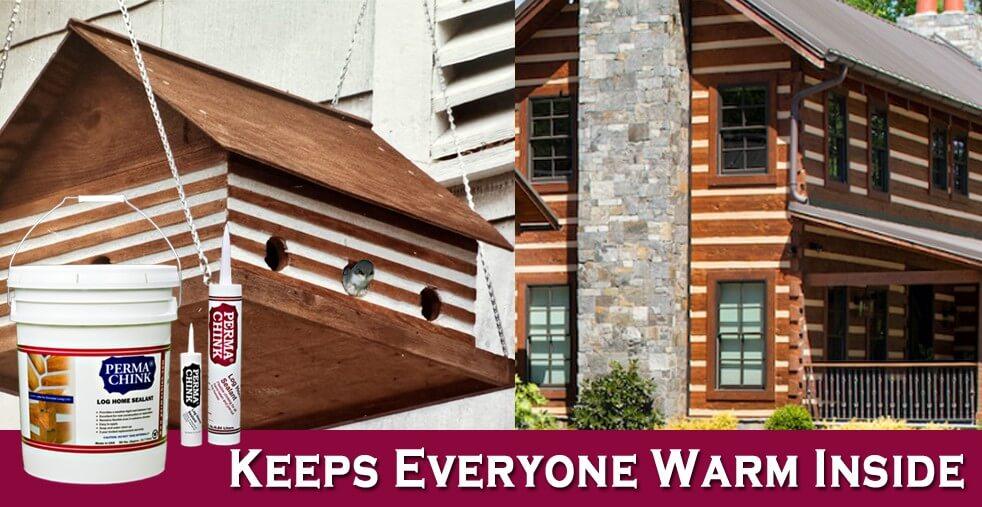
As winter approaches, one of the most important tasks for maintaining your log home is ensuring it’s properly sealed. With the cold months ahead, taking the time to address any gaps and cracks will help prevent cold drafts and keep your home cozy and energy-efficient.
In today’s world of rising fuel costs and growing environmental concerns, keeping cold air out and warmth in has never been more important. A well-sealed home reduces your energy consumption, helping you save money while also minimizing your environmental impact.
At Perma-Chink Systems, we specialize in products designed specifically to help you seal your log home effectively. Although we’re widely known for our premium stain products, our reputation was first built on our high-quality chinking and sealants. So, what exactly do we mean by “sealants”?
In the context of log homes, sealants are materials used to fill gaps, cracks, seams, joints, and any other spaces where air, water, or pests might enter. While many people refer to these materials as “caulk,” we call them “sealants” to emphasize the superior quality of our products compared to typical caulks you’ll find at your local hardware store.
What makes Perma-Chink sealants different?
Our products are specifically designed for log homes, offering superior performance in sealing, and insulating. Unlike basic caulk, many of our sealants remain flexible after curing, providing long-lasting protection without cracking or peeling. They come in a variety of formulations, each tailored to meet different needs—from maintaining flexibility to achieving a hard, durable seal.
Sealants are typically plastic-like compounds that come in tubes or pails, and once applied, they cure to form a strong bond with the surrounding material. This process helps prevent drafts and moisture infiltration, ensuring that your home stays warm and dry throughout the winter months.
If you’re ready to lower your energy costs and get your home winter-ready, Perma-Chink Systems offers the ideal sealants to help you achieve the best possible results. Let us help you seal in comfort and save energy this winter! Call us at 1-800-548-3554 or visit us at Store.PermaChink.com.
How should I go about making sure that I get started right when it comes to maintenance? How critical is it to begin proper maintenance when the home is new?
Research
Do your research in finding the right system. We provide a robust library of Tech Tips that provides information you need to take care of your log and timber home. New homes should not have issues, and we recommend homeowners perform inspections of their home to find any small issues and fix those now, before they become big issues.
The Right System
Chose a system of fully compatible log or timber frame home products to protect your home, such as Perma-Chink Systems. When doing your research ask for samples. This allows you to choose the best color combination you prefer. Our products cover all stages of log home finishing from insect and mold prevention to wood cleaners to sealants to finishes. Our “whole-home” approach results in all our products working together in preserving your log home.
The Right Amount
You’ll also need to know how many linear feet will you get out of a pail of the sealant or chinking that you use to order the proper amount. Do you know the square footage of your log home exterior? You’ll need to know that when ordering finish and topcoats. How many square feet of coverage will you get from a gallon of finish? Sometimes the more moderate or even higher priced products are a better value because they go further than the cheaper ones. This is worth considering, as labor rates keep increasing.
Proper Project Prep
Prep is always the number one thing when sealing or staining. Clean logs, proper log texture (not overly smooth), and compatible weather – avoid extremes and rainy weather.
Hiring a Contractor
If you hire a contractor, make sure that they have a solid background, check their references, make sure they are current with their insurance company, and get quotes from more than one contractor. Perma-Chink Systems has a list of Preferred Applicators that know best how to care for your log home. And pro tip – book contractors well in advance, many Preferred Applicators book months in advance.
Proper surface preparation is a must and is the key to a successful job. Wood has a chemistry, all of it’s own. First of all, it is close to neutral in pH, much the same as drinking water. Any chemical you apply is likely to change the basic chemistry of the wood and may affect the performance of your finish. That means once you have prepared the wood and before applying the finish, you should try to return the wood to a neutral pH.
LOW PH WOOD CLEANER
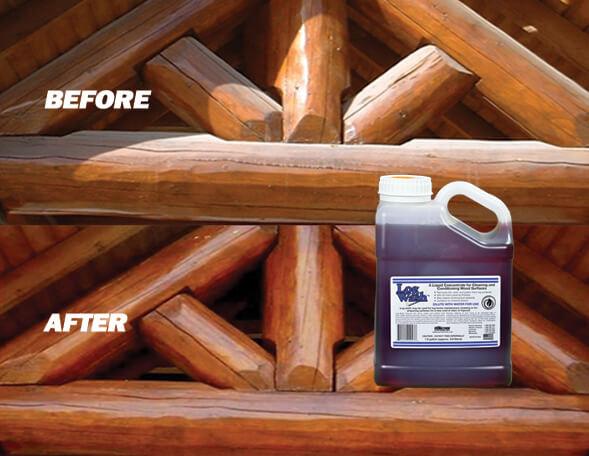
Log Wash is a liquid concentrate for cleaning log and wood surfaces. It can be used as maintenance cleaner or to prepare the surface of wood for a new coat of stain or topcoat. Log Wash removes dirt, grime, pollen, and surface stains without harming the wood or the finish. As opposed to bleach solutions, Log Wash does not upset the natural pH balance of the wood, thus preventing wood fiber damage and iron tannate stains. (To treat gray, UV-exposed wood see below Wood Renew).
One gallon of Log Wash when diluted with water will clean 3000 sq.ft. for maintenance cleaning.
For redwoods and cedar, we recommend Cedar Wash. It is a ready-to-use cleaner specifically formulated for preparing the bare wood surface of wood species that contain high levels of wood extractives and resin oils.
For New Construction Projects
Let’s start with brand new wood right out of the mill. As the logs are planed, the process creates surface heat and pressure. This heat can cause the starches and sugars to form mill glaze on the surface of the logs. Mill glaze is very smooth and can inhibit adhesion and penetration of finishes. Most finish manufacturers recommend removing mill glaze prior to application. The best way to remove mill glaze from exterior wood surfaces is by using Wood ReNew, a percarbonate cleaner, and pressure washing. One old standby procedure was to wash the home down with household bleach. This is a No-No. Bleach is caustic and it will destroy lignin in the wood. Lignin is what holds the wood fibers together. You will end up with “fuzzy” logs, as the lignin is destroyed and the fibers break loose from each other.
You are probably wondering why this neutral balance is so important. Wood is a very interesting object and usually is very forgiving. But whenever the pH balance of wood is altered, the chances of developing iron tannate stains increases. While these stains do not damage the wood, they are unsightly and are very often misdiagnosed as mold or mildew under the finish. If tannin stains develop, they are easily removed with treatment of oxalic acid solution, like Oxcon, a brightener. Oxalic acid is a mild acid, but must be treated with caution and properly rinsed off to bring the chemical balance of the wood back to neutral.
Some wood has characteristic of stains such as bluestain or sapstain that come along with the wood. They are natural occurrence and can’t be removed. Some people try to remove it by spot sanding. While this may lighten the color somewhat, it is best to leave it alone. Spot sanding creates a different surface textures that result in different color acceptance of sanded areas making the finish uneven. If you must sand, try to send the entire wall. Another solution for staining wood with uneven texture is to use a clear primer such as Prelude.
For Restoration Projects
There are two ways to remove old finishes from the logs, Wet and Dry.
Wet Method – Removing Old Finishes
We offer two types of environmentally-friendly wood finish removers that specifically designed for log homes: S-100 and StripIt. Both products are water-based solvents that remove most oil, water-based stains and topcoats. They contain no-harsh chemicals, are bio-degradable and non-flammable, and unlike caustic strippers will not discolor the wood. As opposed to media blasting, chemical stripping is much more user-friendly since all it takes is a general purpose pressure washer.
The latest and greatest dry method around is blasting that aging, discolored finish off with new age glass media. Glass media is lighter than sand so while it strikes your home with necessary force, it has less weight – this allows it to remove the stain without harming the wood so much. There is also no risk of blowing water into your house, and because the media is dry, you can re-stain immediately. Of course, you can hire someone to do it for you. If you prefer, call us and we find you a contractor near you, or visit https://www.permachink.com/contractors/ for a list of contractors in your area.
For Maintenance Cleaning
The exterior of a log home is a settling ground for dust, pollen and other airborne contaminants that dull the surface and encourage mold growth. A light cleaning once or twice a year with Log Wash will keep a home looking beautiful and helps prolong the life of the exterior wood finish.
Read the product labels, follow the directions, be well informed before you start the surface preparation process, and the results will be rewarding. And remember, rinse, rinse and then rinse again! You should apply log finish as soon as the home has adequately dried.
Perma-Chink Systems: Advancing the Future of Exterior Wood Finishes
Perma-Chink Systems has been a leader in waterborne exterior finishes for decades. As federal and state environmental regulations increasingly restrict the use of oil-based products, the performance of traditional oil-based stains has declined. While these changes are a win for the environment, they’ve created challenges for manufacturers and homeowners alike.
Fortunately, waterborne transparent stains have evolved dramatically improving in both durability and appearance. At Perma-Chink Systems, we’ve spent years developing finishes that are not only environmentally responsible but also easy to maintain, long-lasting, and designed to enhance the natural beauty of wood.
Our Lifeline Ultra-2 and Ultra-7 stains, combined with our Lifeline Advance clear topcoat, represent a major leap forward in the performance of exterior transparent finishes—outperforming both waterborne and oil-based alternatives. These finishes deliver the signature beauty you expect from Lifeline, are simple to apply and clean up, and offer the highest level of durability we’ve ever seen in our testing.
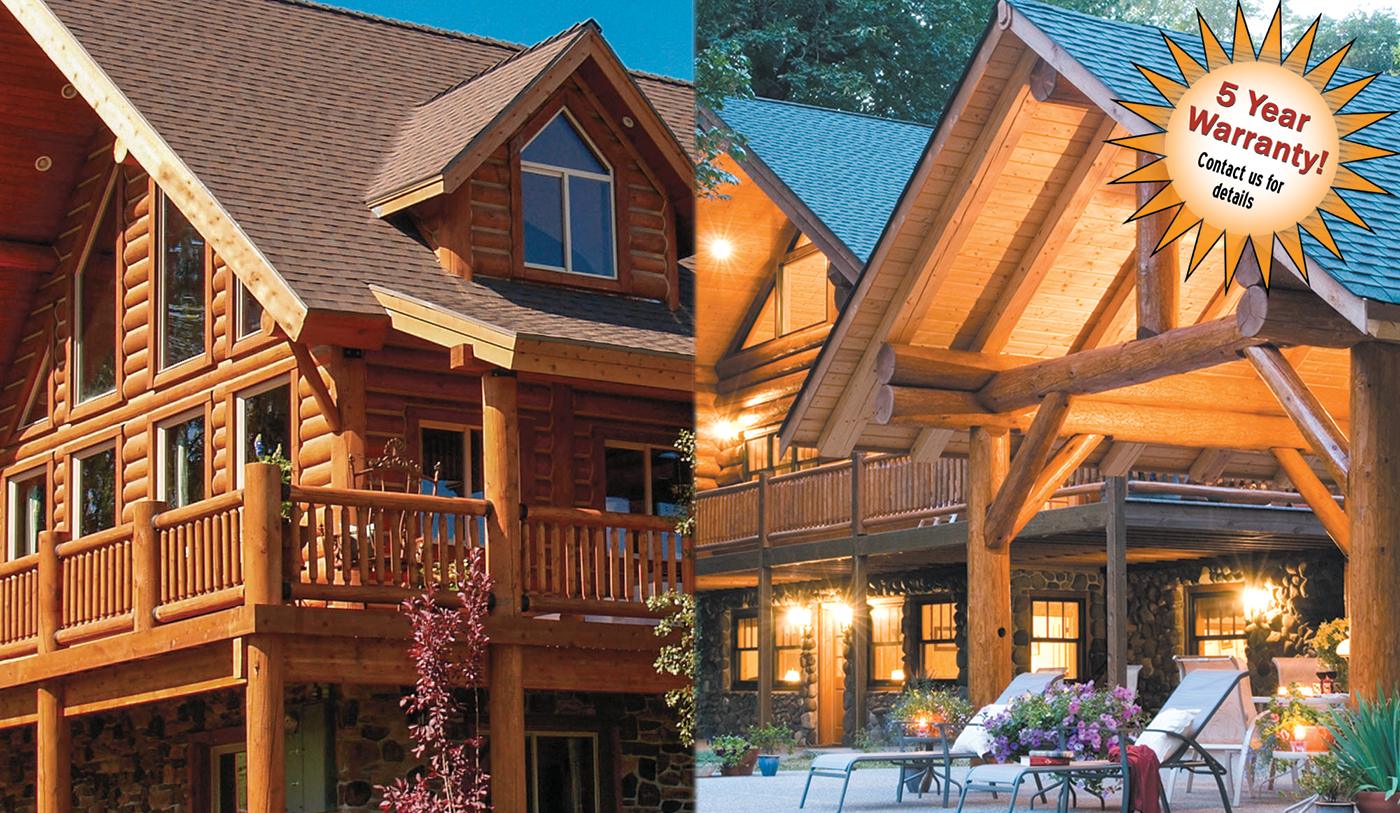
From lab trials to outdoor test panels and real-world building applications, Lifeline Ultra-2 with Lifeline Advance has consistently demonstrated exceptional long-term performance. Based on these results, we’re proud to back this system with a 5-Year Limited Warranty – a testament to its reliability and resilience.
How Does the Warranty Work?
When applied to properly prepared wood, a base coat of Lifeline Ultra-2 or Ultra-7 followed by a clear topcoat of Lifeline Advance qualifies for 3 years of warranty coverage. To extend the warranty to the full 5 years, simply apply one additional coat of Lifeline Advance within the first three years.
This warranty, backed by decades of innovation and rigorous testing, ensures that homes remains protected and beautiful year after year with the most advanced waterborne finish system on the market today.
If you haven’t experienced Lifeline Ultra-2 or Ultra-7 with Lifeline Advance, now’s the time. Contact your nearest Perma-Chink Systems location and request a sample – you’ll see firsthand how beautifully it brings out the character of your wood.