
CT Dev
Occasionally we get a call from someone with an older log home who wants to “seal and protect” their logs but does not wish to remove the gray patina that has built up over the years.
Typically they think that some type of clear finish can be applied to their home which will keep water from penetrating into the wood and help retard wood erosion due to sun, wind, and rain. The truth is that there is no clear exterior product that will meet their expectations.
First and foremost, we NEVER recommend the application of Advance or any other Lifeline™ product on bare, grayed wood. The grayness is an indication that the surface fibers have oxidized and lost their integrity. They are like the rust particles on an old steel plate. If you paint over the rust with a latex paint, it will not adhere properly and soon peel off. The same thing happens when a coat of acrylic latex finish is applied onto grayed wood. Since it does not have an opportunity to bond to intact wood fibers, it too, can peel off.
On the other hand, penetrating oil or solvent products don’t rely on surface adhesion so they can be applied to grayed wood without the risk of peeling off. The trouble is that these types of clear products last only a few months – at best.
For example, many clear water repellent products consist of paraffin wax dissolved in petroleum solvents. When first applied they may look like they are doing a great job repelling water since water beads up on the surface. However, within a few months the solvents evaporate and the wax gets weathered off. So unless you are willing to treat your home every six months to a year, they won’t do much good protecting the substrate.
So what’s the best advice we have for anyone who is not willing to remove the gray patina on their home? Our answer is to do nothing. Just like rust helps protect the underlying steel plate from further corrosion, a layer of grayed wood helps protect the wood beneath it from additional damage.
Is this the best way to protect your home? Of course, not; if you want your home gray you should use one of our gray colored stains. But if you are unwilling to do it correctly by removing all of the gray oxidized wood, applying any type of clear coat is a waste of your time and money. Sometimes less is best.
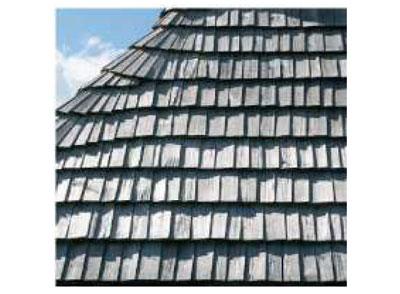
Before we get started, let’s look at the difference between shakes and shingles. In many cases the terms are used interchangeably but regional differences do exist. Nationally you will find shake roofs and shingle-sided homes as well as vice-versa. It’s more a matter of semantics than definition.
By far, the best advice that we can offer regarding coating shakes and shingles is to use whatever your shake and shingle manufacturer or supplier recommends. Often shakes and shingles are pre-treated with a flame retardant or other chemical prior to installation, and it may not be compatible with all types of coating systems.
Shakes and shingles present a different set of dynamics to a coating than logs, siding, decks or dimensional lumber.
First, other than hand-split shakes, they are typically sawn or rough cut, making them quite porous. Second, once installed it is impossible to coat them on all six sides and edges. And third, since they overlap each other, you can’t seal them to prevent water from getting in behind them.
This presents a real challenge to any coating that’s applied after the shakes or shingles have been installed. Since the back and top are impossible to reach with a coating, they remain bare and water absorbent. When water is absorbed, the wood will swell. If a coating has been applied to only the exposed surfaces the outer surface will remain dry and the shake or shingle will have a tendency to cup.
Roofs
We do not approve the use of any of our finishes on roofs of any type, including shakes or shingle roofs. Check with the supplier of your shakes or shingles to find out what they recommend.
Shake or Shingle Siding
If you do want to apply a Lifeline™ coating to shake or shingle vertical siding, the time to start the process is before they are installed – but check with the manufacturer first. You can try brushing a coat of Lifeline stain over the entire shake or shingle, but an easier method may be by dipping them.
Rather than using a stain, our Prelude™ Clear Primer is a good option. Besides adding water repellency to all surfaces, it will prevent over absorption of the pigmented stain and result in better, and more uniform, color generation on rough or porous surfaces.
When the stain or Prelude has dried, the shakes or shingles can be installed. Once in place, they can then be stained and topcoated with a brush or airless sprayer. Back-brushing will also be necessary to get the Lifeline into all of the nooks and crannies.
Just remember – thin coats. You don’t want to flood the surface. Even then, it will still be a challenge avoiding drips and runs when applying Lifeline finishes to shakes or shingles with a brush.

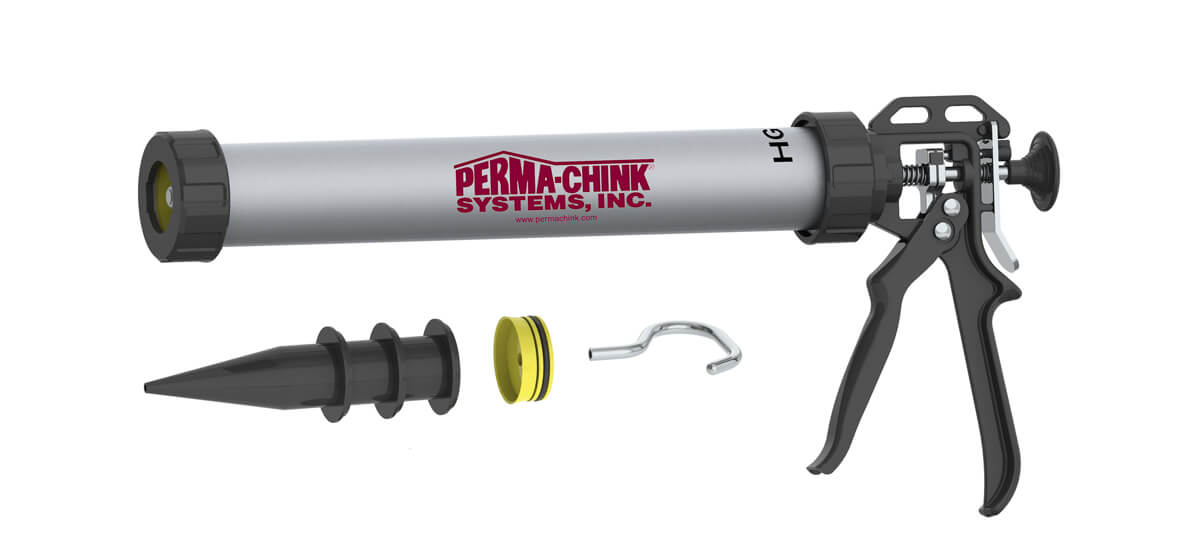
We are proud to announce our new supply of the widest range of dispensing tools in the industry from Albion Engineering Company. Albion is a high quality alternative to the tools typically found in hardware stores and do-it-yourself outlets. Professional tools, built to last.
1. The Albion Bulk Loading Caulking Gun is our most popular tool for applying Perma-Chink or Energy Seal. It is built to meet the demands of serious professionals, utilizing rugged, heavy-duty all steel drives and lightweight aluminum barrels to reliably dispense a wide range of materials.
Available sizes 20 oz. and 30 oz.
- Professional Quality
- Efficient 12:1 Drive Ratio
- Lightweight Aluminum Barrel
- Double Grip Plates for Long Life
- No Spanner Wrench Needed!
- Barrel Rotates for no-stop application
- Kit includes 3 nozzles, one spare piston and a steel ladder hook-pull
2. Albion Smooth Rod Manual Drive Guns are Portable, Efficient, and Adaptable.
Heavy duty cradle smooth rod rod caulking guns. Great for professional use where bead consistency, control and clean up save time and money. A simple push of the recoil releases all pressure on the plunger and instantly stops the flow of sealant. To remove the tube, press the lever and pull back on the rod to expose the entire tube and slip it out of the gun.
Smooth Rod Style Caulking Guns for applying Perma-Chink, Energy Seal, Check Mate 2 and Woodsman.
Available in sizes for 11 oz. tubes and 30 oz. tubes
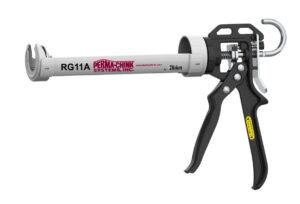
- Professional Quality
- Smooth Rod for reliable dispensing
- Efficient 12:1 Mechanical Advantage Drive
- Convenient Thumb-Release for no run-on caulking
- Full size handle for comfortable dispensing
3. Cordless Guns with a State-of-the-Art Performance, Portability and Control.
How Fast is Fast! A Cordless Gun can dramatically decrease the amount of time on a chinking job.
Available in sizes for 11 oz. tubes and 30 oz. tubes AND 20 oz. bulk
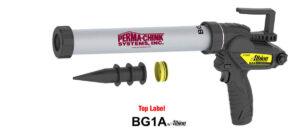
- Powerful – 400 lbs. of Dispensing Force
- Fast – Dispense 11 oz. Cartridge in 16 seconds
- Lightweight Aluminum Barrel
- Long Lasting – 12 V Lithium-Ion Battery
- Control – Variable Speed Trigger with Maximum Speed Dial
- Auto Reverse for No-Drip Dispensing
- Comfortable rubber over molded handle. Swivel barrel
- Fast 30-minute recharge. Battery Fuel Gauge
- Ladder pull hook
One of the greatest mistakes you can make when applying a new finish to your home is to use inexpensive paint or stain brushes. You will be putting a lot of time, money, and effort into your project and saving a few dollars by using cheap brushes can compromise the beauty and performance of your new finish!
When applying water-based finishes like Lifeline™, use brushes made from synthetic nylon/polyester, or blends of bristle and polyester. Ever since the industry started moving away from oil-based coatings, brush manufacturers have designed brushes specifically made for the application of water-based stains and clear coats. These brushes are durable, so they’re great for staining rough surfaces. They maintain their stiffness when exposed to water and are easy to clean. You don’t want to use a 100% natural bristle brush for applying a water-based coating, as natural bristles absorb water. You’ll end up with a limp brush that won’t work very well. Also, rough surfaces will quickly wear out a pure bristle brush. Since transparent stains are typically much less viscous than paints, if you use a normal paint brush, the brush won’t hold much product and you’ll end up having to constantly dip the brush after just a few strokes.
Some Features of Quality Brushes
Bristle Quality – As previously stated, choose brushes with bristles made specifically for applying water-based stains. Using less expensive all-purpose brushes will result in drips, runs, and other defects in the finish.
Bristle Retention – There is probably nothing more exasperating than trying to pick loose bristles off of a surface that you just finished. If the finish has dried, it becomes virtually impossible to remove them without removing some of the finish also.
Ergonomics – The brush will be in your hand for several hours at a time. An ill-designed handle will quickly become uncomfortable to hold and work with.
Threaded Handle – Some high quality brushes come with a removable threaded handle that can be removed and replaced with an extension pole. This comes in handy when working on high, hard-to-reach areas.
Choose the Correct Brush for the Job
Use the largest brush suitable for the surface you are coating. You’ll probably need small brushes for narrow surfaces like frames and trim, but when coating logs and siding, larger brushes carry more finish; there will be less dipping to refill the brush, and fewer strokes to cover the surface. Larger brushes also do a better job when back-brushing a surface that has had a finish applied with an airless sprayer.
Properly Using Your Brush
Never press too hard on your brush. Stains and topcoats should be applied with the tips of the brush, not the sides. Don’t try to load too much finish on your brush. A heavily loaded brush will result in more drips and runs. If your brush becomes messy, don’t be afraid to stop and occasionally wash it out. One of the advantages of using quality brushes is that they can be repeatedly washed without harming the brush. One tool that you may want to consider purchasing is a brush and roller spinner/dryer. It will quickly spin most of the water out of a brush after washing.
Care and Maintenance
If properly cleaned and maintained, a good quality brush will give you many years of good service. If you take a break even for just a few minutes, rinse your brush out with clean water and shake out the water. If you are through for the day, thoroughly wash your brush with a mild soap or detergent, shake or spin the water out and return the brush back into its original storage sleeve. Don’t just throw it into your tool box. You don’t want to pick up any contamination like small particles of steel and the sleeve will help retain the brush’s shape while it dries.
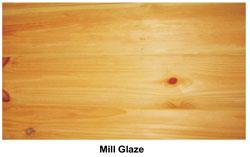
Although there is some controversy regarding its cause, the most commonly held theory about the formation of mill glaze is that it is created on logs, siding and trim by heat and mechanical compression generated during a high speed milling process. The combination of compressed wood fibers and high temperatures that melt the sugars, cellulose, and other water-soluble extractives present in the wood end up forming a surface glaze.
If not removed, this glaze can interfere with the adhesion of both water and oil-based coatings since the wood’s cellular surface is not in direct contact with the coating. The best way to remove mill glaze from exterior wood surfaces is by using Wood ReNew, a percarbonate cleaner, and pressure washing. We highly recommend this procedure whenever a finish is going to be applied to new exterior siding. For interior surfaces a light sanding (120 grit) followed by a light washing with a Log Wash solution (1/2 cup Log Wash concentrate per gallon of clean water) and wiping the wall with warm water to rinse and remove the detergent from the wood. This action will also help swell and decompress the wood fibers while dissolving the glaze. This assures the adhesion of our finishes to the surface of the wood.
Over the past few years there has been a lot of talk about volatile organic compounds (VOCs) and how they are concerned with products used on log homes. Here are some frequently asked questions about VOCs as they relate to log home finishes and sealants.
What are VOCs, and what are the risks posed by VOCs to the environment?
VOCs are Volatile Organic Compounds, typically petroleum-based solvents and other liquids contained in coatings, sealants, cleaners, fuels, and other products that evaporate into the atmosphere. Once in their vapor state, they have been implicated in the increase of the ground level ozone concentration. In addition, many of these compounds are designated as health hazards. VOCs are typically measured in terms of grams per liter (g/L). The higher the number, the more VOCs are contained in the product.
What are some of the VOC restrictions placed on stains?
Stains are classified as architectural coatings and both state and federal agencies have limited the amount of VOCs allowed in coatings. Some states, like California, Virginia, Pennsylvania, New Jersey and others, have placed VOC limits lower than those mandated by the federal government. This is why many of the oil-based stains sold in these states are not the same products they were five years ago. Within the next few years it is expected that both state and federal allowable VOC limits will continue to decrease.
What kind of challenges have the VOC restrictions posed to Perma-Chink Systems?
Since Perma-Chink Systems manufactures and sells only water-based coatings, VOC restrictions have not had much of an impact on us, other than increasing the demand for our products. However, there is one method of measuring VOCs that has a minor impact.
Back when VOCs first became an issue, the solvent-based coating manufacturers lobbied that it was unfair to compare a water-based coating with a solvent-based product. The result was a method of determining the VOC content of water-based products by first removing all of the water. Even if a product contains 80% water, this method only looks at the remaining 20% of the components. Although this method of determining VOCs in water-based coatings has fallen out of favor by many coating organizations, it is still used by the states under the direction of the EPA.
Although all of our stains, topcoats, and sealants currently meet or are significantly lower than the VOC requirements for all 50 states plus Canada, we continue to investigate formulations that contain even lower amounts of volatile organic compounds, while maintaining or increasing the performance in terms of longevity and durability of our product lines.
Is there any difference in the quality, color, and durability of low VOC water-based stains versus oil-based stains?
Over the past few years almost all new innovations in coating technology have been in low VOC water-based systems. This new technology has allowed the development of high quality products like our Lifeline™ brand stains and Advance™ Topcoats that not only look great, but meet all of the requirements of a log home. Recent advances in polymers, UV light inhibitors, and mildewcides have significantly improved the look, longevity, and performance of water-based coating systems.
For those manufacturers like Perma-Chink Systems willing to make the investment, this new technology has allowed us to develop water-based products that look better, last longer, and outperform the best oil-based product ever made. On the other hand, one way that high VOC oil-based coating manufacturers have lowered their VOC content is to add fillers such as pigments or extenders to their coatings. The subsequent reduction in solvent content has, in most cases, decreased the attractiveness and longevity of these products.
Why is it important for Perma-Chink Systems to offer low-VOC products to our customers?
Since our inception back in 1982, Perma-Chink Systems has always had a concern for our environment, and we have always taken the environmental impact of a product into consideration during its development. In retrospect, this was and is a very wise decision which has resulted in our considerable growth over the years as people become more aware of the effect products have on the quality of our environment.
Aside from the environmental impact, are water-based products safer to use and apply?
Most water-based coatings have little, if any, odor and can be applied both inside and outside a home without concern. In addition, water-based coatings can be cleaned from brushes and spray equipment with just soap and water. On the other hand, oil-based coatings must be cleaned with mineral spirits which releases even more VOCs into the atmosphere.
Besides low-VOC water-based stains are Perma-Chink Systems’ sealants also earth and people friendly?
Perma-Chink Systems offers a wide range of caulks and sealants including Perma-Chink®, Energy Seal™, Woodsman™, and Check Mate 2®. All of our sealants are low VOC water-based products. We do not make any petroleum solvent-based sealants, nor do any of our sealants outgas xylene, toluene, formaldehyde, or other toxic or carcinogenic components.

Contact Info
7174 Shavers Creek Road
Petersburg, PA 16669

(800) 257-4864 Phone
(814) 669-1958 Fax
Pennsylvania Hours
8:00AM – 5:00PM Monday – Friday
By appointment – evenings and Saturdays

Directions
Traveling from State College & Route 80:
Route 26 to Pine Grove Mills
Travel 26 over Pine Grove Mountain turn right onto Charter Oak Road
Perma-Chink Systems store is 11.5 miles on the right
Traveling from Altoona:
Take Interstate 99 North to Tyrone
Follow Route 453 to Water Street (Intersection 453 & RT.22)
East on Rt.22 approximately 3 miles.
Left onto Rt. 305 travel 5.2 miles
Perma-Chink Systems is on the left
Traveling from Huntingdon:
Follow Route 22 east 6.8 miles
Right onto Route 305, travel 5.2 miles
Perma-Chink Systems is on the left.
Our Staff
Mandy H. – Branch Sales Manager
Call Mandy direct 1-425-952-2084
Amy S. – Customer Relationship Specialist
Call Amy direct 1-425-952-2083
Sammy K. – Customer Relationship Specialist
Call Sammy direct 1-425-952-2085
Jeremy I. – Customer Relationship Specialist
Call Jeremy direct 1-425-952-2082
Project Gallery
Bear’s Paw Lodge & Everhart Painting
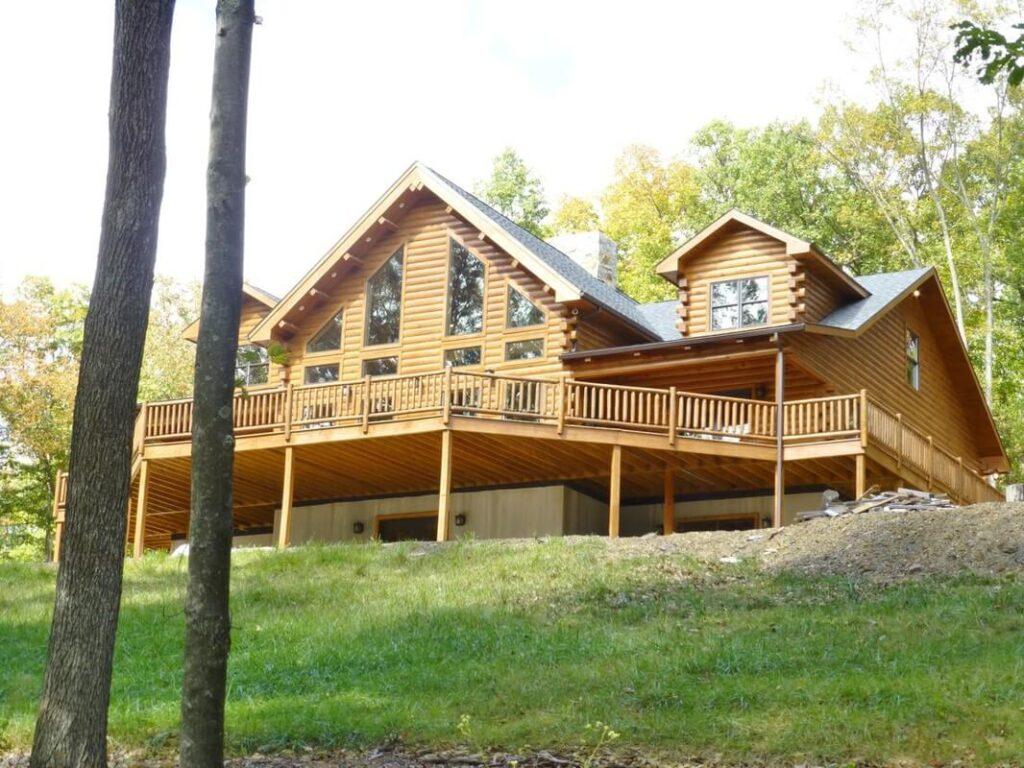
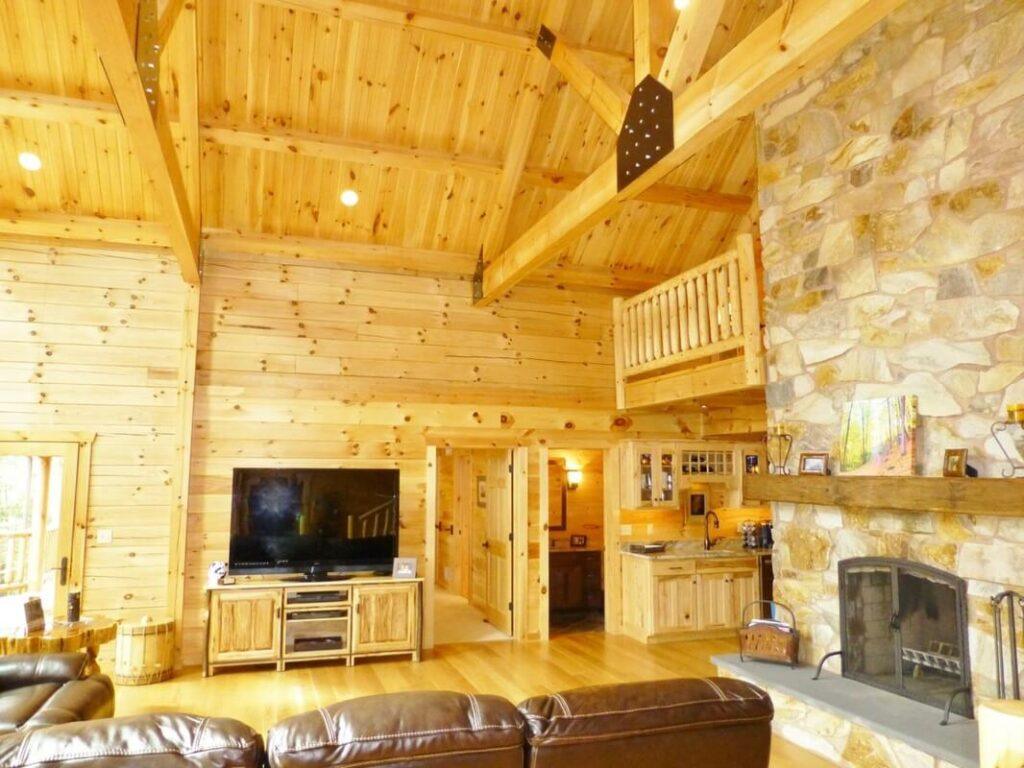
Bear’s Paw Lodge in Pennsylvania chose Perma-Chink Systems for their lodge retreat. The exterior was finished with Lifeline Ultra-2 in Dark Natural, with Lifeline Advance Satin topcoat. Everhart Painting, a Perma-Chink Systems Preferred Applicator, performs maintenance of the lodge.
Zook’s Masonry & Philip Hess Contracting
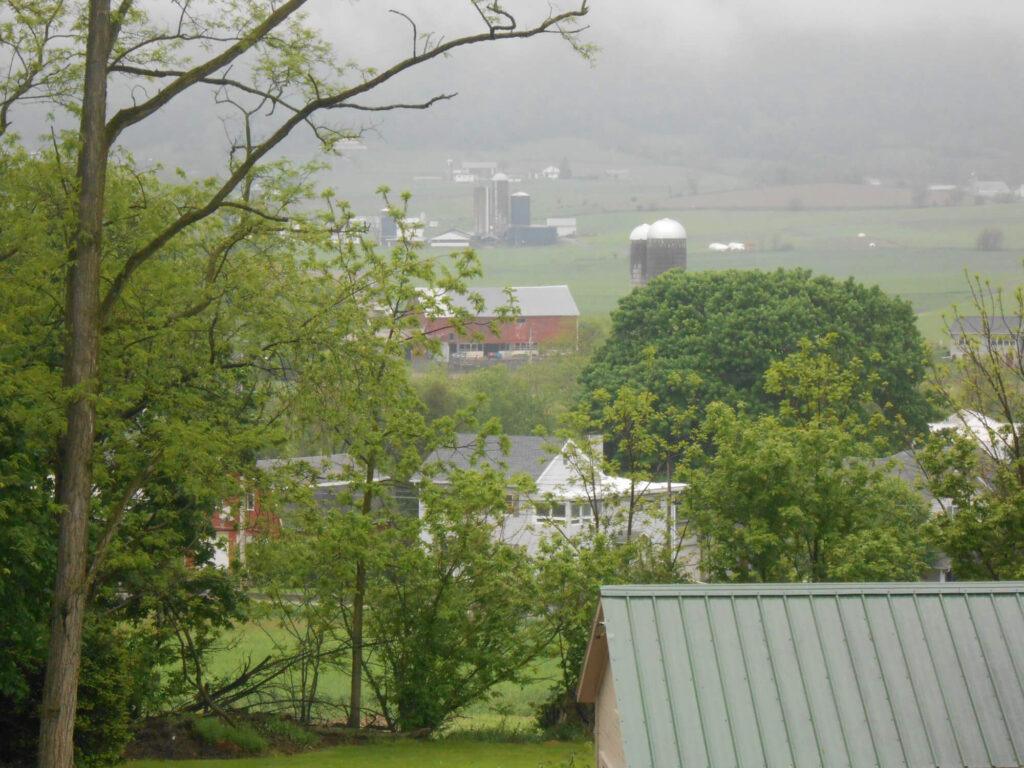
One of the oldest (if not the oldest) log homes in the community of Belleville PA is being restored with Perma-Chink sealant. Owner John Zook of Zook’s Masonry is getting help from Philip Hess Contracting of State College PA for the renovation. Below is an article that appeared in the fall 2017 issue of Kishacoquillas Valley Historical Societies newsletter. The recent pictures show Perma-Chink Stone color being applied with a Kodiak chink pump. This piece of history sits along the street of this quaint small town with a beautiful view of “Big Valley” from the back windows. Watch for updated pictures as the renovation unfolds.
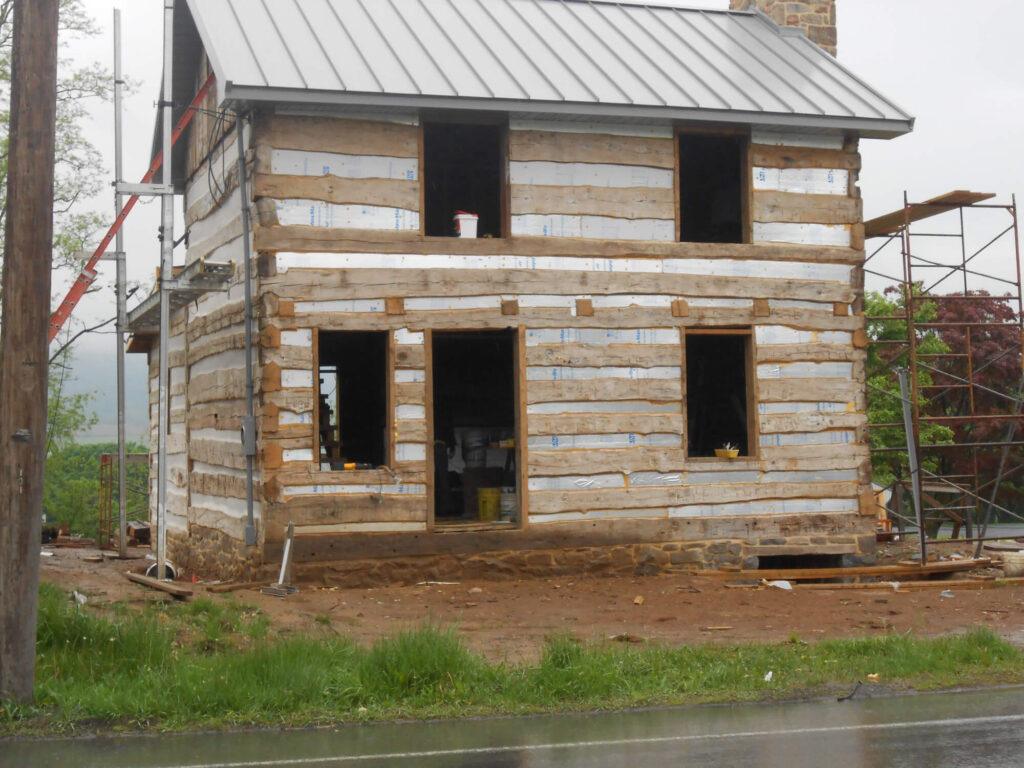
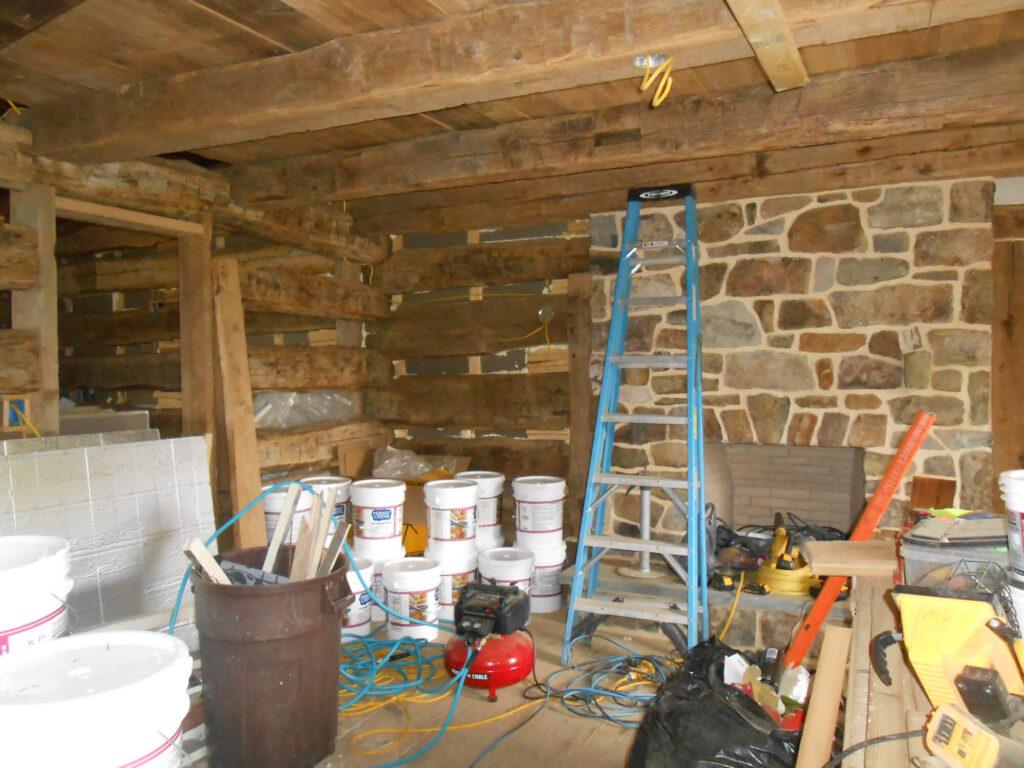
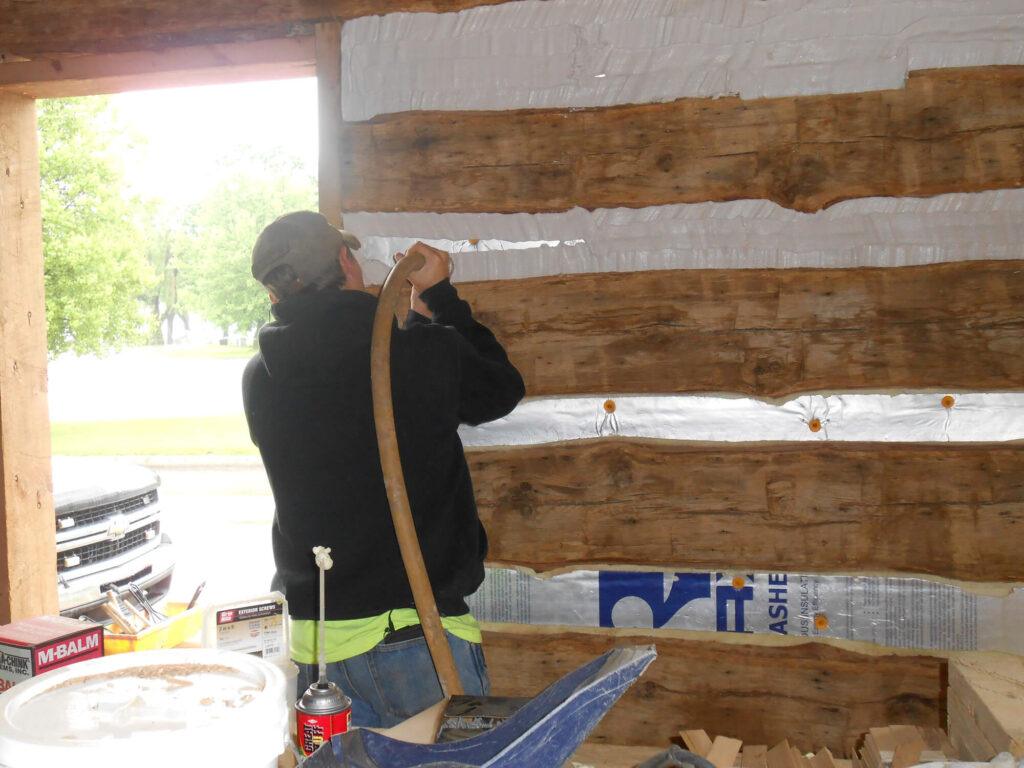
Fall 2017 Kishacoquillas Valley Historical Societies Newsletter
Liberty Log Finishing
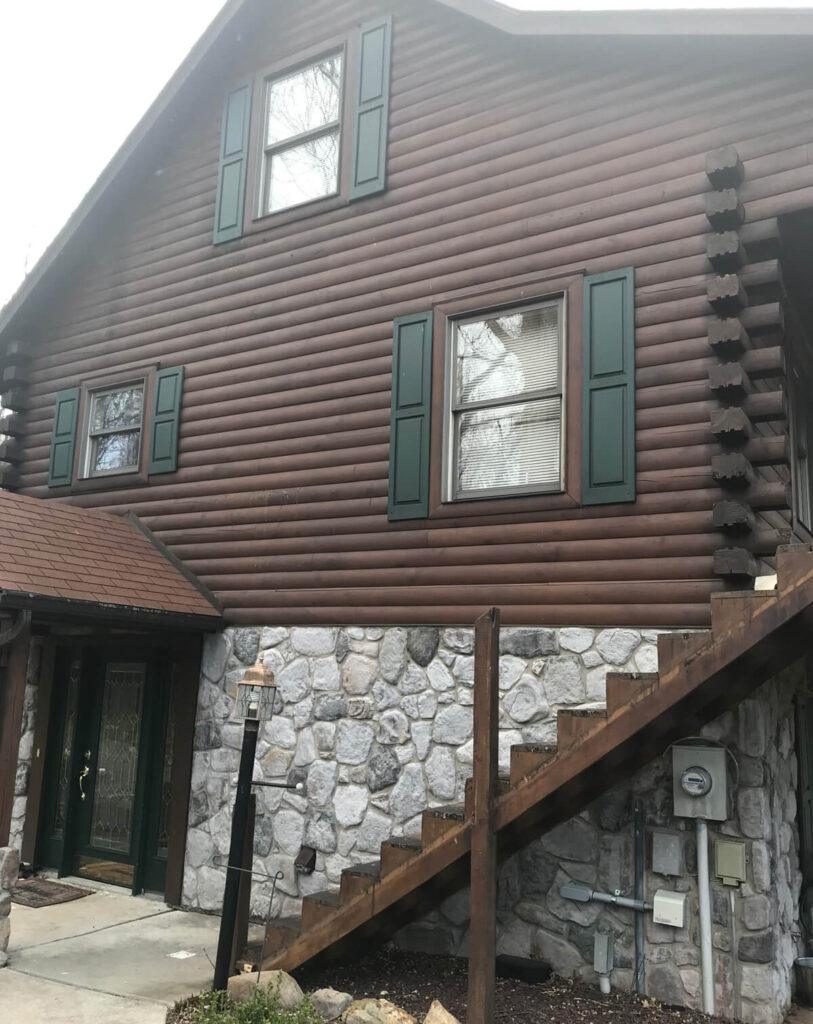
Liberty Log Finishing media blasted, applied Shell Guard RTU, sealed checks with Perma-Chink Sealant and backer rod, applied Prelude and Ultra-2 Cedar and Gloss Advance Top Coat. Before work is the image on the left, completed project on the right.

Ward Cedar Log Home Project
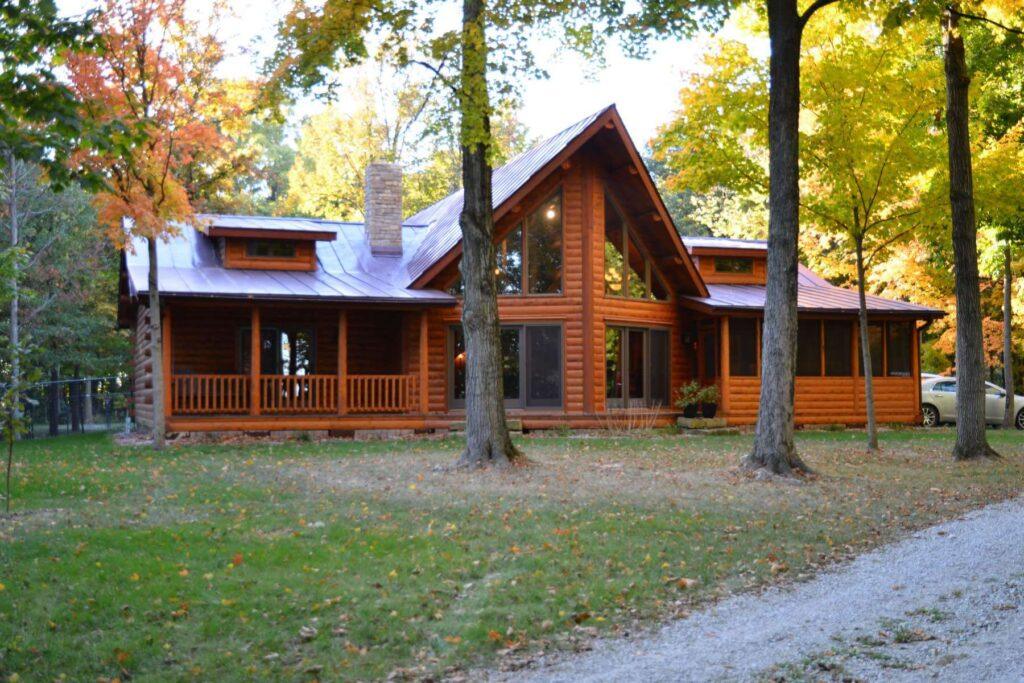
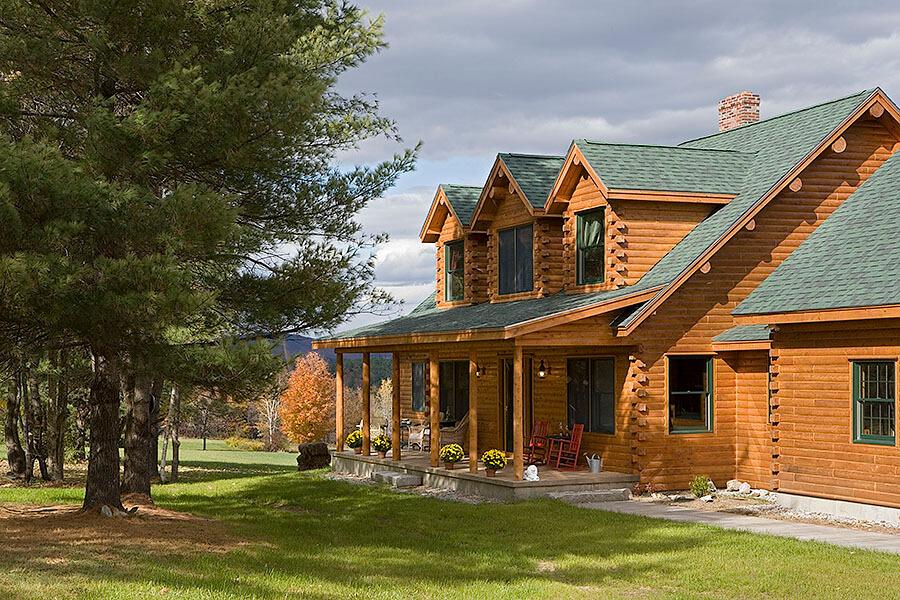
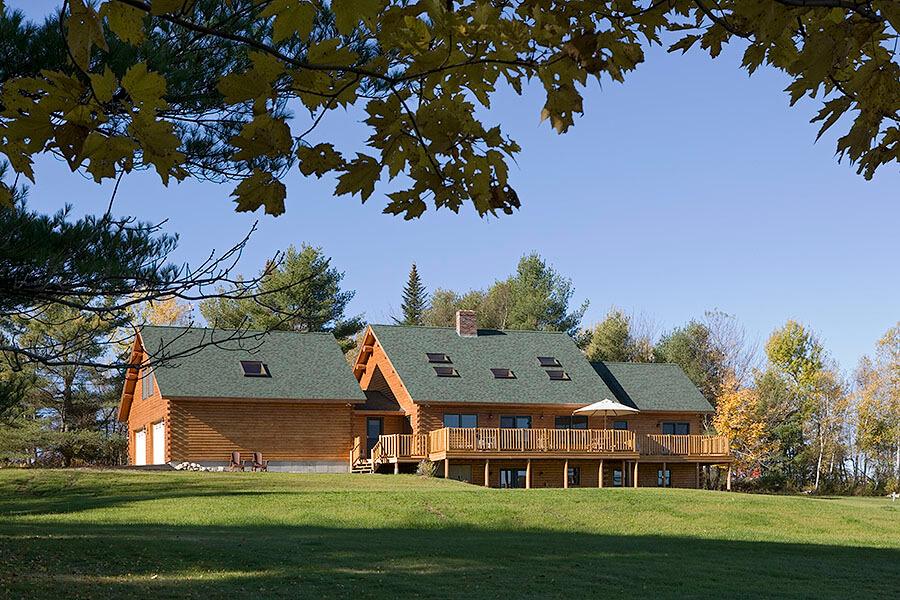
Ward Cedar Log Homes in Maine have some amazing homes finished in Perma-Chink Systems’ Lifeline Ultra-2 in Cedar.

Homestead Blasting Project
Project from Homestead Blasting
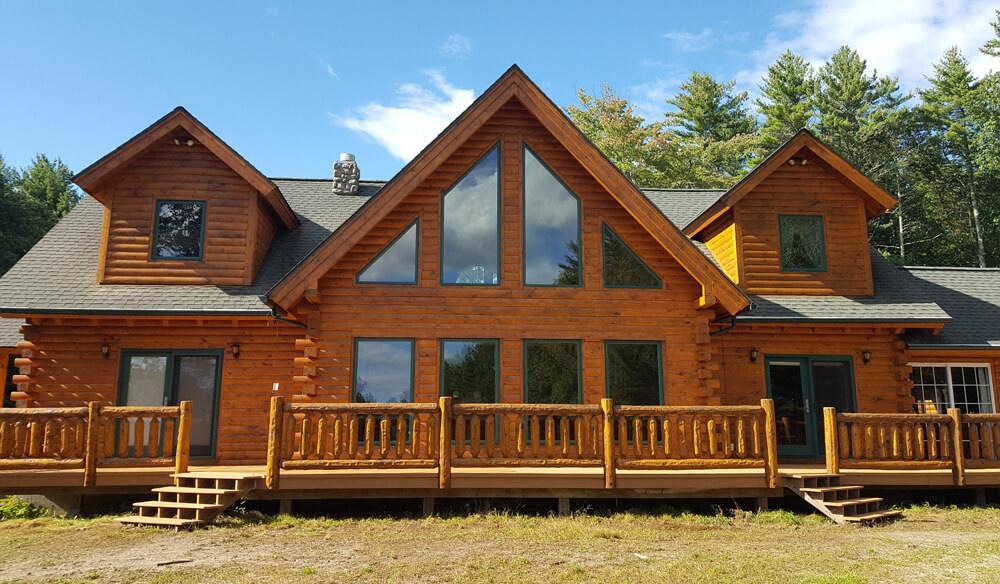
The home was blasted with glass bead, then the surface was prepared for stain with Osborn brushes. The exterior was finished with Perma-Chink Systems’ Prelude primer, Ultra-2 Bronze, and Advance Satin topcoat. Exterior trim was finished with Lifeline Accents in green.
For the interior, the home was blasted and prepped with Osborn brushes. The homeowners decided on utilizing Prelude, Acrylic Satin to keep a natural wood finish, and chose Energy Seal Natural Pine. Interior trim done in Accents Espresso, contrasting beautifully with the natural color of the wood.
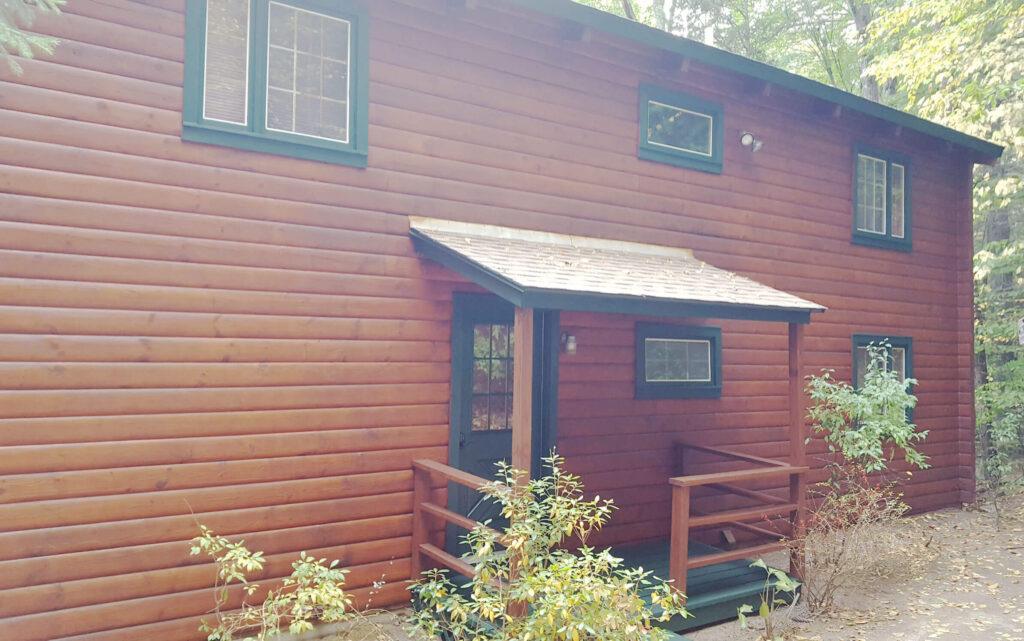
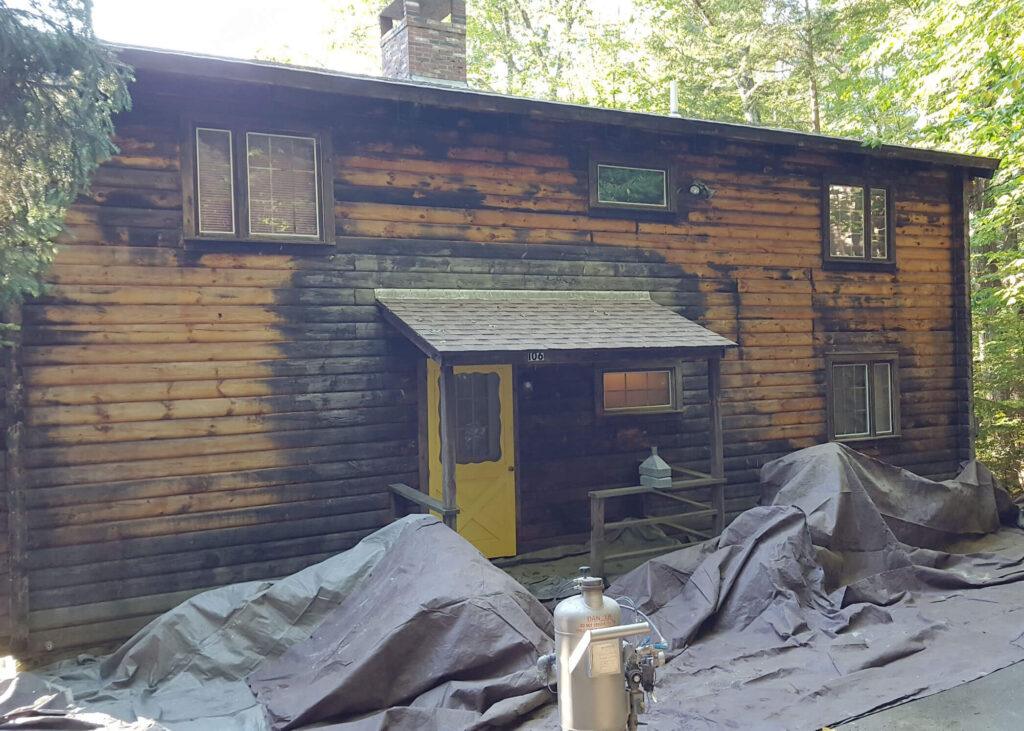
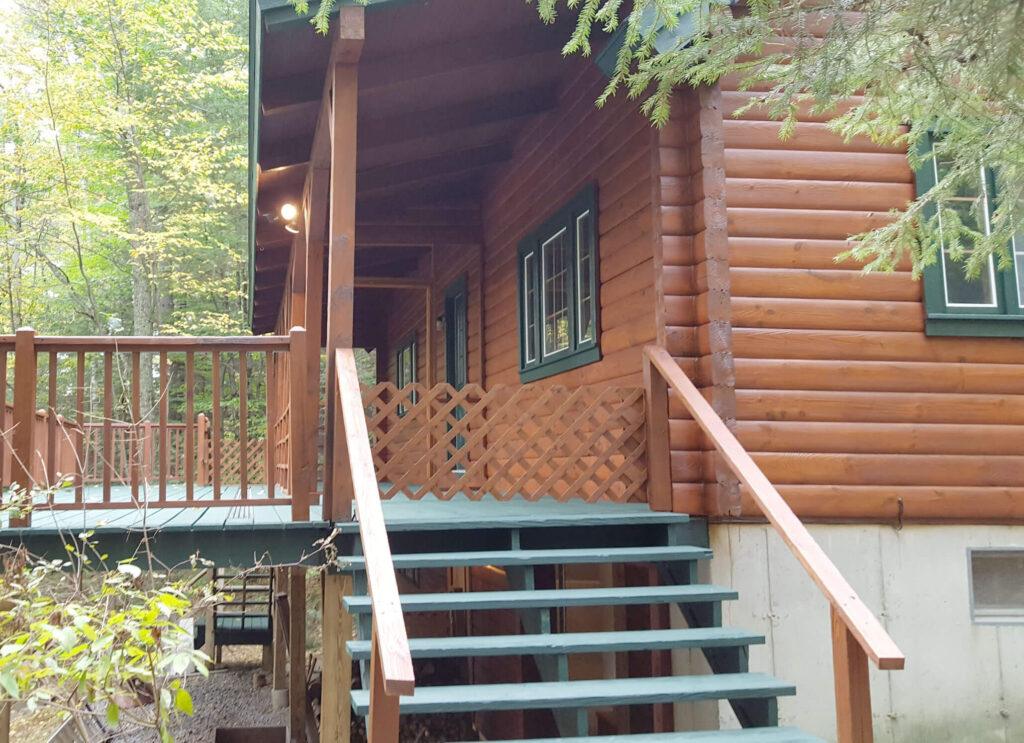

Amazing restoration projects from Brian Russell of Homestead Blasting in Hillsboro County, NH. Come back to see work-in-progress images or visit their website https://www.homesteadblast.com/.
Homestead Blasting Exterior Blast & Refinish
Homestead Blasting is doing a fantastic job getting the wood prepped for the new stain, just check out this before and after picture:
Brian’s crew blasting off the old finish:

Blasted, washed, and ready for stain!

The finished product!

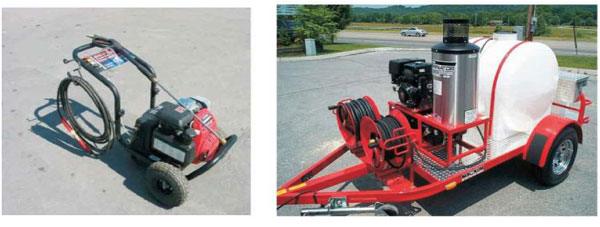
When preparing a home for a new finish, one tool we typically recommend is a pressure washer. However, all pressure washers are not created equal. Choosing the right pressure washer for the job is critical for the proper performance of our cleaning and finish removal products.
When selecting a pressure washer, there are some things to look for. One of the most important features is water output volume. It should be able to put out at least two to three gallons of water per minute (2-3 gpm). A lower output tends to move the degraded stain and wood fibers down the wall, but does not necessarily wash them off of the wall. For example, electric pressure washes may generate enough pressure to clean, but since they only put out about 1/2 gallon of water per minute, they really are not suitable for cleaning a wall down to bare wood.
Although a good pressure washer typically generates 2500 to 3000 pounds of pressure (psi), it does not mean that you need that much pressure to clean the surface. You want to hit the surface of wood with no more than 600 psi in order to avoid excessive feathering. However, the higher pressure allows you to stand back from the wall and clean off a wider swath with each pass of the wand tip. For removing old finishes we recommend using a 25-degree fan tip or an adjustable nozzle, if it’s available.
One more thing about pressure washers: we don’t recommend running any of our cleaners or strippers through the pressure washer. Our products should be applied separately, allowed to work on the surface for the labeled amount of time, then you should use the pressure washer to wash it off. To avoid streaks and runs, clean from the bottom up and rinse from the top down.
A pressure washer will definitely test the sealant system of a home. Water will undoubtedly enter the home, so have someone inside with some towels and to mark water entry points for later inspection and sealing. Lastly, the wood must be allowed to dry at least a day and be dry to the touch before applying a caulk, stain, or a wood preservative.
For many years oxalic acid has been one of the most commonly used products for brightening and preparing wood surfaces for a coat of stain. Why? Prior to the introduction of organic solvent finish removers in the late 1990s, the most popular paint and stain removal products were caustic chemical strippers which contain sodium or potassium hydroxide. They are still sold at most paint stores, and although quite caustic and somewhat hazardous, they have been used for over 100 years and are relatively inexpensive.
One negative feature of using any hydroxide stripper is that it’s extremely high pH turns the wood dark. After a hydroxide stripper is used, it is standard procedure to apply a solution containing oxalic acid to the wood to bring the wood back to its original color prior to the application of a stain. That’s how Oxcon attained its original description as a “Blonding Agent.” There is also a belief that since it is an acid, it helps “neutralize” any hydroxide residue remaining in the wood, thus preventing wood fiber degradation due to the presence of highly alkaline chemical residue.
Since oxalic acid does do a good job restoring the color of the wood after the use of sodium or potassium hydroxide, as well as removing metallic tannate discolorations, over the years it gained a reputation as being a “cure-all” for other types of wood discolorations as well. One reason is because many discolorations that were attributed to mold were in fact not mold, but metallic tannate or inorganic stains. Somehow oxalic acid also got a reputation for helping remove grayed or photooxidized surface wood fibers. In reality, it does not do a very good job and there are other products, like our Wood ReNew™, that are much more effective.
If not properly applied, oxalic acid can do more harm than good when it comes to preparing the surface for a water-based film forming finish like Lifeline™. Film-forming water-based finishes rely on the integrity of the surface fibers to assure adhesion to the wood. If the surface fibers are damaged and the film does not have intact fibers to bond to, peeling of the applied finish can result.
We have found in our testing that the use of concentrated oxalic acid, or even a small amount of residual oxalic acid left on the wood, can seriously affect the adhesion properties of water-based finish systems.
Like chlorine bleach, oxalic acid is subject to being easily misused. For example, even when properly diluted to our labeled instructions, if left on the wood too long, especially in hot dry conditions, the water will begin to evaporate and the concentration of the acid solution increases proportionally, eventually reaching a point where damage to the wood fibers can occur. Another potential problem with oxalic acid solutions is that when they react with alkaline compounds, they form oxalate salts which are quite insoluble and almost impossible to rinse off with water. They, too, can interfere with the adhesion of water-based finishes.
Most finish removers that are used today contain organic solvents that don’t darken the wood. Since oxalic acid does not remove grayed wood fibers or organic discolorations like brown stain, blue stain, or mold and mildew stains, what are the valid uses for Oxcon oxalic acid?
1. Oxcon oxalic acid is the only product that removes inorganic discolorations of metal tannates and rust. If, after stripping and cleaning the surface, there are still dark colored streaks or blotches, there is a chance that a solution of Oxcon will remove them. This includes some types of “water marks.”
2. If the stripping and cleaning process has turned the wood dark, a solution of Oxcon may help lighten it up.
To properly use Oxcon here are some guidelines that must be followed:
1. Make sure that any product that was previously applied to the wall has been thoroughly rinsed off prior to the application of the Oxcon solution.
2. Oxcon is a concentrate and MUST be diluted with four parts water. That’s one gallon of Oxcon mixed with four gallons of water. The use of a more concentrated solution won’t work any better and will damage the wood.
3. Don’t leave it on the wood for more than 15 minutes. If it’s a hot, dry day, wet the wall down before applying Oxcon and keep misting it with water to keep the acid concentration from getting too high. Never, ever allow Oxcon to dry on the wood. If oxalic acid crystals form from evaporation, they will be almost impossible to remove by rinsing with cold water.
4. After using Oxcon, adequate rinsing is mandatory. While rinsing, pay particular attention to any cracks or crevices where the Oxcon solution may have puddled. No one should ever use Oxcon without having pH strips at hand. Just a trace of oxalic acid left on the wood will seriously affect the adhesion of the finish.
After reviewing a number of past adhesion issues, we found that many of them were attributed to the use, or more accurately misuse, of oxalic acid. There is no reason to routinely use oxalic acid in a stripping and cleaning process just because it has been done it for years. Only use oxalic acid when it’s absolutely necessary. Sometime less is definitely best.
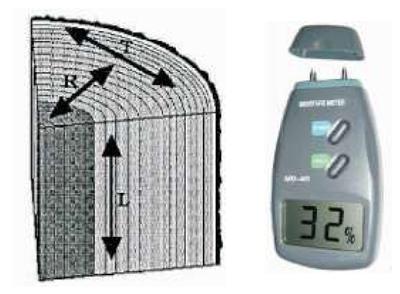
Moisture content of logs can dramatically affect the application of some of Perma-Chink Systems’ products. We recommend that moisture content is below 35% for maximum adhesion of our finishes.
The moisture content of a log is defined as the weight of the contained water divided by the dry wood weight times 100. For example, let’s say a green log weighs 100 pounds and we place it in a drying kiln until all of the water is removed. If the dry log now weighs 65 pounds, the original moisture content was approximately 54% (35 pounds water ÷ 65 pounds dry wood = 0.538 x 100).
Using this method of calculation you can see that it is not at all unusual for a recently cut log to contain well over 100% moisture content. In the field, moisture content is typically measured using a pin-type moisture meter that converts the electrical conductivity between the pins into approximate moisture content.
Once a tree is cut and the bark removed, it will begin to dry out. The water contained in the wood is in basically two forms: free water and water that is bound in the cell walls. The free water evaporates from the log first, and although there is some shrinkage during this process, it’s not until the wood reaches its fiber saturation point (FSP) of about 28% and begins to lose its bound water that significant shrinkage occurs. That’s why whenever a log home is built using very green logs, checks may not begin to open for several months, or even years, after the home was constructed.
Although shrinkage affects all dimensions of a log, some wood species are more prone to checking than others because their rate of radial shrinkage (R) is not as great as their tangential shrinkage (T). Shrinkage along the length of the log (L) is usually negligible. Radial cross section shrinkage can be quite significant and although it varies from species to species, shrinkage of 5-6% is not unusual. Thus a 10-inch round log with a radial shrinkage of 6% can lose more than 1/2 inch of its diameter as it dries.
Once logs have dried below their fiber saturation point, they will continue to shrink until they reach a moisture level that is in equilibrium with the relative humidity of their environment. In warm, humid areas like Florida or Louisiana, logs may never get below 18% moisture content, whereas in the Southwest, they may hold steady at 9-10% moisture content. In most areas of the country, the relative humidity of the air changes with the seasons. For example, in the Northeast air during the winter months is much drier (low relative humidity) than in summer. On the other hand, in the Pacific Northwest the highest relative humidity occurs during the winter months.
So how does all of this affect the application and performance of our sealants and finishes? Although it’s true that our products can be applied to green logs, if the surface of the logs are above the fiber saturation point, there may be so much free water in the surface cellular structure that both sealants and finishes will not be able to adhere properly to the wood fibers, compromising the adhesion. To be on the safe side, the surface moisture content should be 20% or less, as measured by a moisture meter. This is not the same as requiring that the entire log be less than 20% moisture content. We are only concerned with the surface, not the interior of the log – which may still contain 40-50% moisture, even though the surface may read 18% moisture content.
As previously stated, most of a green log’s shrinkage occurs after it has reached the fiber saturation point. Since log checking is associated with shrinkage, most checks will open up several months after the home is constructed, and continue opening until the logs reach an equilibrium with their environment. It is not unusual for large checks to open up two to three years after a home is constructed. If our finish system is applied before the logs reach the fiber saturation point, checks and fissures that later appear may allow rain water to get into the wood behind the finish. When the sun hits the water, saturated wood heat converts the liquid water to so much water vapor that it can overload the ability of the finish to breathe. This is one of the leading contributors to peeling.
Sealing checks before the logs reach their moisture equilibrium point can be an exercise in frustration for a homeowner. What may start out as a small fissure can easily turn into an inch-wide check within a few months. If sealed too soon with Check Mate 2®, the enlargement of the check can exceed the elongation capability of the Check Mate 2 and may eventually provide an entry point for water.
In the homeowner’s eyes, the Check Mate 2 failed since he or she may not remember how narrow the check was when it was originally sealed. There is no perfect solution to the challenges presented by constructing a home using very green logs. Most new log home owners are in a rush to get their home finished and sealed as soon as possible. However, allowing the logs to air dry a few months will improve the performance of both the sealant and finish systems, and help reduce the maintenance required for the first three to four years.
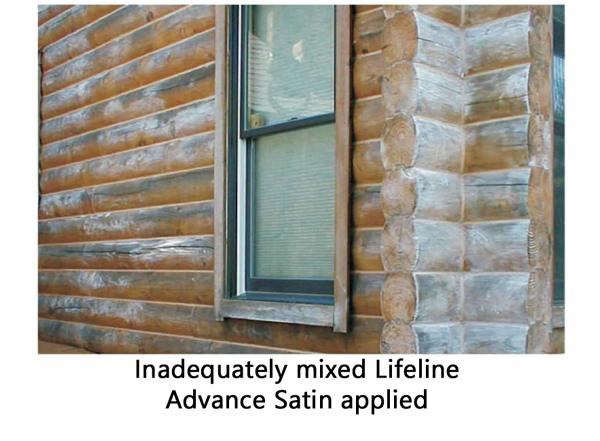
Although there is not much difference in the formulation between Lifeline Advance™ Satin and Advance Gloss, Advance Satin contains a flatting agent for the purpose of reducing its reflectivity, or “gloss.” This raw material can settle to the bottom of the container over time.
It’s important to mix ALL of our finishes before and during use, including Advance. Since it does contain a flatting agent, be sure to shake or mix Advance Satin until none of the flatting agent remains at the bottom of the pail or gallon container. Secondly, the container should be mixed or shaken during use every 20 to 30 minutes to assure a uniform dispersion. This will avoid areas of a wall or home looking “flatter” than others.
If inadequately mixed Advance Satin is applied to a wall, the only way to remove the white residue is to strip the entire finish off and start over again.
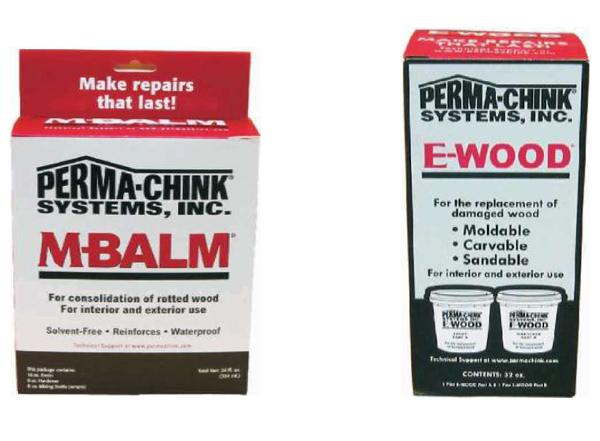
Perma-Chink Systems sells two epoxy products, M-Balm®, a wood consolidator that hardens loose, friable wood fibers, and E-Wood®, a putty used to fill voids or cavities in logs and timbers. Both M-Balm and E-Wood are two component epoxies. Like all epoxy products, they consist of a resin and a hardener and rely on a chemical reaction between the two components to become hard. As they react they often become warm, or even hot. M-Balm, in particular, can become quite hot about 15 to 20 minutes after the two components are mixed together.
Tip: Mix M-Balm in a disposable aluminum bread pan. This allows mixed component to release heat (exothermic) and cool while preventing you from melting your mix container or bottle.
There is one thing about epoxies that you should understand: as epoxies age they lose their chemical reactivity. The older they get, the longer it may take for the combined components to become hard. If unused epoxy has been in your garage for a couple of years or more, it’s not unusual for the hardening process to take three or four times longer than when using fresh product. It’s not that it won’t eventually harden, it’s just reacts slower and takes longer.
Never change the ratio of hardener to resin to try and speed things up. Unlike other types of resin and catalyst mixtures, M-Balm MUST be mixed together at a ratio of two parts of Part A to one part of Part B by volume. For E-Wood, equal volumetric parts of Part A and Part B MUST be kneaded together for these products to work.
Tip: Mix only the amount necessary to complete each step of a small job.
Here’s one more tip: M-Balm does NOT have to be cured before applying E-Wood. Epoxies do not “dry” in the sense that they must be in contact with air. They rely on chemical reactions to harden and cure, so M-Balm will harden just as rapidly under E-Wood as it will if left exposed. In fact, applying E-Wood before the M-Balm cures results in an even stronger bond to the wood.