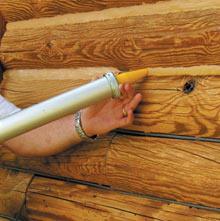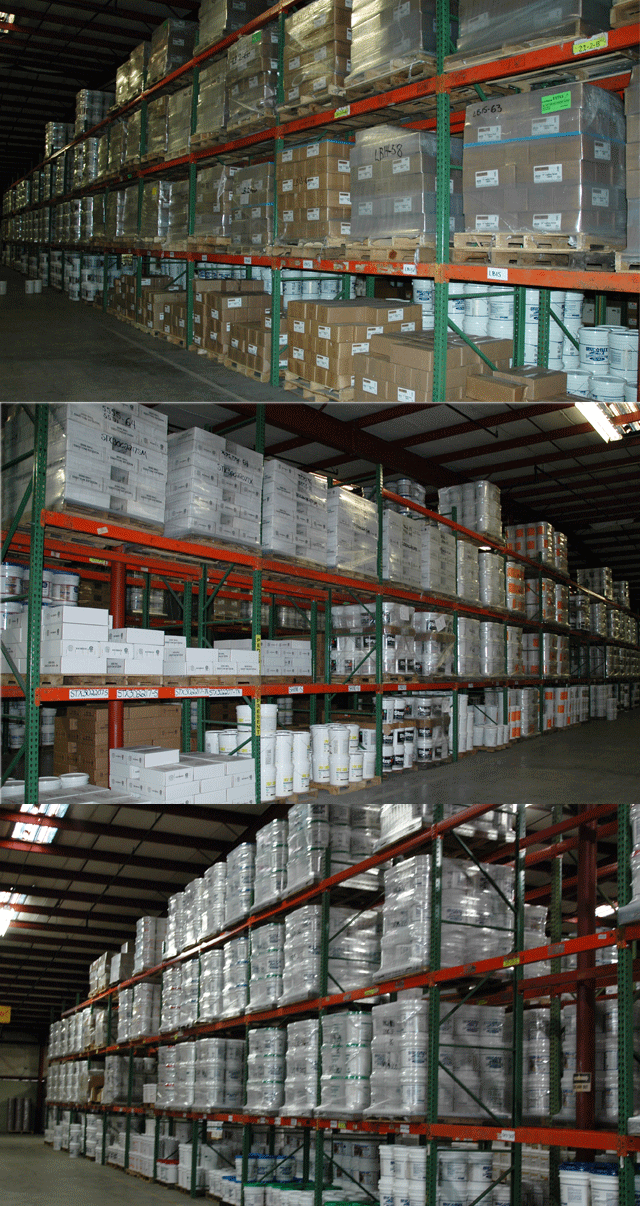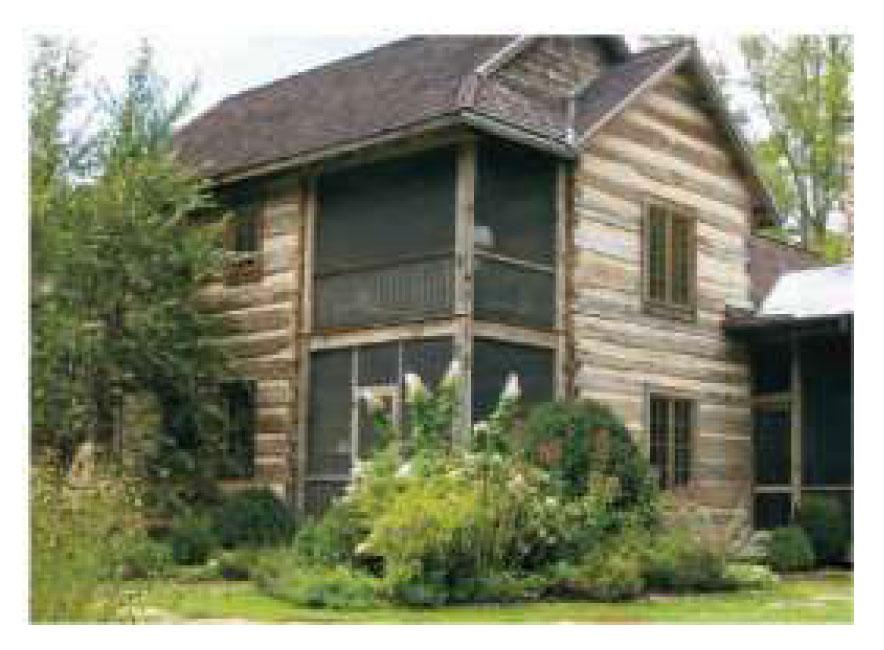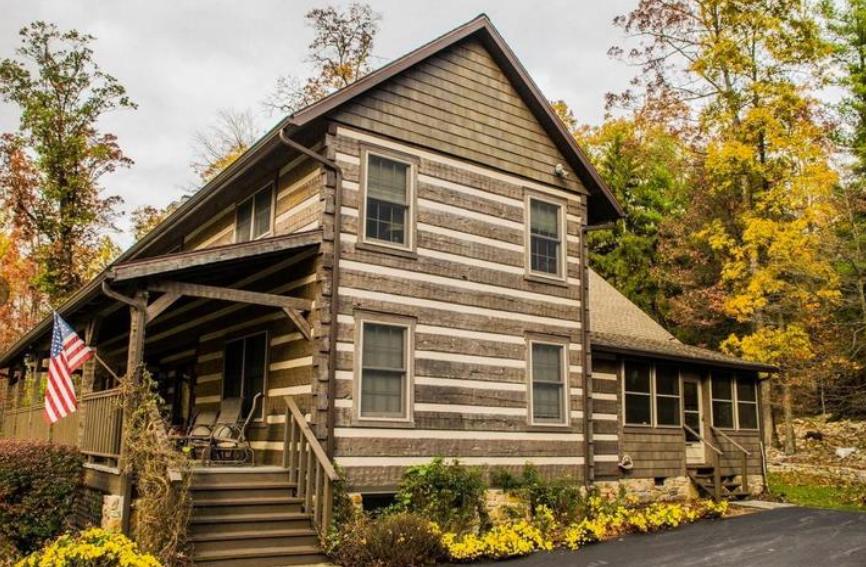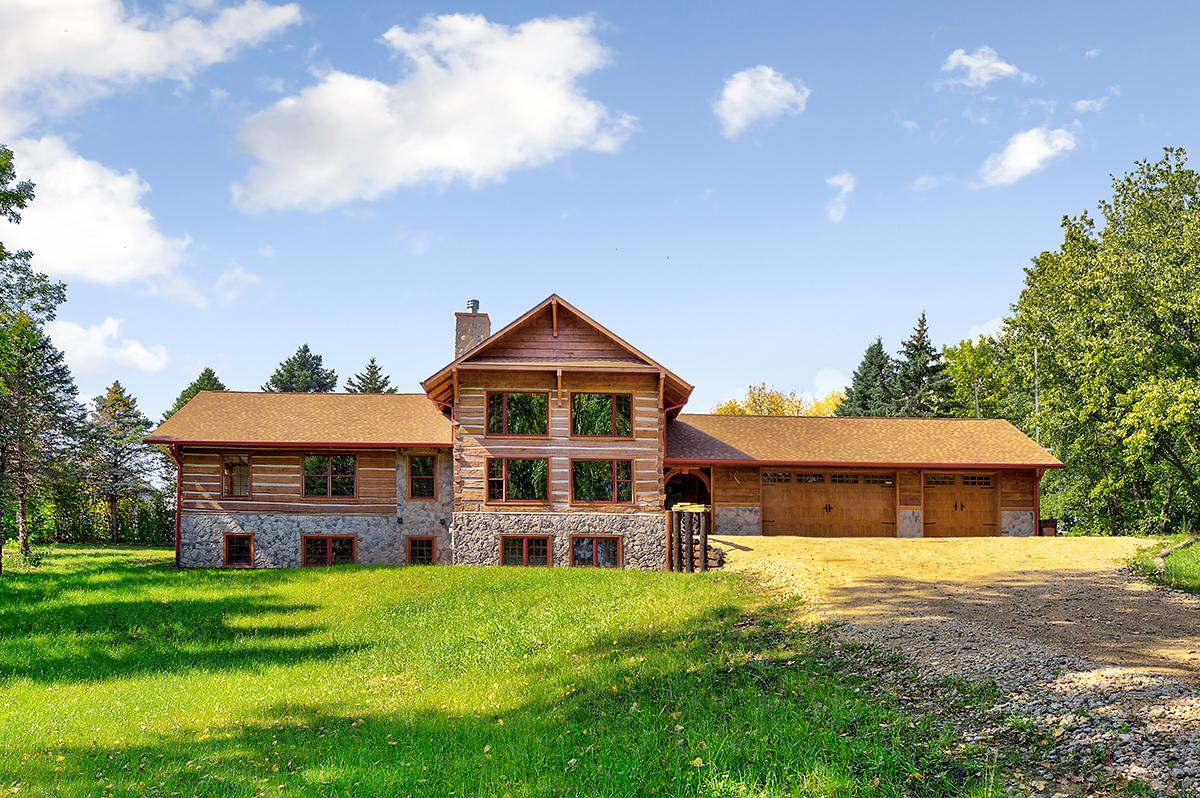
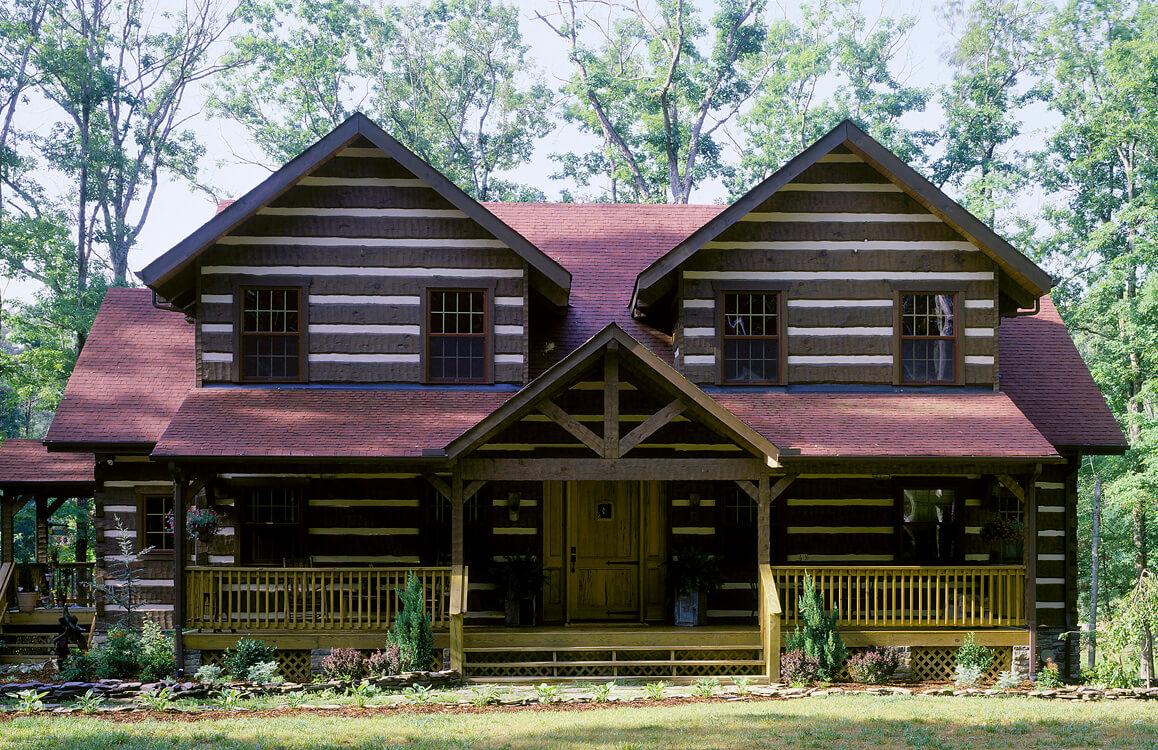
Perma-Chink has evolved into an elastomeric compound that has been specifically designed for use in log home sealing applications. Perma-Chink adds to the overall integrity of the structure by not only preventing water and air from entering the home, but also adding greatly to the overall effectiveness of the entire building envelope – keeping heat and air from escaping during the heating and cooling seasons. While it looks fantastic when properly applied, Perma-Chink is most definitely a sealant first and a cosmetic product second.
It should also be mentioned that a properly applied chinking compound will help keep out unwanted insects and other nuisance pests. In the case of a “chinkless” style home, many homeowners often desire to add a chink line for cosmetic purposes to differentiate the home from a smooth-sided home. Or oftentimes on a full log wall system Perma-Chink is used as a contrast in the color of the chosen finish.
Who Can Apply Chinking Properly? A DIYer or a Pro?
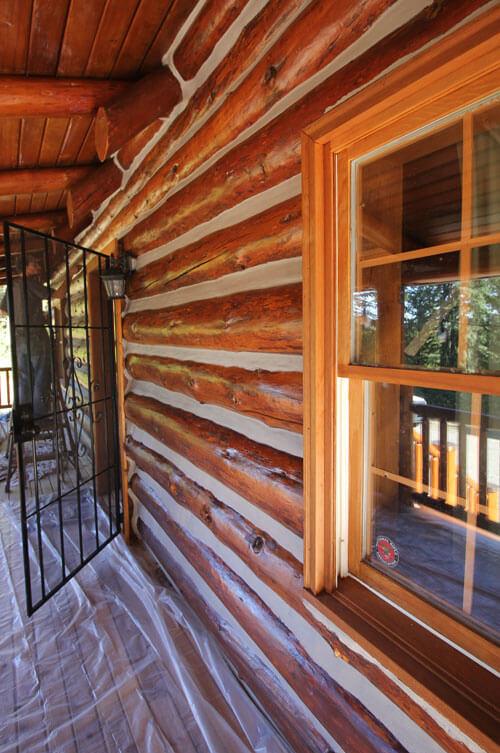
Basically anyone can apply Perma-Chink properly if they follow instructions that are available. Some homeowners attend workshops or seminars to learn how, should they choose to apply the product themselves. But in today’s busy environments, some homeowners choose to use the services of trained contractors as the design of their dream home may require the use of specialized equipment, such as lifts or scaffolding, and a trained contractor can usually shorten the time required to accomplish the job. Therefore the homeowner can tend to the other necessities involved to get moved in, and sometimes there are just not enough hours in the day for the homeowner to do this.
How has Chinking Changed Over the Past Decade?
Perma-Chink was the first synthetic chinking produced in 1981. There have been many significant changes made in formulations to improve the adhesion, flexibility, and longevity. Early formulations were lacking in elongation and freeze-thaw stability, which resulted in performance issues and storage and application concerns. Today’s Perma-Chink offers excellent qualities in all areas to meet the needs of the industry. Application can be accomplished in a much wider range of temperature extremes with little or no worries about product performance. There have also been additions to the color palette of the products to keep up with the homeowner’s desire to mix and match shades and hues of today’s finishes.
How is Log Chinking Repaired?
When Perma-Chink is properly installed, there are usually no repairs needed unless it is damaged somehow. The hard part is keeping people from trying to “feel” it before it cures, which results in indentations or fingerprints; and those usually occur right at the front door for some reason. But if repairs are needed, small separations can easily be repaired by applying a small bead of chinking into the damaged area and smoothing out with a small brush and water. Most chinking issues are the result of improper application of trying to make too little go too far. Again, read the directions prior to application and you should not have to make repairs.
Can You Stain Log Chinking or Change its Color in Any Way?
The answer is yes; Perma-Chink can be stained, but it will not take the color as wood does, so the results may be undesirable. Perma-Chink manufactures Chink Paint to change the color of the chinking, if so desired. Chink Paint uses the same raw materials as the chinking, so they are completely compatible with each other.
No matter how much you know about log home chinking, there is always something new to discover.
Celebrating America’s Independence and the Legacy of Log Homes
Each July, we commemorate the birth of the United States – a nation founded on independence, resilience, and ingenuity. Appropriately, July is also recognized as Log Home Industry Month, offering an opportunity to reflect on how one of America’s earliest building traditions helped shape the country’s identity.
Long before modern construction methods, early settlers relied on the abundant natural resources around them. While many of the first structures in colonial America were timber frame buildings, log construction, introduced by Scandinavian settlers in the 17th century, provided a practical, durable alternative. These early log structures, dating back more than 400 years, became a defining feature of frontier life, enabling settlers to quickly establish shelter in rugged environments.
Log homes are deeply tied to the American story. Like the nation itself, they represent self-reliance, craftsmanship, and a connection to the land. As settlers expanded westward, log construction techniques spread, becoming synonymous with perseverance and the pioneering spirit that ultimately helped shape the United States.
This year also marks an important milestone within the industry. Perma-Chink Systems is celebrating 45 years of innovation and leadership. Compared to America’s 250th anniversary, it may seem like a relatively short chapter, but its impact has been profound. The company’s flagship product, Perma-Chink log home chinking, not only helped solve critical maintenance challenges that once threatened the longevity and appeal of log homes, but also played a pivotal role in revitalizing and sustaining the industry.
By improving durability, energy efficiency, and long-term performance, Perma-Chink helped ensure that log homes could continue to be built, preserved, and passed down, creating lasting legacies for generations of homeowners.
Today, the log home industry continues to honor its heritage while embracing modern innovation. Contemporary log and timber homes blend time-honored craftsmanship with advanced engineering, sustainable forestry practices, and improved building science. While materials and technologies have evolved, the core values remain unchanged – authenticity, resilience, and a deep connection to nature.
Celebrating Log Home Industry Month in July, alongside Independence Day, provides a meaningful moment to recognize how this enduring building tradition parallels the founding ideals of America. Both reflect a commitment to independence, resourcefulness, and building something meant to stand the test of time.
As we honor the birth of our nation, we also celebrate the legacy of log homes, and the companies, innovations, and people who have ensured their future, preserving a uniquely American tradition rooted in craftsmanship, perseverance, and pride.
Discover some of the WORLD’S LEADING LOG HOME MANUFACTURES by clicking the link below.
A custom log cabin is more than a house — it’s a foundational structure for a homesteading lifestyle built around land stewardship, self-reliance, and daily connection to your environment. For aspiring homesteaders, building a log home requires thoughtful planning long before the first log is set.
A Quick Snapshot Before You Break Ground
Building a custom log cabin for homesteading involves:
Choosing land that supports long-term food production and water access
Preparing a site that protects the structure from drainage and weather issues
Securing permits and working with experienced professionals
Designing interior and exterior spaces around real homestead workflows
Planning for construction timing, settling, and ongoing maintenance
When done intentionally, your cabin becomes an integrated part of your working landscape — not just a place to sleep.
Spend time walking the property in different weather conditions. Observe drainage patterns, wind exposure, and where snow accumulates. These observations will directly influence cabin placement.
Site Preparation Basics
Proper site preparation protects your investment:
Grade the land to direct water away from the foundation
An experienced log cabin contractor will account for settling by installing slip joints, adjustable posts, and proper window and door framing systems. This is not an area to improvise.
When interviewing contractors, ask to see previous builds. Talk to past clients. Clarify who handles subcontractors and inspections. A log cabin is a specialty build — choose someone who treats it that way.
Designing for Daily Homesteading Life
Your cabin should support how you actually live and work.
Functional Spaces to Prioritize
A mudroom for boots, tools, and wet clothing
A pantry sized for bulk storage and preserved food
A utility area for water filtration, solar equipment, or battery systems
Covered outdoor workspace for firewood processing or equipment repair
Think beyond aesthetics. For example, positioning the kitchen near garden access shortens harvest-to-prep time. Placing windows to monitor livestock saves steps during winter storms.
Design integration matters. Map your property layout — gardens, greenhouse, barn, workshop — and position the cabin as the central operational hub.
Managing the Paperwork Without Losing Your Mind
Permits, contracts, and design documents accumulate quickly during a custom build. You’ll likely juggle building permits, septic approvals, contractor agreements, engineering plans, and insurance paperwork.
Keep all documents organized and easily accessible throughout the process. Many homesteaders create a digital master file that includes every permit revision and contractor change order. Tools that let youmerge PDF files online can simplify this by combining scattered documents into one consolidated file. When inspectors call or contractors need clarification, having everything in one place reduces delays and stress.
A Resource for Learning Log Home Craft
If you want reliable, homeowner-focused information about building and maintaining a log cabin, the International Log Builders’ Association (ILBA) is an excellent resource. ILBA supports education and standards in handcrafted log construction, offering articles, training information, and technical insights into proper log building practices.
Reviewing guidance from organizations dedicated specifically to log construction can help you better understand craftsmanship standards, maintenance expectations, and what quality work should look like — whether you’re building yourself or hiring a contractor.
Ongoing Maintenance: What to Prioritize From Day One
A custom log cabin requires consistent care. Maintenance isn’t optional — it’s part of the lifestyle.
From the first year onward, prioritize:
Inspecting and maintaining sealants between logs
Monitoring moisture intrusion around windows, doors, and rooflines
Keeping gutters clear and directing water away from the foundation
Protecting wood surfaces from UV damage and pests
Regular inspections help catch small issues before they become structural problems. Specialty retailers like Perma-Chink Systems provide products and guidance specifically designed for log homes, including sealants, finishes, and repair materials. Their technical resources are especially helpful for new owners learning what to look for.
Consistent maintenance preserves not only the beauty of the logs but also the energy efficiency and structural integrity of your home.
Frequently Asked Questions
How much land do I need for a homesteading log cabin?
It depends on your goals. A few acres can support gardens and small livestock, while larger operations may require 10+ acres for pasture and crop rotation.
Do log cabins require more maintenance than standard homes?
Yes. Logs must be monitored for moisture, UV exposure, and settling-related gaps. However, routine inspection makes maintenance manageable.
How long does it take to build a custom log cabin?
From design to move-in, expect anywhere from 6 months to over a year depending on permitting timelines and project complexity.
Can I build a log cabin myself?
Some homesteaders do, especially with smaller kits. However, structural expertise and knowledge of settling systems are essential for long-term performance.
Step-by-Step Planning Checklist
Define your homesteading goals (livestock, crops, off-grid systems).
Evaluate land for water, soil, zoning, and access.
Develop a property layout map before finalizing cabin placement.
Secure permits and confirm code requirements.
Hire an experienced log cabin contractor.
Plan for settling adjustments in design.
Create a long-term maintenance schedule before move-in.
A custom log cabin built for homesteading is both shelter and system. Every decision — from land selection to maintenance habits — affects how well your home supports your self-sufficient goals. Plan carefully, build with experienced help, and treat ongoing maintenance as part of daily stewardship.
Seth Murphy is a guest contributor and can be reached at papadyi.com
Perma-Chink Systems Featured on Fox Business® Network – As Seen on Fox Business
We’re honored to have been featured on Fox Business as a top manufacturer by Alan Ackles for Manufacturing Marvels®!
Being recognized with the “As Seen on Fox Business” spotlight is something we are incredibly proud of, as not every company is chosen to be featured on Manufacturing Marvels.
If you missed the original airing, click this link 🎥 to watch the 2-minute feature and get a behind-the-scenes look at Perma-Chink Systems manufacturing and our passion for protecting log and timber homes.
Woodpeckers cannot tell the difference between the wood in your home and dead trees in the forest, so they occasionally cause damage to logs, siding, or fascia boards. People attribute this damage to woodpeckers pecking for grubs in the wood, but that is not always the case. There are three main reasons that woodpeckers peck on wood; one, they are looking for something to eat, two, they are defining their territory and three, they are making a nest. It is usually the second reason that it creates the most damage.
Woodpeckers are very territorial. In order to let other woodpeckers know that this is his (or in some cases her) territory, it flies around the perimeter of its territory, usually in the morning, and initiates a series of raps on hollow trees or other wood members that have the “right” sound. This behavior is called “drumming” and consists of two or three long brrrrrrrrrrrps. The woodpecker will typically drum in one spot for a minute or so, day after day. It does not take long before a large, irregular hole appears at the drumming site. If the site is a log or siding of a home, it can become a real eye sore.
When a woodpecker pecks for grubs in wood it acts differently and makes smaller cone-shaped holes or a long gallery. If you have ever seen a woodpecker searching for grubs it will constantly turn its head as if looking for something on the wood. It is actuality listening for grubs feeding in the wood. All it needs to do is make a hole large enough for its tongue. A woodpecker’s tongue is long and thin and that is what it uses to catch a grub in a gallery. The holes woodpeckers make searching for grubs are usually no more than an inch or so in diameter. Occasionally a woodpecker will attempt to excavate out a round nesting hole in a log, but it is rare and if the wood is sound, it will usually give up after a few days. However, they will make a hole in synthetic chinking to establish a nesting site.
Solving the Problem
One thing you can try to discourage drumming woodpeckers is to put a piece of metal window screen over the area where the woodpecker drums. This often discourages it enough that it will go elsewhere. Fake owls, snakes, and other scare devices may work for a little while, but it does not take exceedingly long for the woodpecker to discover that if it just ignores it, nothing happens. Trapping and releasing woodpeckers aren’t highly effective either. They can fly and unless you release them miles away, they will return to their home territory within a few days.
For woodpeckers feeding on beetle grubs, the best solution is to kill the grubs in the wood and the way to do that is to treat the wood with a borate. This will kill the beetle larvae and if there are no grubs for the woodpecker to search for, it will move on to better feeding sites. However, borates are not effective for eliminating or preventing carpenter bees so other methods of control must be used.
Three types of woodpeckers that occasionally damage log homes
Through late fall to early spring, we occasionally receive calls about Lifeline Advance topcoat turning milky white after application, a condition called blushing. Before discussing blushing, the formulas for both Lifeline Advance Gloss and Satin have recently been modified to reduce the probability of blushing without altering any of their properties.
Blushing is mostly caused by atmospheric humidity, reduction in rate of solvent evaporation, and low temperatures. Any water that gets trapped or incorporated into the film may cause blushing. This is particularly noticeable on shaded walls, especially where Lifeline Advance has been applied too heavily. Once Lifeline Advance has a chance to dry and cure this whitening should disappear, but it may take several warm, dry days. There is not much anyone can do to help speed up the curing process. When the blushing occurs on a few logs, using a hairdryer on the area can sometimes help (do not use hot air). Often, the best thing is to do nothing. If blushing occurs in the fall, it may take until spring for the Advance to completely resolve and turn clear.
The best way to avoid blushing is to apply the Lifeline Advance when the conditions are most favorable for success. For example, avoid applying when the temperatures are low and relative humidity is high. Dew formation is more likely as well as an increased risk for blushing. Instead, apply it during warm and dry conditions when possible.
Blushing does not affect the durability or performance of the finish. It is, however, cosmetically unattractive until the arrival of warm, dry weather. Once the Lifeline Advance is clear, blushing should never re-occur.
Restacking History: Expert Chinking Brings a Reclaimed Cabin Back to Life
Tucked into its natural surroundings, a small cabin built from reclaimed wood was given new life with a thoughtful addition – blending old character with new craftsmanship. The cabin was dismantled and restacked in Wauconda WA, a very remote location 4 hour drive from Seattle near the Canadian border.
The project was completed by Jeff Kyger of Northwest Log Home Care, who brought his experience and attention to detail to every stage of the finish.
Working with reclaimed materials can be challenging, especially when it comes to irregular corners and joints. Chinking the corners of the cabin required patience and precision, but Jeff handled it with skill and confidence. Using Perma Chink® chinking in his favorite color, Medium Gray #224, he achieved clean, consistent lines that complemented the cabin’s rustic charm while providing long lasting protection.
The result is a beautifully finished cabin that honors its past while embracing modern performance – proof that with the right products and expertise, even the most challenging details can shine.
To provide the best experiences, we use technologies like cookies to store and/or access device information. Consenting to these technologies will allow us to process data such as browsing behavior or unique IDs on this site. Not consenting or withdrawing consent, may adversely affect certain features and functions.
Functional
Always active
The technical storage or access is strictly necessary for the legitimate purpose of enabling the use of a specific service explicitly requested by the subscriber or user, or for the sole purpose of carrying out the transmission of a communication over an electronic communications network.
Preferences
The technical storage or access is necessary for the legitimate purpose of storing preferences that are not requested by the subscriber or user.
Statistics
The technical storage or access that is used exclusively for statistical purposes.The technical storage or access that is used exclusively for anonymous statistical purposes. Without a subpoena, voluntary compliance on the part of your Internet Service Provider, or additional records from a third party, information stored or retrieved for this purpose alone cannot usually be used to identify you.
Marketing
The technical storage or access is required to create user profiles to send advertising, or to track the user on a website or across several websites for similar marketing purposes.