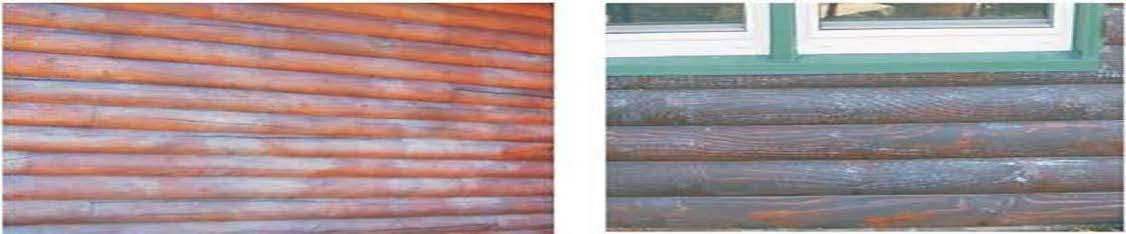
Through late fall to early spring, we occasionally receive calls about Lifeline Advance topcoat turning milky white after application, a condition called blushing. Before discussing blushing, the formulas for both Lifeline Advance Gloss and Satin have recently been modified to reduce the probability of blushing without altering any of their properties.
Blushing is mostly caused by atmospheric humidity, reduction in rate of solvent evaporation, and low temperatures. Any water that gets trapped or incorporated into the film may cause blushing. This is particularly noticeable on shaded walls, especially where Lifeline Advance has been applied too heavily. Once Lifeline Advance has a chance to dry and cure this whitening should disappear, but it may take several warm, dry days. There is not much anyone can do to help speed up the curing process. When the blushing occurs on a few logs, using a hairdryer on the area can sometimes help (do not use hot air). Often, the best thing is to do nothing. If blushing occurs in the fall, it may take until spring for the Advance to completely resolve and turn clear.
The best way to avoid blushing is to apply the Lifeline Advance when the conditions are most favorable for success. For example, avoid applying when the temperatures are low and relative humidity is high. Dew formation is more likely as well as an increased risk for blushing. Instead, apply it during warm and dry conditions when possible.
Blushing does not affect the durability or performance of the finish. It is, however, cosmetically unattractive until the arrival of warm, dry weather. Once the Lifeline Advance is clear, blushing should never re-occur.