
Blog
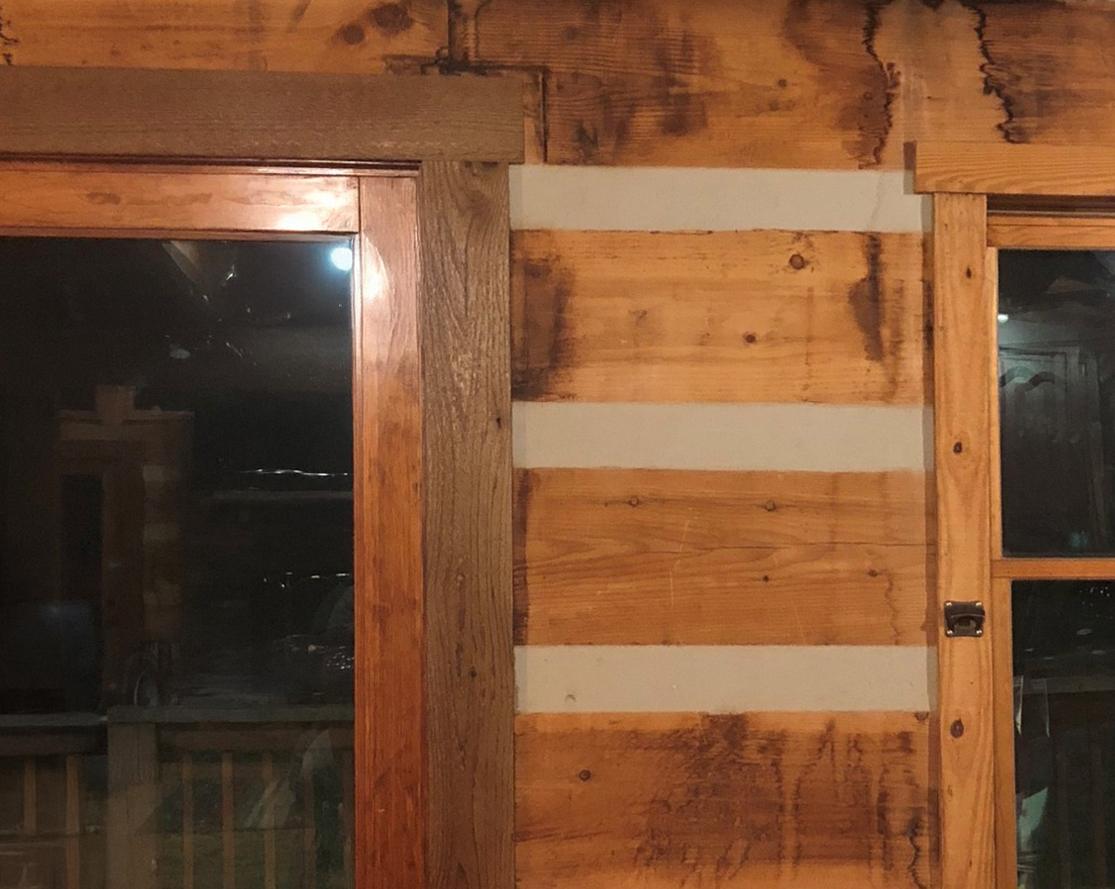
Some of the most challenging discolorations on log home walls, or any wood surface, are water stains. They can run the range from light brown to jet black, and can appear on both interior and exterior surfaces.
How do water stains form?
All wood contains a number of components that are grouped under the category of “water-soluble extractives.” In other words, they can dissolve in water and as the water within the wood evaporates, they can be carried along to the surface.
Generally, if wood is exposed to water for only a brief period of time, the water does not get a chance to penetrate deep into the wood and dissolve these water-soluble components. However, if the wood is exposed to water for days, weeks, or months, the water can pick up a high concentration of these components and deposit them on or near the surface of the wood.
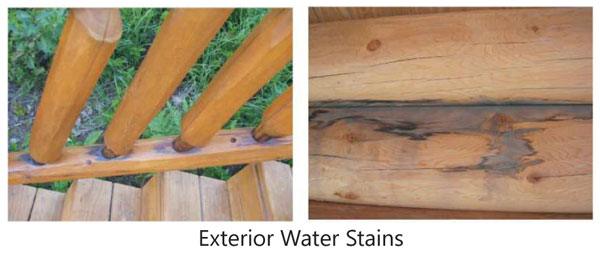
Exterior water stains typically occur around log checks, fissures, and other openings that collect rain water. The water soaks into the wood and as it evaporates out of the wood, it brings along the colored extractives which can then become visible on the surface. In some cases, water-soluble tannins may react with minute particles of steel on the surface, forming dark iron tannate stains.
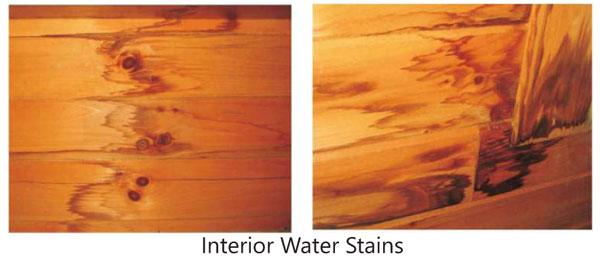
This process may occur on bare wood or under an existing finish. Interior water stains typically develop during construction before the home is sealed or from an ongoing water leak. They can be particularly ugly and may cause a lot of distress.
Getting Rid of Water Stains
As previously stated, water stains can be just on the surface or they can go deep into the wood. The first step in determining a course of action is to find how deep the stain goes into the wood. Remove about a 1/16” thick sliver of the discolored surface with a sharp knife, and if the discoloration comes off with the sliver, the discoloration can usually be sanded off or treated with products like Log Wash™, Wood ReNew™, or Oxcon™.
Since there are a number of components involved with water stains it’s impossible to predict which product will work best. We recommend starting with Log Wash and if that does not work, move to Wood ReNew, and finally Oxcon.
The problem is that even these products don’t always work; sanding may be the only solution. If the discoloration goes deep into the wood, still visible after the sliver of wood is removed, it will be virtually impossible to either sand or chemically remove the water stain. In this case there are only two options: replace the discolored wood or hide the stains.
Hiding Water Stains
Although Perma-Chink Systems manufactures and sells transparent and semi-transparent finishes, some of our colors are fairly heavily pigmented which gives them some hiding power. On interior bare wood surfaces, Butternut is a good choice, since it is very close to the color of bare white pine. It may take several coats depending on the darkness of the discolorations.
If a colored stain is going to be applied later, it would be a good idea to apply Prelude™ over the entire wall once the water stains are hidden to even out the absorption of the stain and obtain a uniform final color. For hiding very dark discolorations, one or two coats of Kilz® primer will hide virtually anything. Kilz is available in both water and solvent-based formulations, but only comes in white. However, it can then be coated with our colored stains and although it may not result in an exact match with the rest of the wall, it will definitely look better than the dark, visible water discolorations.
The best way to hide exterior water stains is to use a dark-colored finish like Walnut, one of our gray-colored finishes, or our wheat-colored finish. If this is not to your liking, you can try using the same hiding procedures as stated for interior stains, but on exterior walls the opaque finished areas tend to be more pronounced than on interior surfaces.
By Lee Denman, Intensified Wood Restoration
There are essentially two types of log home stains available on the market today:
| Film-Forming FinishesOil-based (Alkyd) Log Home StainsLatex-based Log Home StainsAcrylic Latex-based Log Home StainsVarnishes for Log Homes | Penetrating FinishesOil-based Semi-transparent Log Home Stains |
What are the PROS and CONS of each of these types of log home finishes?
1. Oil Based (Alkyd) Log Home Stain
PROS: Wood grain visibility, UV Protection, Non Porous, Easy application, longer open times.
CONS: Trap Moisture, Brittle, Can’t Breathe, Weather Quickly, Coat build-up over time, Blistering occurs if moisture is present behind finish, High Maintenance.
2. Latex based Solid Color Log Home
PROS: Breathable, Flexible, Durable, High UV Protection, Porous, Easy application, Low maintenance, Long life, low odor.
CONS: Won’t prevent decay if conditions are favorable, Short Shelf Life.
3. Semi-Transparent Acrylic Latex based Log Home Stain
PROS: Breathable, Flexible, Durable, High UV Protection, Wood grain visibility, Porous, Low maintenance, Long life, low odor.
CONS: More difficult to apply than oil based stains and solid color stains, fast drying times.
4. Log Home Varnishes
PROS: Allow for natural look of logs.
CONS: High maintenance, prone to Cracking, Peeling and Blistering, Requires recoating every 1-2 years, Partial UV protection.
5. Oil based Semitransparent Log Home Stains
PROS: Penetrate into wood, Wood grain visibility, Breathable, High UV protection.
CONS: Perform best on rough sawn, weathered, or course textured wood. Compatibility issues with most log home sealants due to waxes found in most penetrating finishes. Don’t have a furniture grade finish look (dull), must apply second coat before first coat dries in order for stain to penetrate wood. Vapor barrier, non-breathable.

What types of log home stains work the best?
So we have all this helpful information on the types of log home stains but which log home stain is the best? It is hard to say which one is the absolute best because there are many factors that ultimately decide how well or long a log home stain will perform. Some of these factors are:
- What season the logs were cut (winter cut logs only)
- Proper surface preparation
- Environment surrounding building
- Moisture content of logs
Of all these factors none is more important than proper surface preparation of the logs before applying a log home stain. If the surface of the logs has not been prepped properly none of these log home stains will perform as they state they will. This is why it is important to only hire a qualified log home restoration expert to work on your log home! They will have the knowledge and expertise to work with the products available in the current log home market. This will ensure your investment is protected well into the future.
While we can’t say which log home stain is the overall best, we can recommend which type of log home finishes we feel perform exceptionally well and keep maintenance costs down throughout the years. This only holds true if proper surface preparation is kept in mind before and during any finish or sealant application. In our opinion, film-forming, latex based waterborne log home finishes such as Perma-Chink Systems’ Lifeline is best bang for your buck!
While Perma-Chink Systems finishes aren’t the cheapest out there they seem to require the least amount of maintenance based on our 25+ years of experience restoring log homes and log cabins of all sizes and shapes. They also offer an unmatched 5 year warranty on their log home stains when applied properly and maintained accordingly.
Lee Denman is the founder of Intensified Wood Restoration Company
Perma-Chink Systems Free Samples
Want to try Perma-Chink Systems products? Order free samples online here.
There are two kinds of wood – wood that is rotten, and wood that one day will be rotten. This statement may seem a bit extreme, but it is a fact. Wood is a product of nature and its nature is to return to the earth in a natural process. As professional log home contractors, it is our job to ensure that wood used in the construction of log homes lasts for many years.
Borates have been used to preserve wood for many years, and because people have lately become more concerned with the toxicity of products used in their homes, it has steadily grown in popularity. We will discuss the use of borates to preserve log homes in detail.
What are borates and how do they work?
Simply put borates or borax are naturally-occurring water-soluable salt-like acids. They are about as toxic as table salt to humans and pets but kill wood-consuming insects like termites, powder-post beetles, and old house borers. More importantly, it kills the wood destroying microorganisms that cause rot.
Rot in log or conventional homes causes hundreds of times more damage to homes every year than damage by insects.
For borates to be effective, they must be actually eaten by an organism. Borates are not effective against carpenter bees because they do not actually consume wood – they just chew it. Interestingly enough, consuming borates does not instantly kill termites or other wood destroying insects. It does however kill the bacteria in their digestive system. These bacteria actually help the insect digest the cellulose fibers that make up a piece of wood. Without these bacteria, the insects die of starvation. Funny how nature works.
Borates
Borax, also known as sodium borate, sodium tetraborate, or disodium tetraborate, is an important boron compound, a mineral, and a salt of boric acid. Powdered borax is white, consisting of soft colorless crystals that dissolve easily in water.
Borax is a component of many detergents, cosmetics, and enamel glazes. It is used to make buffer solutions in biochemistry, as a fire retardant, as an anti-fungal compound, in the manufacture of fiberglass, a texturing agent in cooking, as a precursor for other boron compounds, and along with its inverse, boric acid, is useful as an insecticide.
Types of Borates
Perma-Chink Systems markets four different forms of borates for the purpose of preserving wood. TimBor is sold as a powder that is mixed with water on-site and then sprayed onto wood. PenaShield comes pre-mixed and is Ready-To-Use. Bora-Care contains the highest concentration of borax with glycol added to deepen penetration into wood and must be mixed with additional water on-site. The Concentrate is usually used in extremely wet or rot-prone conditions or on active rot or insect infestations. Cobra-Rods are made from borax and copper which have been compressed and heated to form a glass-like rod of borax which is inserted into holes drilled in rot-prone areas like porch posts. Cobra Rods are so effective that they are now inserted into all new utility poles installed in the southern U.S.
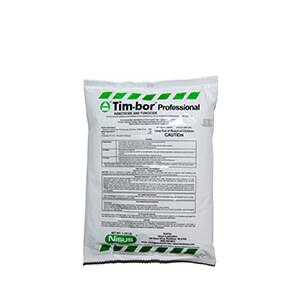
Tim-Bor®
Sold as a powder that is mixed with water on-site and then sprayed onto wood.
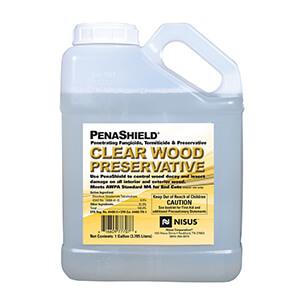
PenaShield®
Comes pre-mixed and is Ready-To-Use.

Bora-Care®
Contains the highest concentration of borax with glycol added to deepen wood penetration and must be mixed with additional water on-site. It is usually used in extremely wet or rot-prone conditions, on active rot, or insect infestations.
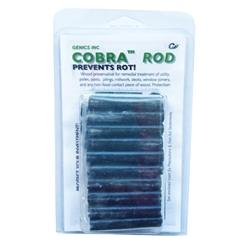
Cobra-Rods®
Made from borax and copper, are compressed and heated to form a glass-like rod. The rods are inserted into holes drilled in rot-prone areas, like porch posts. Cobra Rods are so effective that they are now inserted into all new utility poles installed in the southern U.S.
When most homes are constructed, the logs are clean and smooth with very few checks, or cracks, in the logs. During the first few years, these checks open up, expand, and deepen. Many checks extend to the center of the log – much deeper than any topical application of borax can effectively reach. These exposed deep checks CAN and DO collect water. Over time, this will cause the log to rot. It is very important to include the application of borates into checks during any and all maintenance work done on a log home prior to a maintenance coat of stain, clear coat, or caulking.
Special and Unusual Applications
I have used borate treatments over the years in many other special and unusual applications that I will list below.
For antique log homes – Owners of antique log homes have spent a lot of money purchasing old logs, timbers, and siding because of their unique appearance. They love that silvery-gray rough texture inherent to old timbers. They are very reluctant to remove this look in order to properly apply a protective waterproof coating that would protect these logs from rot.
An alternative for this unique and growing segment of the market is to simply treat the exposed logs every year with borates. The treatment must be done every year because borates are water-soluable and rain will eventually leach the product out of the wood.
The borates will not change the color of the wood and it is almost impossible to over-apply.
For additional protection against insects inside new homes – During initial construction, spread powdered Tim-Bor into open stud wall cavities and on the floor where base cabinets are to be located. Then close up the stud walls and install the base cabinets. The borate powder will stay in those locations forever and kill all roaches and ants that come in contact with Tim-Bor.
Now, I told you earlier that insects must consume the product to be effective and that is true. Insects can crawl through the powder without being harmed. However, ants and roaches belong to a group of insects which constantly groom themselves to stay clean – or a clean as a roach or ant can be. To stay clean, they lick their legs and other body parts. When they do, they consume the borate and will die.
For log replacement projects – I highly recommend a thorough treatment of all replacement logs and log siding with liquid borates and Cobra Rods. The chances are that homeowners who have not maintained their homes in the past will probably neglect them in the future.
A more permanent treatment today will lower your liability in the future as a contractor. An even better plan would be to have replacement logs pressure-treated with borates. There are probably more companies that provide that service, but I do know that Appalachian Log Structures, Lok-N-Logs, and Sisson DuPont Carder will pressure-treat logs for use in log replacement. They all also produce many different log profiles. If I were to replace a log on a customer’s home that was pressure-treated, I would have no problem extending a lifetime warranty on that log – a good selling point for log home contractors.
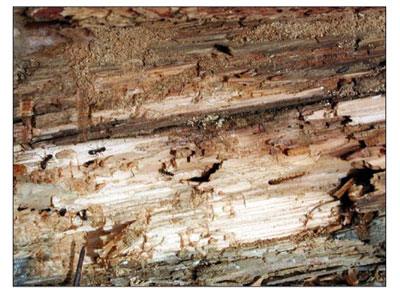
For active infestations – I have successfully used borates against insects that are actively living in isolated spots on structures. In the pictures below, powder-post beetles infested barn wood on my porch. I injected borates into the actual holes using a syringe made for injecting marinade into food.
Any plastic syringe will work when held tightly against the hole to inject the liquid.
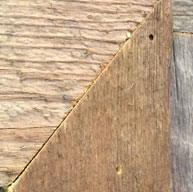
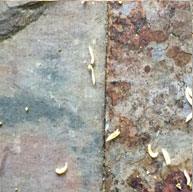
I treated these holes one afternoon and found them dead on my counter-top the next day. I may have simply drowned them, but that was a year ago and they have not returned.
The same type of method can be used in isolated areas of rot or termite damage using – believe it or not – a bulb-type turkey baster or cheap ketchup squirt bottle. Simply drill angled holes into the wood on the upper part of the log (you have to drill to get the product into the wood past the existing water-proof stain on most logs) and insert the bottle or baster full of borate solution into the hole and walk away for a couple of days. The liquid will slowly soak into the log and saturate a large section of log. If the product simply flows quickly into the log, then you will probably be facing a log that is too far gone and it may need to be re-faced or replaced. Once the product is deep in the log, it will soon kill the rot or termites.
I recommend Bora Care for this procedure as it has the highest concentration of borates. Remove the delivery device and add a Cobra Rod as extra insurance and longevity.
For log railings – Log railings exposed to the weather are a maintenance nightmare. They are very difficult to maintain a stain coating on because they develop checks on the upper curvature of the rails which gather water. However, when located on a raised deck or stairway, they can be downright dangerous. How many homes have you visited a homeowner who warns you not to lean on the railing during your inspection of the home?
Think about it – the only thing between you and serious accident is a rotted handrail! Many state codes now require pressure-treated handrails.
These things are a serious safety problem – and this warning does include cedar or redwood which last longer, but also rot.
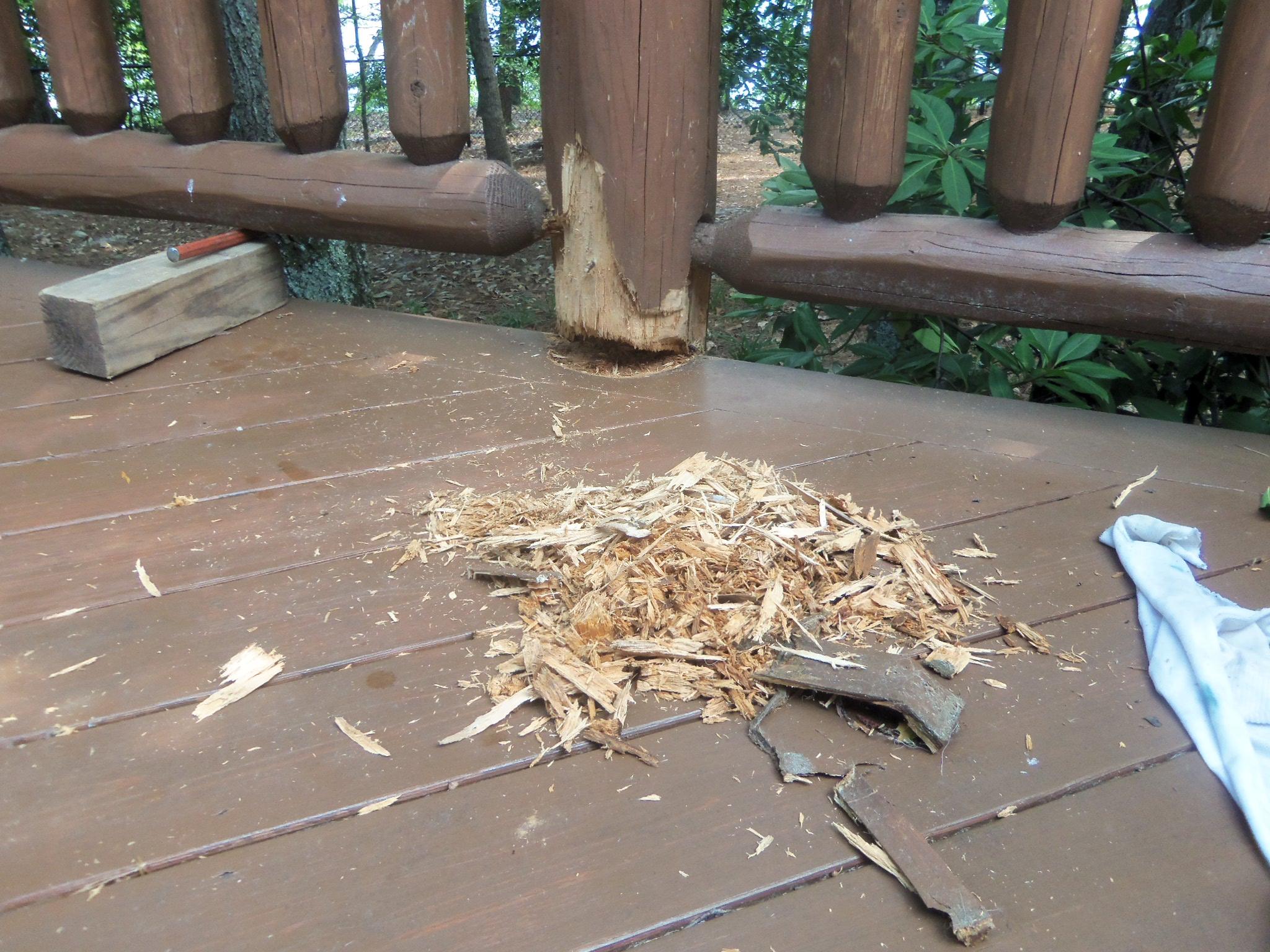
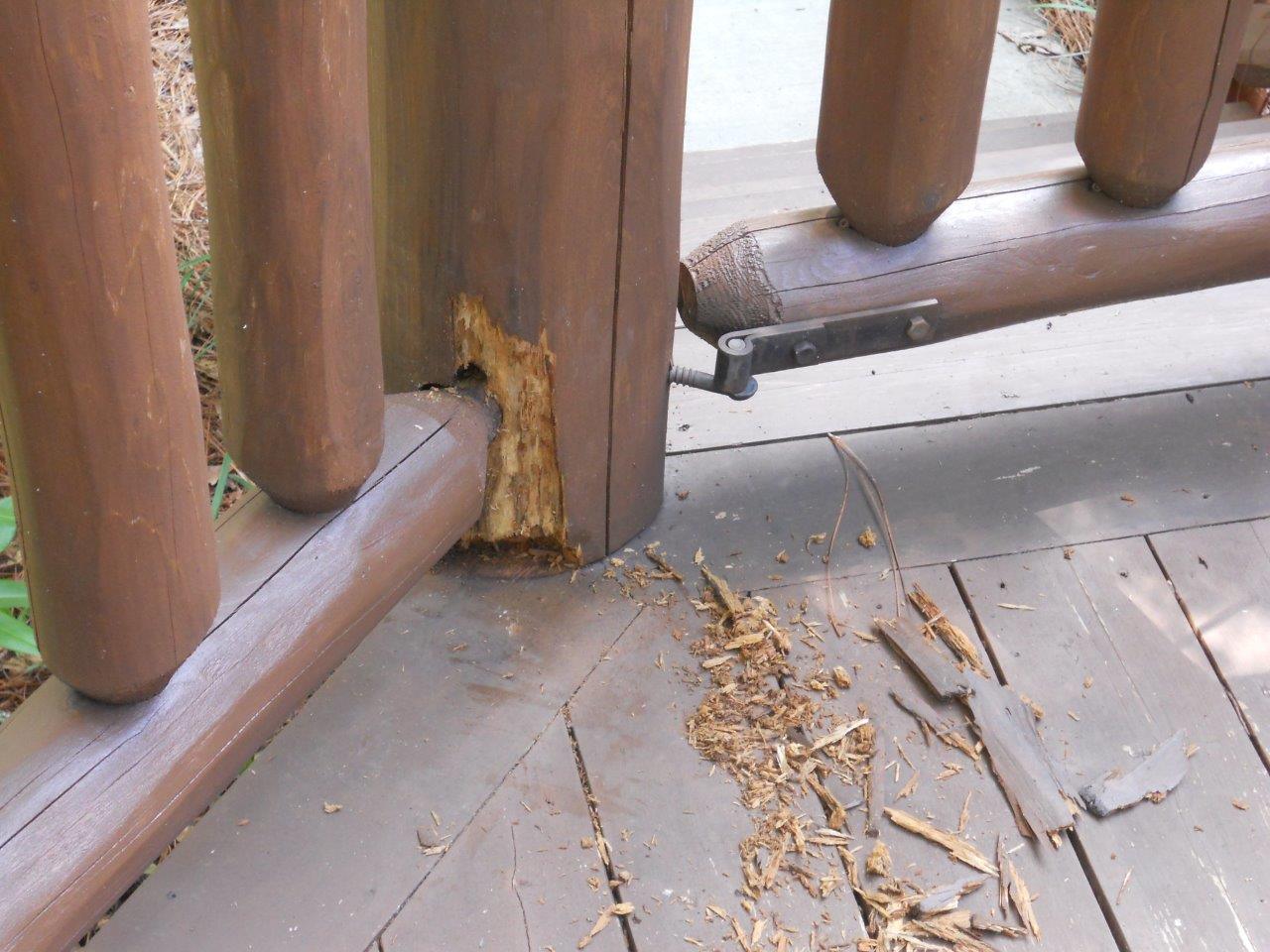
If you are at a new home site, you can treat new hand rails as they are assembled by drilling a hole into the end of each spindle and inserting a Cobra Rod. The borates and copper will dissolve into the surrounding wood and protect against rot. I would also soak all the components in one of our other liquid borate products. A pain, but better than an accident.
If you have more questions, please contact us 1-800-548-3554.
Please visit Perma-Chink’s How-To Tips for more detailed application information on the use of these products.
If you live around trees, and many people do, you probably have carpenter ants around your home. Carpenter ants are typically large ants, although the size of the workers can vary in a single colony. Finding a few carpenter ants in your home each week is not necessarily a sign that you have an infestation. Foraging ants roam far and wide looking for food and an occasional ant trapped in a sink or bathtub is quite common. If there are trees close to your home, ants can fall or be blown off the trees onto your roof. They may end up trapped within your home during their journey back to their nest.
Carpenter ants do not eat wood. They get their name from their habit of hollowing out wood in order to make a suitable nesting site. In addition to wood, carpenter ants will happily nest in Styrofoam (EPS) panels and other types of insulation. A good indication of a carpenter ant infestation within a home is the presence of numerous foraging ants, especially in the kitchen or bathroom. Water attracts carpenter ants as much as food and moist wood around leaky pipes and drains provides an ideal environment for nesting ants. Another sign of an infestation is the presence of large winged ants in late spring and early summer.
Most carpenter ant colonies start outdoors in a tree cavity. After a few years, the colony grows and expands its foraging territory. If suitable conditions are found within a nearby home, satellite colonies can become established in voids, moist wood or foam panels within the home. These satellite colonies contain workers, older larvae, pupae, and when conditions are right, some winged reproductive ants. Once a satellite colony has become established within a structure the potential for additional satellite colonies dramatically increases.
Control of a carpenter ant infestation starts with a complete and thorough inspection. Useful inspection tools include a flashlight, a thin bladed screwdriver for probing the wood and a stethoscope, if you have one. Since carpenter ants are most active at night, the best time to perform an inspection is after dusk. Two things to keep in mind during your inspection, find the voids and follow the water. Although carpenter ants are usually found in wood, any dark, damp cavity can provide a suitable nesting site. Carpenter ants make a noise like crinkling cellophane as they move about and a stethoscope makes them much easier to hear and locate. Tapping a suspected nest site excites the ants and you should be able to hear their movement.
When carpenter ants burrow into wood they generate sawdust, or frass, that can pile up beneath the site of their activity. Carpenter ant frass looks like tiny wood shavings and will often contain bits and pieces of dead insects. Look closely at all of the wood directly above any frass piles for signs of any openings. Probing the wood with a thin bladed screwdriver can reveal hollowed out nesting sites.
In addition to food and a nesting site, carpenter ants require water. That’s one reason they prefer to nest in damp wood. A moisture meter is a great tool to have for discovering actual and potential carpenter ant nesting sites as well as finding decay prone areas. Some pretty good moisture meters can be found on eBay or Amazon.com for less than $50. A moisture reading of over 20% is an indication of some type of water problem that needs to be corrected.
Controlling Carpenter Ants
Correcting roof leaks, faulty plumbing and water penetration into log walls are the most important steps for long-term ant control. Even after the leaks have been repaired, enough moisture may remain to sustain a carpenter ant infestation for many months. The application of a contact pesticide directly to the nest is not the best way to control carpenter ants. Most contact pesticides are highly repellent which causes the ants to scatter. This creates the potential for additional satellite colonies to become established in other areas of the home. In addition, contact pesticides do not impart any long-term residual protection to the wood. After a few months the carpenter ants may return to the site of their original nest.
A better way to control a carpenter ant infestation is to treat the infested area and those areas subject to infestations with a borate such as Bora-Care®, PenaShield®, or Tim-Bor®. They are all effective pesticides for preventing carpenter ant infestations. Tim-Bor® is best used as dust in wall voids and other areas as preventative measures. Along with the use of a borate you can use a granular bait such as Amdro Ant Block around your home.
Also, removing all wood debris near the house, keeping shrubs and tree branches from touching your house, and storing firewood away from the house will all help reduce infestation. Carpenter ants are not easily eliminated, and you may wish to call a professional in to take care of the problem.
If you live in or near the woods, you probably have a variety of rodents that also occupies your surrounding area. Most rodents like to gnaw on wood and if your log home is accessible to them it may become the target of their gnawing activity. Although field mice occasionally work on the exterior of a home, most of their effort is devoted to finding a warm place to spend the winter. If you seal up all of the potential entrance points, especia lly around the foundation, you will prevent their taking up residence inside your home. Just remember that they can squeeze through unbelievable small openings so you need to do a thorough job.
Squirrels and Porcupines
Almost all of the log home wildlife damage we see is the result of gray squirrels. However, flying squirrels are commonly found in many parts of the country, and they, too, can cause wood damage. But since flying squirrels are extremely shy and nocturnal, they are rarely seen. Squirrels chew on wood for two basic reasons, they are attempting to get inside where it’s nice and warm, or they are trying to extract salts that may be contained in the wood. This problem is most common on wood that has been bleached or borate treated since the sodium salts contained in bleach and borates provide essential nutrients to these animals. If this is the case, in addition to trapping or elimination, there is another method that may help prevent them from damaging your home. Go to your local co-op store, buy a salt lick and place it where it is accessible to these animals. The salt lick will supply the mineral nutrients they require, and it is a lot easier for them to obtain what they need from the lick than it is by chewing on your home. Porcupines too have a ravenous appetite for salt and this method may work for them as well.
Some people have reported success in preventing animals from chewing on their wood by coating it with a repellent containing Bitrex, a very bitter substance added to many household products to prevent small children from drinking them. One product specifically designed for this purpose is Ropel® available from Nixalite of America, Inc. Information is available online at www.nixalite.com/ropel.aspx or call them at 888-624-1189. Never attempt to add any of these type products to a stain or topcoat, they are not compatible with many types of finishes. They are made to be applied on top of a dried finish, not mixed in with it.
Occasionally animals will gnaw on a home just for the fun of it. In these cases, trapping and relocation may be the best and only solution.

In many areas of the country when cool, fall days arrive, Asian lady beetles (ladybugs), Harmonia axyridis, and boxelder bugs, Boisea trivittatus, congregate on exterior walls. They typically choose the south and west facing walls since these walls are the warmest. Once on the wall they look for nooks, crannies and other dark openings where they can hibernate over the winter. Log checks, gaps between butt joints and corner openings provide ideal wintering sites for these insects. If any opening leads to the inside of the home, they can become a real nuisance, especially if they enter in large numbers. An effective method to handle them inside is with a vacuum cleaner. Spraying them with pesticides is unnecessary and unhealthy.
The best way to keep them out of your home is to block their entry points with a sealant, screening and weather stripping. Using high quality sealants like Energy Seal™ or Woodsman™ will help prevent these and other insects from entering your home for years to come. When sealing, pay special attention to window and door frames. That’s where openings typically appear as a home settles and logs season.
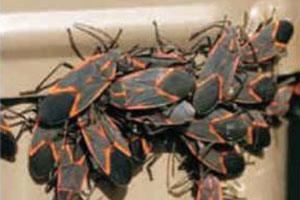
Although ladybugs and boxelder bugs do no damage or reproduce indoors, they can still be a nuisance. If a gathering of insects on the exterior walls of your home bothers you, spray them with a simple solution of soap or detergent and water. To help keep them off of the walls, you can use a pesticide containing deltamethrin, cypermethrin, permethrin or bifenthrin. These products only last about three to four weeks, so the treatment will have to be repeated every so often and should only be used during periods of peak activity. Be sure to follow label directions and read and understand all precautions that must be taken when using any pesticide.
Most pest control companies offer some type of exterior treatment for these insects as well. But be aware that any type of exterior treatment must be applied before the insects enter the home in the fall of the year.

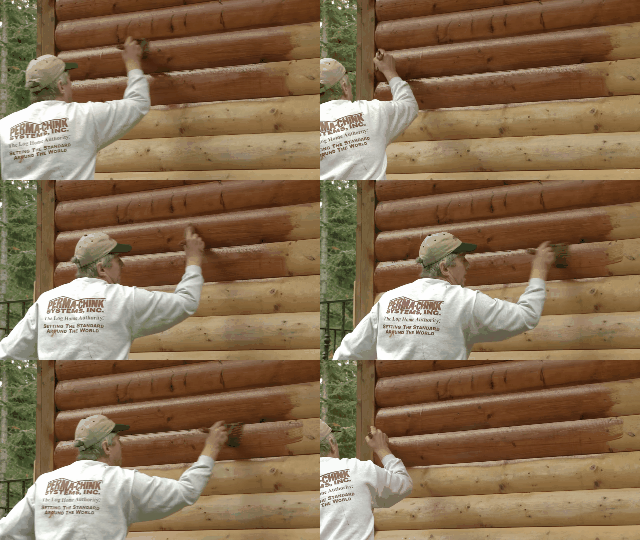
What exactly is “back-brushing” and why is it so important? Back-brushing is the term used to describe the process of working the finish into the wood and obtaining an intact, uniform film over the entire surface. Typically used when applying stain with an airless sprayer; however, back-brushing is just as important if the product is manually applied with a brush.
Back-Brushing Benefits:
- Forces stain to penetrate the surface and seep into small fissures/cracks
- Evenly distributes applied stain over all surfaces, allowing for a smooth, uniform final finish
- No lap marks
- Very efficient, saves time and delivers beautiful results

The first step in the process is to obtain a high-quality brush. A cheap, three dollar brush will not give you satisfactory results. You need a good, quality brush like a Purdy or Wooster. For back-brushing logs, use a fairly wide brush, preferably 3” to 4” wide. Using a narrow brush takes longer and may result in visible brush marks. If you plan to hand apply the finish with a brush and pail, you will use the same brush for both the application and the back-brushing.
IMPORTANCE OF QUALITY STAIN BRUSHES
When applying water-based finishes like those in the Lifeline™ family, use brushes made from synthetic nylon/polyester, or blends of bristle and polyester. These brushes are durable, so they’re great for staining rough surfaces. They maintain their stiffness when exposed to water and are easy to clean. You don’t want to use a 100% natural bristle brush for applying a water-based coating, as natural bristles absorb water. You’ll end up with a limp brush that won’t work very well. Also, rough surfaces will quickly wear out a pure bristle brush.
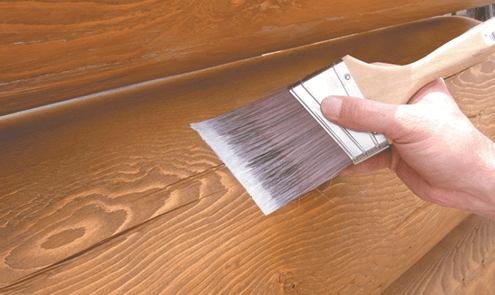
Ever since the industry started moving away from oil-based coatings, brush manufacturers have designed brushes specifically made for the application of water-based stains and clear coats. Since transparent stains are typically much less viscous than paints, if you use a normal paint brush, the brush won’t hold much product and you’ll end up having to constantly dip the brush after just a few strokes. Use the largest brush suitable for the surface you are coating. You’ll probably need small brushes for narrow surfaces like frames and trim, but when coating logs and siding, larger brushes carry more finish; there will be less dipping to refill the brush, and fewer strokes to cover the surface. Larger brushes also do a better job when back-brushing a surface that has had a finish applied with an airless sprayer.
Perma-Chink System has all the needed tools to get your job done right. Check out our line of brushes here.
PROPERLY USING YOUR BRUSH
Never press too hard on your brush. Stains and topcoats should be applied with the tips of the brush, not the sides. Don’t try to load too much finish on your brush. A heavily loaded brush will result in more drips and runs. Lifeline finishes are designed to go on in thin coats, including the first coat. If applied too thick, the long-term performance of Lifeline finishes can be diminished. In other words, more is not necessarily better when it comes to applying a Lifeline finish to your log home.
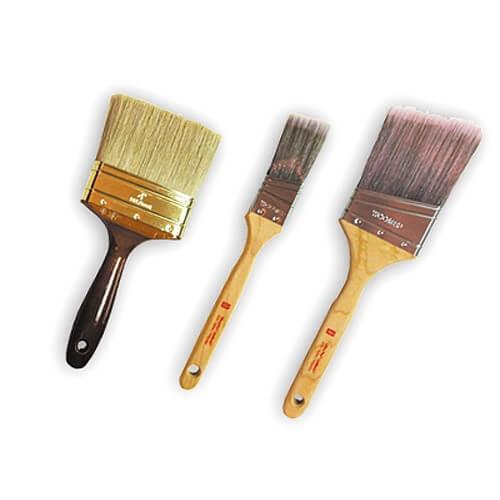
If your brush becomes messy, don’t be afraid to stop and occasionally wash it out. One of the advantages of using quality brushes is that they can be repeatedly washed without harming the brush.
CARE AND MAINTENANCE
If properly cleaned and maintained, a good quality brush will give you many years of good service. If you take a break even for just a few minutes, rinse your brush out with clean water and shake out the water. If you are through for the day, thoroughly wash your brush with a mild soap or detergent, shake or spin the water out and return the brush back into its original storage sleeve, it will help retain the brush’s shape while it dries.
QUALITY STAIN + QUALITY BRUSH = BEAUTIFUL HOME
Order Free Samples Now

We often get asked if it is acceptable to apply our Lifeline™ finish systems over an existing oil-based or petroleum stain. It would be nice if there was a simple yes or no answer to this question, but there is not. It depends on a number of factors, including how many coats have been applied, how long the stain has been on the walls, and which oil-based or petroleum stain is present on the wood surface. In general, it is ALWAYS best to remove an existing competitive finish before applying Lifeline.
All too often a homeowner has no idea what is on the walls, let alone how many coats were applied. What they do know is that they want to apply something on top of what’s already there to avoid the cost and effort of stripping the surface down to bare wood. This approach is very risky, especially with a water-based, high performance film-forming finish like Lifeline.
Let’s look at some of the individual parameters that have to be dealt with and addressed.
Appearance
Perma-Chink’s Lifeline stains are transparent finish systems. This means that any discolorations or residual pigmentation that remains on the wood will show through our finish systems. With few exceptions, our finishes have little or no hiding power. Once our Lifeline system has been applied, it essentially locks the surface of the wood in place. If you are dissatisfied with the final look and appearance, it can be quite costly and time consuming to remove the finish, address of the discolorations, and refinish the wood surface.
Adhesion
How much residual oil still remains in the wood and is it enough to interfere with the adhesion of Lifeline stain? These are questions that are just about impossible to answer. Yes, a small test area may quickly determine that there is a problem, but if a problem does not show up within a few days there is no way to tell what may happen over a period of several months or years. We have seen several issues that were directly attributed to the prior application of oil-based or petroleum stains. Peeling occurred around checks and micro-fissures because they had been flooded with an oil-based product during the initial staining process, and although most of the oil had evaporated from the surface of the logs, the checks had retained enough oil to reduce the adhesion of a water-based film.
Blisters
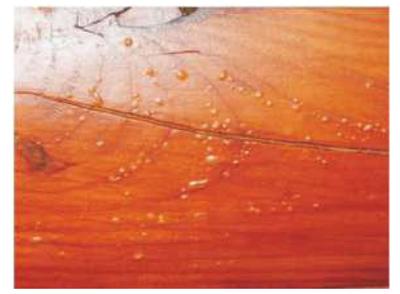
When several coats of an oil-based or petroleum, penetrating stain have been applied to a wall within the course of a few years, the underlying wood can become so saturated with oil that it may take a long time for it to evaporate. When a homeowner finally decides that it is time to change to a quality finish like Lifeline, pressure washing with just water, or even a mild detergent, may appear to remove most of the residual oil and colorants, and give the appearance of a prepared surface for the Lifeline finish. The wood may look clean and bare, but in reality the old oil carriers may still be in the top layer of wood. With the application of the first coat of Lifeline, these oils are now trapped in the wood and serve as a vapor barrier. Yes, our finishes breathe water vapor, but oil molecules are much larger and can’t make it through the film.
Now weather comes into the equation. If the days stay cool and cloudy until the entire finish system is applied and has time to cure, there’s a good chance that nothing of consequence will occur. But if the sun comes out and heats up the wall while the finish is still soft and pliable, the oils contained in the wood will begin to evaporate, creating blisters in the finish. This can occur after the first coat, second coat, or even after the entire finish system has been applied. One thing that these types of problems have in common is that they typically show up within a week after application.
If you plan to apply Lifeline after having applied a penetrating oil-based stain, what is the best way to minimize the chance of forming blisters? The product to use in these cases is S-100™ Finish Remover. S-100’s formulation includes a strong and aggressive detergent package that will help make the residual oils water soluble and easier to remove and wash away from the wood surface.
Once the finish is removed using S-100, allow the surface to remain bare for a couple of months to allow any remaining oil to evaporate. When you are ready to stain, wash the surface with Log Wash™, allow it to dry and apply the first coat of Lifeline.
We often get asked if it is acceptable to apply our Lifeline™ finish systems over an existing oil-based or petroleum stain. It would be nice if there was a simple yes or no answer to this question, but there is not. It depends on a number of factors, including how many coats have been applied, how long the stain has been on the walls, and which oil-based or petroleum stain is present on the wood surface. In general, it is ALWAYS best to remove an existing competitive finish before applying Lifeline.
All too often a homeowner has no idea what is on the walls, let alone how many coats were applied. What they do know is that they want to apply something on top of what’s already there to avoid the cost and effort of stripping the surface down to bare wood. This approach is very risky, especially with a water-based, high performance film-forming finish like Lifeline.
Let’s look at some of the individual parameters that have to be dealt with and addressed.
Appearance
Perma-Chink’s Lifeline stains are transparent finish systems. This means that any discolorations or residual pigmentation that remains on the wood will show through our finish systems. With few exceptions, our finishes have little or no hiding power. Once our Lifeline system has been applied, it essentially locks the surface of the wood in place. If you are dissatisfied with the final look and appearance, it can be quite costly and time consuming to remove the finish, address of the discolorations, and refinish the wood surface.
Adhesion
How much residual oil still remains in the wood and is it enough to interfere with the adhesion of Lifeline stain? These are questions that are just about impossible to answer. Yes, a small test area may quickly determine that there is a problem, but if a problem does not show up within a few days there is no way to tell what may happen over a period of several months or years. We have seen several issues that were directly attributed to the prior application of oil-based or petroleum stains. Peeling occurred around checks and micro-fissures because they had been flooded with an oil-based product during the initial staining process, and although most of the oil had evaporated from the surface of the logs, the checks had retained enough oil to reduce the adhesion of a water-based film.
Blisters
When several coats of an oil-based or petroleum, penetrating stain have been applied to a wall within the course of a few years, the underlying wood can become so saturated with oil that it may take a long time for it to evaporate. When a homeowner finally decides that it is time to change to a quality finish like Lifeline, pressure washing with just water, or even a mild detergent, may appear to remove most of the residual oil and colorants, and give the appearance of a prepared surface for the Lifeline finish. The wood may look clean and bare, but in reality the old oil carriers may still be in the top layer of wood. With the application of the first coat of Lifeline, these oils are now trapped in the wood and serve as a vapor barrier. Yes, our finishes breathe water vapor, but oil molecules are much larger and can’t make it through the film.
Now weather comes into the equation. If the days stay cool and cloudy until the entire finish system is applied and has time to cure, there’s a good chance that nothing of consequence will occur. But if the sun comes out and heats up the wall while the finish is still soft and pliable, the oils contained in the wood will begin to evaporate, creating blisters in the finish. This can occur after the first coat, second coat, or even after the entire finish system has been applied. One thing that these types of problems have in common is that they typically show up within a week after application.
If you plan to apply Lifeline after having applied a penetrating oil-based stain, what is the best way to minimize the chance of forming blisters? The product to use in these cases is S-100™ Finish Remover. S-100’s formulation includes a strong and aggressive detergent package that will help make the residual oils water soluble and easier to remove and wash away from the wood surface.
Once the finish is removed using S-100, allow the surface to remain bare for a couple of months to allow any remaining oil to evaporate. When you are ready to stain, wash the surface with Log Wash™, allow it to dry and apply the first coat of Lifeline.
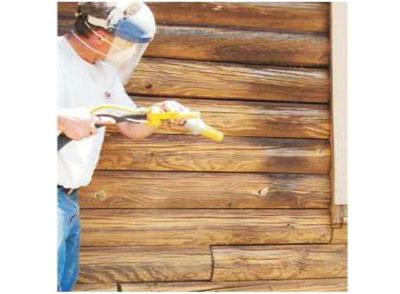
For the best performance and long lasting beauty, Lifeline™ finishes should only be applied to bare wood surfaces or an existing Lifeline finish that is still in good condition. To remove an existing finish, there are basically three options: pressure washing along with a chemical finish remover, media blasting, or sanding.
Media Blasting
Although we rent and sell the Blaster Buddy™ and furnish crushed recycled glass blasting media, we usually advise do-it-yourself homeowners to use chemical finish removers along with pressure washing because the process can be easily accomplished by an average homeowner. And since it is less susceptible to surface damage, chemical finish removers result in a more attractive finished surface.
However, when performed by an experienced professional, media blasting can effectively and efficiently remove the most stubborn existing finish. We do recommend that you first inspect a home that has been media blasted before making your final decision about which method of finish removal you want to use.
Media blasting consists of using corncob grit, walnut shells, glass beads, baking soda, dry ice, or recycled crushed glass to abrade the finish off the wood. We prefer crushed glass since it is very efficient, relatively inexpensive, and does not impregnate the wood with organic material that can later mold. Plus it is very safe for the environment.
Once a home has been media blasted, there are two steps that are often overlooked but need to be followed:
Step 1: Blow off as much dust and debris as possible using compressed air.
Step 2: Wash the wall down with a two cups per gallon Log Wash™ solution no more than seven days prior to staining. It is not necessary to use a pressure washer, a garden hose will do. Clean from the bottom up and rinse from the top down. Rinse well and allow the wood to dry before applying a color coat or Prelude™ Clear Wood Primer.
This removes all of the loose wood fibers and dust that may still be remaining on the surface and ensures better adhesion of the finish to the wood.
Sanding
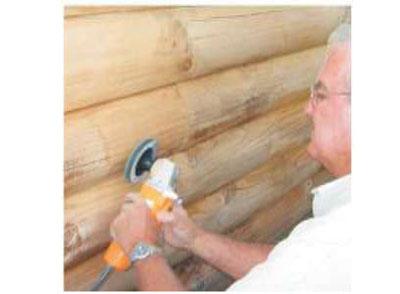
Sanding can effectively remove an existing finish, but it is time consuming and a lot of work. The use of sanding disks rather than sandpaper can save you both time and money but you need to be careful not to create swirl marks in the wood. When sanding exterior surfaces, never use anything finer than 80 grit.
Water-based film forming finishes require some wood texture for good adhesion, especially on exterior surfaces. Osborn™ Buffing Brushes work great for removing raised wood fibers (feathers) that may have resulted from aggressive pressure washing but they are not suitable for removing finishes.
A sanded wall is not clean! Always wash down sanded walls with two cups per gallon Log Wash solution no more than seven days prior to staining. It is not necessary to use a pressure washer, a garden hose will do. Clean from the bottom up and rinse from the top down. Rinse well and allow the wood to dry before applying the first coat of finish.
Using a Chemical Finish Remover
It is always best to use finish removers supplied or approved by Perma-Chink Systems. Never use finish removers containing potassium or sodium hydroxide. They disrupt the chemistry of the wood and can lead to discolorations appearing under the finish. Before purchasing any finish remover be sure to obtain a sample and test it on your existing finish to see how well it works. Finish removers do not dissolve finishes; they only soften them enough to allow the finish to be removed with pressure washing.
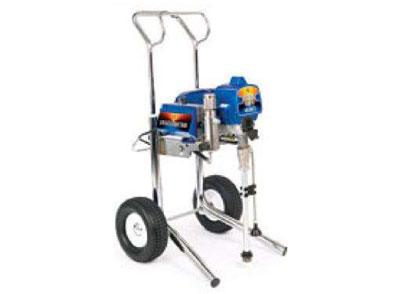
Tools & Equipment
Before you start have all of the tools that you will need at hand and be sure that they are clean and in good working order. These may include:
- Paint brushes
- Paint scraper
- Stiff nylon brush (never use a wire brush)
- Airless sprayer*
- Wet and dry rags
- Water hose
- Gas powered pressure washer with an output of 2 to 3 gallons per minute (gpm)
- Tarps
- Recommended safety equipment such as eye protection and rubber gloves
Note: Most quality airless spray equipment will handle our S-100™. On the other hand, for applying StripIt®, you will need a professional grade airless sprayer with an output of at least 0.54 gpm. In either case, there are a couple of minor modifications that have to be made before using them. The first thing is to change the tip to a 0.021 tip orifice. We stock universal 521 tips in case you cannot find one locally. If a smaller diameter orifice tip is used, it will take longer to apply the proper amount of finish remover and the tip may become clogged. In addition, since a small orifice produces a fine mist there is a greater chance of wind drift onto surfaces that you may not want to strip.
Once the stripping process is completed, it’s of utmost importance to replace the 0.021 tip with a 0.015 or 0.017 tip for applying our stain and topcoat. The second thing is to remove any sprayer strainers, screens and/or filters. Our finish removers are somewhat thick and viscous, so having to pass through screens and filters will impede the flow of product through the sprayer and may eventually clog it up.
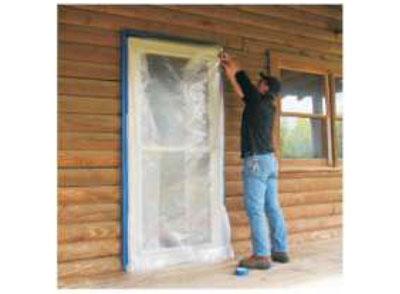
Preparation
Before you start be sure to remove downspouts and cover or mask off any areas that you don’t want to strip. Finish removers will soften both stains and paints. You may wish to protect window and door trim with plastic sheeting. If you do get some finish remover on an area that you don’t want to strip, immediately wash it or wipe it off with a wet rag. If you have a deck or porch floor that you want to protect it’s best to cover it with a tarp. Although neither S-100 nor StripIt is highly toxic to plant life, it is best to either cover plants or wet them down prior to starting then rinse them off when stripping is complete.
Application and Removal
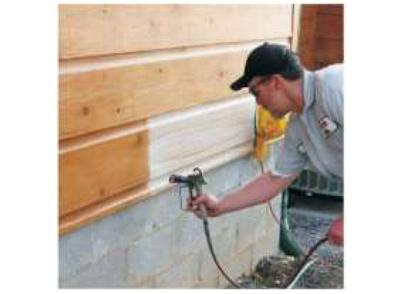
Step 1: Thoroughly read the label and be sure to wear the proper safety equipment and eye protection. Starting at the bottom of the wall, apply the finish remover with a brush or airless sprayer according to the directions for use. Be sure to follow the directions pertaining to the application rate; if applied too thinly the finish remover may not work and you will have wasted your time and money. Be sure to give the product time to work. On hot dry days, work on small sections of a wall at a time so that it does not dry out.
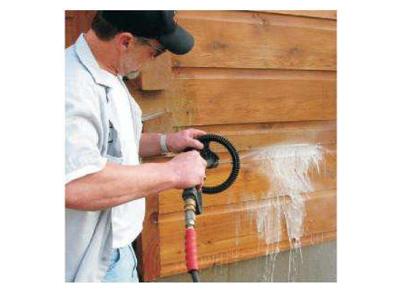
Step 2: Allow the finish remover time to soften the finish. It may take 30 minutes or several hours depending on the existing finish, product and temperature. If you see that the S-100 is beginning to dry, mist it with a light spray of water. For drying StripIt apply another coat on top. In colder weather conditions it may take many times longer for the finish to soften than it does in warm or hot weather. On cool days you can apply the finish remover to the entire wall late in the afternoon or early evening and leave it on overnight. Neither S-100 nor StripIt will damage the wood or cured Perma-Chink sealant, even with prolonged contact.
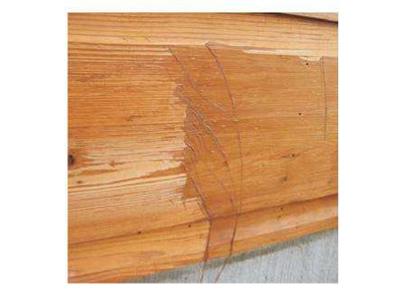
Step 3: Once the finish has softened, use a pressure washer to remove the chemical stripper along with the finish. The use of a 15-degree fan tip works well. Start at the bottom of the wall and work up. You don’t want to wash away the chemical stripper from those areas you are not ready to strip. Hold the pressure washer wand at a 30- to 45-degree angle from the wall. The objective is to “peel” the softened finish off of the surface, not blast it off with a lot of water pressure. This will help avoid gouging the surface and severe feathering. If there are some spots of remaining intact finish, try scraping them off with a paint scraper or a stiff nylon brush before they dry.
Step 4: Once the entire wall is completed, begin the rinsing process starting at the top of the wall and work your way down. Rinsing off all remaining chemical residue and bits of loose finish is very important for the long term performance of the new Lifeline finish system.
Step 5: If after rinsing there are still remnants of finish remaining on the wall, repeat the process until all of the existing finish is removed. It is not necessary to reapply the stripper to the entire wall. Only use it on those areas that need it.
Step 6: Once the entire wall is completely bare rinse the entire wall starting at the top and work your way down. Allow the wall to dry before making your final evaluation.
Step 7: If pressure washing the wall has feathered the surface you may wish to lightly sand it or use an Osborn Brush to remove the feathered wood fibers. Never use sandpaper or Osborn Brushes finer than 80 grit on exterior surfaces. Sanded or brushed surfaces MUST be washed with two cups per gallon Log Wash solution and the surface allowed to dry before the first coat of finish is applied.
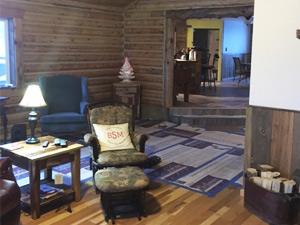
Brenda and I bought a log home in Challis, Idaho in 2015. This home was built in 1980. As with most homes built in this era it was very dark which made it outdated for the present era. We saw the potential this home had, we just needed a lot of advice on how to get it there. After careful review of several companies and their products we chose Perma-Chink.
I was informed from a good source that builds log homes that Joanne Hamlin with Perma-Chink could help us out with whatever we needed. Boy were they right! I called Perma-Chink for the first time and got hooked up with Joanne. She has been so kind, sweet, considerate, educational, so helpful on how to, what product to use, and how to apply it. Guidance in all areas has just been wonderful experience. Look forward to all future business with Perm-Chink.
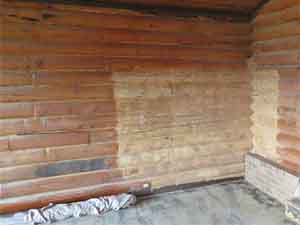

Travis Sakellaridis
Challis, ID
Tom D. says:
I used cleaner after cleaner on my 20-year-old, completely black log home and the only thing that worked was Wood ReNew. It was like night today, I couldn’t even believe it.