Key Takeaways
- Gaps and cracks in a log home can allow outside air to enter, making the home harder to heat efficiently.
- Chinking and sealants improve energy efficiency primarily by reducing outside air infiltration, not by adding significant insulation value.
- Energy Seal is designed to remain flexible with log movement while sealing against air and water infiltration.
- If you aren’t sure where air is entering the home, an energy audit with blower door testing and thermal imaging can help locate leakage areas.
As winter approaches, one of the most important tasks for maintaining your log home is ensuring it’s properly sealed. With the cold months ahead, taking the time to address any gaps and cracks will help prevent cold drafts and keep your home cozy and energy-efficient.
Keeping cold outside air from entering through gaps and joints can reduce unnecessary heat loss and improve comfort inside the home. Finding the source of air leakage first also allows you to concentrate sealing work where it is needed.
At Perma-Chink Systems, we specialize in products designed specifically to help you seal your log home effectively. Although we’re widely known for our premium stain products, our reputation was first built on our high-quality chinking and sealants. Perma-Chink Systems has developed products for log and timber homes since 1981.
What Are Log Home Sealants?
In the context of log homes, sealants are materials used to fill gaps, cracks, seams, joints, and any other spaces where air, water, or pests might enter. Perma-Chink Systems sealants are formulated specifically for the movement and sealing requirements of log and timber structures.
What Makes Perma-Chink Systems Sealants Different?
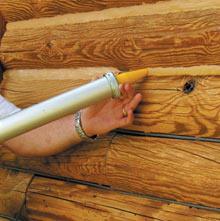
Products such as Energy Seal are designed to form a flexible seal that accommodates log movement while reducing air and water infiltration. Energy Seal can be used around log walls, butt joints, windows, door frames, corners, and other gaps where a visible traditional chink joint is not desired.
Chinking and backing materials do not contribute significant insulation value to a wall. Their larger contribution to energy efficiency comes from eliminating outside air infiltration through gaps and joints.
If you feel drafts but cannot identify where the air is entering, an energy audit can help. Blower door testing measures cumulative air leakage within the home, while thermal imaging can help locate individual leakage pathways.
Frequently Asked Questions
Does chinking insulate a log home?
Perma-Chink and backing materials do not provide significant insulation value to the wall. Their energy-efficiency benefit comes primarily from sealing openings that allow outside air to enter the home.
How can I find air leaks in a log home?
Check for drafts around log joints, windows, doors, and other openings. Air leakage can also occur where plumbing, ductwork, or electrical wiring passes through walls, floors, ceilings, or soffits. For harder-to-find leaks, blower door testing and thermal imaging can provide a more detailed energy assessment.
What is Energy Seal used for?
Energy Seal is a textured acrylic polymer sealant designed for log homes. It remains flexible to accommodate log movement and forms a barrier against air and water infiltration.
Find the Source of Air Leaks Before Sealing
Explore Energy Seal for appropriate log-home gaps and joints, or learn more about thermal imaging and blower door testing before beginning a larger sealing project. If you need professional help, Find a Contractor Near You. You can also call Perma-Chink Systems at 1-800-548-3554 for product and application guidance.