Key Takeaways
- The Leroy Mountain project included old-finish removal, surface preparation, wood repair, sealing, staining, topcoating, and deck refinishing.
- The restoration used Perma-Chink Systems products for separate stages of the job, including New Age Blast Media, M-Balm, E-Wood, Energy Seal, Lifeline finishes, and Deck Defense.
- Surface preparation included media blasting, sanding, smoothing log ends, repairing animal damage, and cleaning the wood before the finish system was completed.
- The documented six-week project required 317 labor hours and substantial quantities of restoration, sealant, preservative, and finish products.
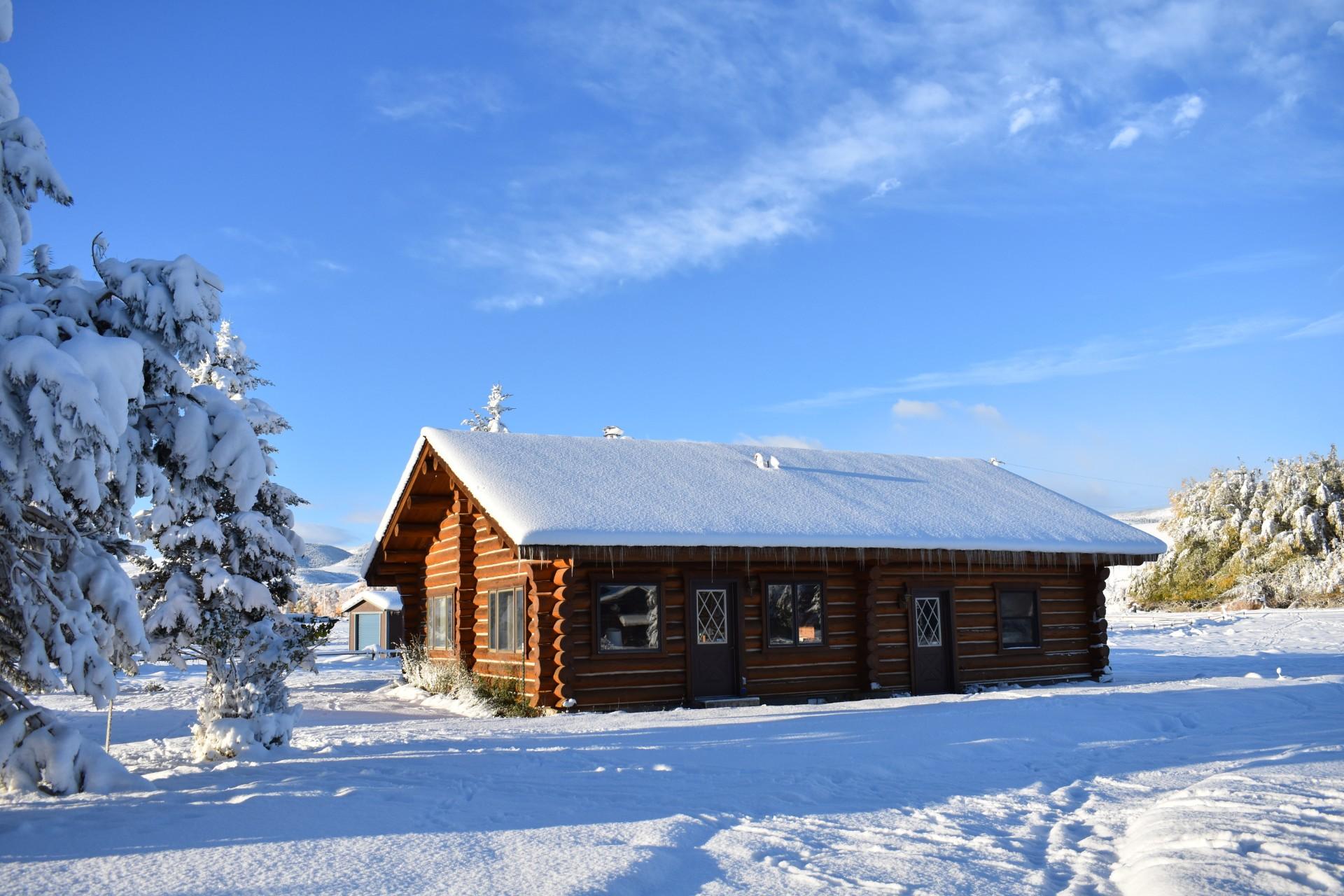
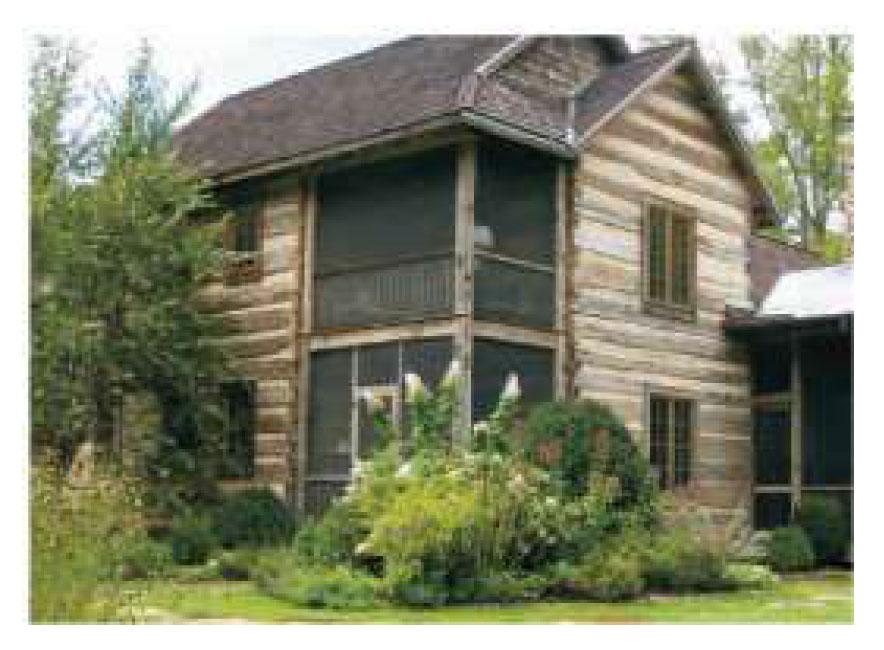
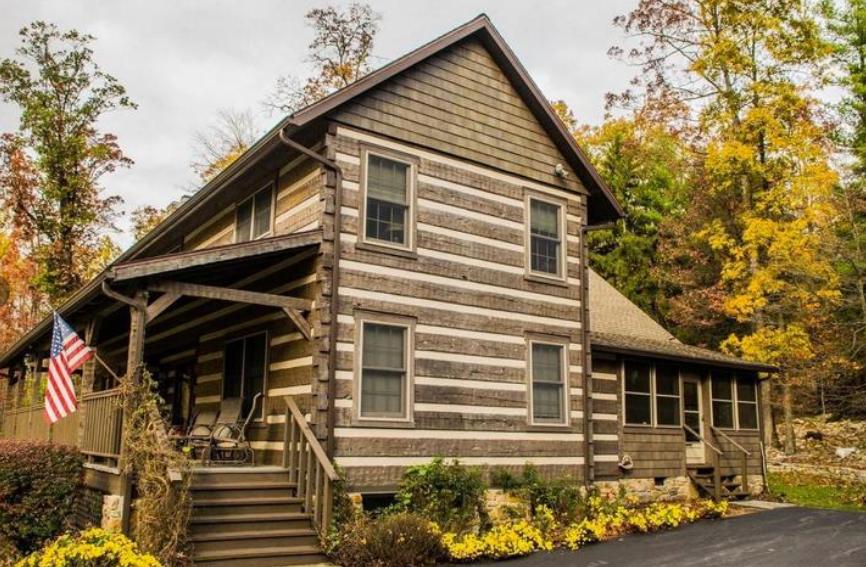
The Leroy Mountain project was in need of some help. Built in 2003, it had been coated with Sansin Classic. One product, one color had been used on everything- logs, trim, and deck. This resulted in a mono-tone appearance. A second and third coat had been applied over the years, without adequate preparation. On one wall it looked like the finish had not been stirred or mixed before applying. Time, sun and weather had degraded the exterior badly. It was sad to see such a beautiful home in this condition.
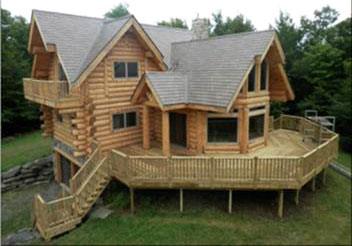
My first impression on seeing the house was “Whoa, what is that little gem doing here?” Large Doug Fir logs, scribed fit, three gables, two balconies, two dormers, two porches, hexagon great room and deck; all tucked in on a basic footprint of 32’ X 32’. This is not your typical Pennsylvania log home. The log kit was supplied by The Log Connection, British Columbia, Canada. As soon as I saw it, I knew we could bring it back to better-than-new-looking condition.
Removing the Old Finish and Preparing the Logs
The first step was cleaning the home. Seventy-eight bags of New Age Blast Media were used to remove the old finishes from the logs and deck. Next we sanded the logs down using random orbital sanders with 60 grit and then an Osborn Brush. Special attention was paid to the log ends, smoothing them out and chamfering the edges. We also smoothed out all the deck top railings, posts and handrails to ensure a nice feel when touched.
New Age Blast Media is recycled-glass blasting media used with compressed air for dry finish removal. Perma-Chink Systems includes it in its log restoration products for projects where an existing finish needs to be removed before the wood is repaired or refinished.
Repairing Damaged Wood
Porcupines had climbed all the log corners and chewed some pretty large areas. Some spots could be sanded out, others were repaired using M-Balm and E-Wood. After sanding the E-Wood smooth I brushed a light coating of Energy Seal over the repaired area so that when stained it blended right in.
M-Balm penetrates and consolidates deteriorated wood in preparation for an E-Wood repair. E-Wood can then be used for non-structural repairs where damaged wood does not require full log replacement. Product choice depends on the depth and extent of the damage, so larger or structural repairs should be evaluated by a qualified log home contractor.
Treating and Sealing the Log Walls
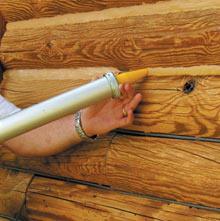
We soaked the bare logs with thirty gallons of ShellGuard RTU then sealed all the log courses, corners and intersections with six pails of Energy Seal “Adobe”. The house was then washed with Log Wash and allowed to dry.
This sequence records how the Leroy Mountain project was completed. For current projects, follow the latest product labels and Perma-Chink Systems application instructions for wood preservatives, sealants, cleaners, and finishes. Current Shell-Guard RTU guidance calls for application to bare wood and specific drying and handling steps before later coatings are applied.
Energy Seal is a flexible, textured log sealant designed for areas including log joints, corners, and window and door trim. Log Wash is a low-pH cleaner used for bare-wood preparation and maintenance cleaning.
Applying the Exterior Finish System
The first coat of finish required fifteen gallons of Lifeline Prelude, a clear primer/sealer that contains UV Boost. Two coats of Lifeline Ultra-2 “Bronze” were next, requiring twenty three gallons. The last coat was nine gallons of Lifeline Advance Gloss. All finishes were sprayed on using a Graco Tradeworks 170 with a 313 tip and back brushed with a StainMaster brush.
Lifeline Prelude fills wood pores to support a more uniform finish color and is designed for use beneath Lifeline finishes. Lifeline Ultra-2 is a semi-transparent exterior stain, while Lifeline Advance provides the clear topcoat used over the color finish. Homeowners planning similar work can browse Perma-Chink Systems’ exterior wood stains and finishes to compare products for each step.
Window trim and fascia were painted with Sherwin Williams Super Trim Paint in a rich, deep, pine tree green. This extra step required more time and effort but set off the details of the home and complemented the color of the logs.
Refinishing the Deck
The deck and railing were coated with twenty-five gallons of Deck Defense in Hickory.
Deck Defense is made for decks, rails, fences, and other exposed wood surfaces. Using a dedicated deck product also kept the deck treatment separate from the Lifeline exterior wall finish system used on the logs.
Six Weeks of Log Home Restoration
The project took one man, six weeks, 317 hours to complete. When I started the project in late July I did not have a firm deadline nor did I know of the family reunion occurring on Labor Day Weekend. I really had to hustle to finish, putting the final touches on the deck just in time. It was worth the effort, as the owners and their extended family loved their restored home.
The Leroy Mountain project shows how much of a log home restoration can happen before the final stain is applied. Finish removal, sanding, localized wood repair, preservation, sealing, cleaning, staining, topcoating, and deck work each addressed a different part of the home.
Perma-Chink Systems offers log restoration products, wood sealants and chinking, cleaners, preservatives, and exterior finishes for these different stages. For extensive decay, structural concerns, or work beyond routine DIY maintenance, use Perma-Chink Systems’ Find a Contractor resource or consult a qualified log home contractor.
Brian O’Shea
Log Home Restoration
Wellsboro, PA
Frequently Asked Questions
Why was the existing finish removed instead of recoated?
The project page documents multiple older coats, uneven application, and substantial weathering. The restoration crew removed the old finish with New Age Blast Media before sanding and preparing the logs. Another home may require a different method depending on the existing coating and wood condition.
What products were used to repair the porcupine damage?
Some areas could be sanded, while larger damaged areas were repaired with M-Balm and E-Wood. M-Balm consolidates deteriorated wood before E-Wood is used to rebuild suitable damaged areas. E-Wood is intended for non-structural applications where log replacement is not required.
What stain and topcoat were used on the Leroy Mountain home?
The project used one coat of Lifeline Prelude followed by two coats of Lifeline Ultra-2 in Bronze and a final coat of Lifeline Advance Gloss. The documented quantities were fifteen gallons of Prelude, twenty-three gallons of Lifeline Ultra-2, and nine gallons of Lifeline Advance Gloss.
What was used on the deck?
The deck and railings received twenty-five gallons of Deck Defense in Hickory. Deck Defense is formulated for decks, rails, and fences rather than serving as the wall finish used on the log exterior.
Where can I find products for a log home restoration project?
Start with Perma-Chink Systems’ log restoration products for finish removal and wood repair, then review the wood sealants and chinking and exterior wood stains and finishes categories as needed. The right products depend on the existing finish, condition of the logs, type of damage, and surfaces being restored.